Do dogs wag their tails only when happy?

 The answer is: "Not only when happy."
Dogs don't wag their tails only when they are happy. Research shows that dogs also wag when their feelings are stirred up, such as when they are tense or anxious. One experiment even found that dogs wagged more widely to the right when they saw their owner, and more to the left when they saw a strong-looking dog they didn't know.
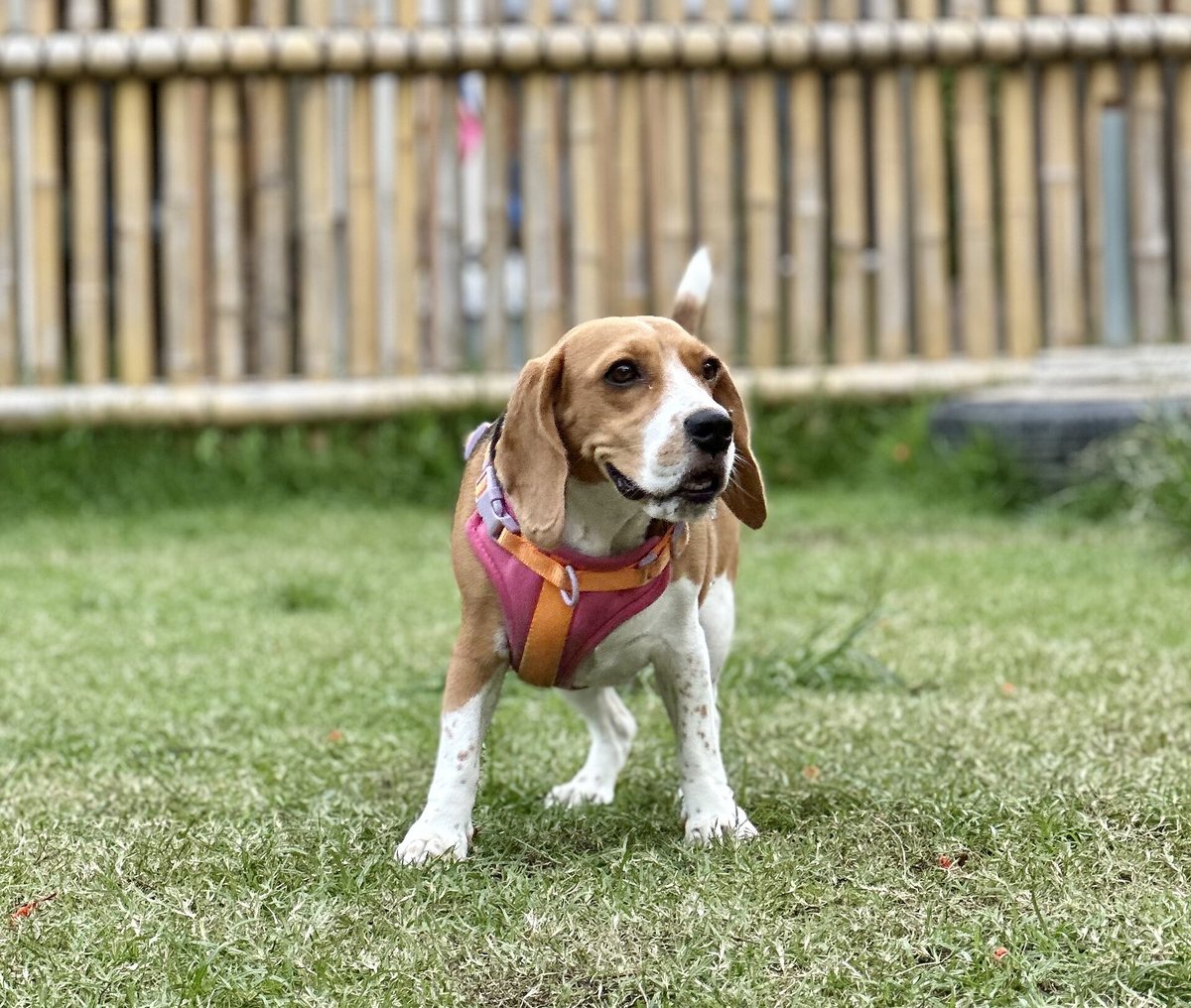
Not only when happy
People tend to think a dog wagging its tail is "happy," but research shows that dogs wag their tails not only when they are happy, but also when their feelings are stirred up by things like tension or anxiety. A research review published in 2024 also mentions a report that aggressive dogs wagged their tails more often.
Wagging right or wagging left
In an experiment at a university in Italy, 30 pet dogs were shown their owner, a stranger, a cat, and a strong-looking dog they didn't know, and the way their tails moved was measured. When they saw their owner, they tended to wag more widely to the right side. When they saw the strong-looking unfamiliar dog, they tended to wag more widely to the left side. Differences in how the left and right sides of the brain work are thought to be involved.
The fan shapes show how the tail swings, as seen from behind the dog.

Dogs watch how other dogs wag
In another experiment, dogs that watched a video of a dog wagging its tail more to the left had a higher heart rate and showed more signs of restlessness. Dogs may be reading the feelings of other dogs from the way they wag their tails.
Why dogs wag more than wolves
Dogs wag their tails more often, and in more situations, than wolves and their other relatives. Some ideas have been suggested to explain why: that wagging grew stronger along with friendliness as people chose friendly dogs to raise, or that humans, who like rhythmic movements, selected for it. But these have not yet been confirmed.
Want to know more?
- The difference in tail wagging between dogs and wolves is said to appear at about 3 weeks of age, even when they are raised the same way.
- Wagging with the tail held low and tucked between the hind legs is said to be linked to anxiety or a submissive feeling.
- There are an estimated 1 billion dogs in the world, which makes them the most widespread meat-eating animal on Earth.

Quick quiz: test yourself
When do dogs wag their tails?
Show the answer
- Only when happy
- Only when sleepy
- Also when tense or anxious
Also when tense or anxious Research shows dogs wag their tails not only when happy, but also when their feelings run high, such as when tense or anxious.
Research shows dogs wag their tails not only when happy, but also when their feelings run high, such as when tense or anxious.
Next quiz ›Sources
- Why do dogs wag their tails?Biology Letters(The Royal Society)
- Asymmetric tail-wagging responses by dogs to different emotive stimuliCurrent Biology
- Why Do Dogs Wag Their Tails? Scientists Examine the Endearing BehaviorSmithsonian Magazine
This article was written after checking the sources above as of 2026-10-03. Explanations may change as research progresses. Photo credits are shown below each photo.