Why does iron rust?

 I have summed up how rust works in 30 seconds.
Iron rusts because, when it touches both oxygen in the air and water, a slow chemical reaction takes place. In the thin film of water on the iron's surface, iron gives up electrons and dissolves, then combines with oxygen to become reddish-brown rust. Without either oxygen or water, iron hardly rusts at all.
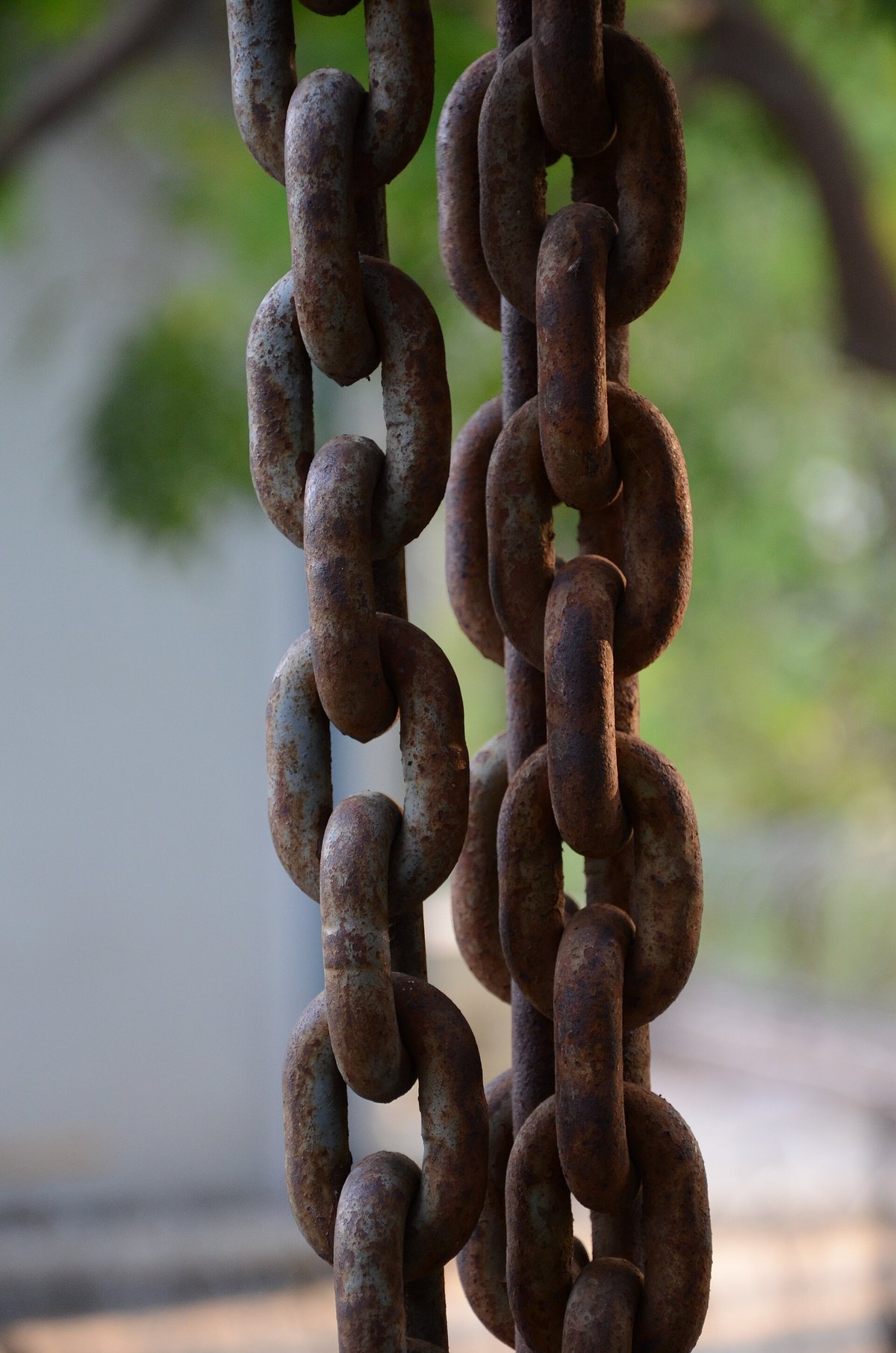
Oxygen plus water means rust
For iron to rust, it needs both oxygen and water. For example, an iron nail placed in water with the oxygen removed does not rust even after weeks. A nail placed in a liquid with no water in it, like kerosene, also does not rust, even though oxygen is there.
Tiny batteries on the surface
Rust spreads as tiny battery-like spots form on the surface of the iron. In the film of water, iron gives up electrons and dissolves in one spot, and those electrons travel through the iron to another spot. There, oxygen takes in the electrons. The dissolved iron then combines further with oxygen and water to become reddish-brown rust.

Rust flakes off and keeps going
Metals such as aluminum form a thin, tough film on their surface that protects the metal inside. Iron rust, however, is brittle and flakes off easily, so fresh iron is exposed to air and water again. That is why, if left alone, rust keeps eating its way deeper into the iron.
Salt speeds it up, paint protects
Iron rusts more easily near the sea or in areas where salt is spread on roads in winter to melt snow. Iron that touches salt water rusts faster than in fresh water. A common way to prevent rust is to paint the iron to block out oxygen and water. However, if the paint gets scratched, rust can start from there.
Want to know more?
- Stainless steel resists rust because the chromium mixed into it forms a thin protective film on the surface that guards the iron inside.
- If an underground iron pipe is connected to a magnesium rod, the magnesium dissolves first and protects the iron.
Quick quiz: test yourself
What does iron need in order to rust?
Show the answer
- Only oxygen
- Only water
- Both oxygen and water
Both oxygen and water Iron rusts when it touches both oxygen in the air and water, slowly reacting with them. Without one of them, it hardly rusts at all.
Iron rusts when it touches both oxygen in the air and water, slowly reacting with them. Without one of them, it hardly rusts at all.
Next quiz ›Sources
- 11.7: Corrosion (Chemistry: Physical Principles)Chemistry LibreTexts(トロント大学の講義教材)
- Corrosion as an Electrochemical ProcessHyperPhysics(ジョージア州立大学)
This article was written after checking the sources above as of 2026-10-03. Explanations may change as research progresses. Photo credits are shown below each photo.