Do ostriches really bury their heads in the sand?

 The answer is no. But there is a good reason why it looks that way.
No, it is a myth. Ostriches do not bury their heads in the sand. When in danger they may lie flat with their necks stretched out, and they lower their heads close to the ground to turn the eggs in their nests. From far away, these poses look like head-burying, which is thought to be how the myth began.
Did the myth start in ancient Rome?
In English, to "bury your head in the sand" means to ignore a problem instead of facing it. This idea may go back to Pliny the Elder, a naturalist in ancient Rome. In his book Natural History, he wrote that when an ostrich pushes its head and neck into a bush, it believes its whole body is hidden.
Ostriches do not really bury their heads
According to the San Diego Zoo and others, ostriches do not bury their heads in the sand. The ostrich is the world's largest bird, weighing up to 130 kg and standing up to 2.7 m tall, but its head is very small for its body. When an ostrich senses danger, it usually runs away. It can sprint at 70 km/h for short bursts and keep up about 50 km/h over longer runs.
Lying flat hides the head
When it cannot run away, an ostrich flops down on the ground, stays still, and lays its head and neck flat in front of it. Its head and neck are light in color and blend in with the soil, so from far away only the body can be seen. This pose looks as if the ostrich has buried its head in the sand.

Turning the eggs looks like head-burying too
Ostriches do not build nests in trees. Instead, they lay their eggs in a shallow hole scraped in the ground. The parents turn the eggs several times a day to keep them warm. When turning the eggs they lower their heads close to the ground, and this pose is also thought to have helped start the myth. Ostriches also often keep their heads near the ground while looking for food.
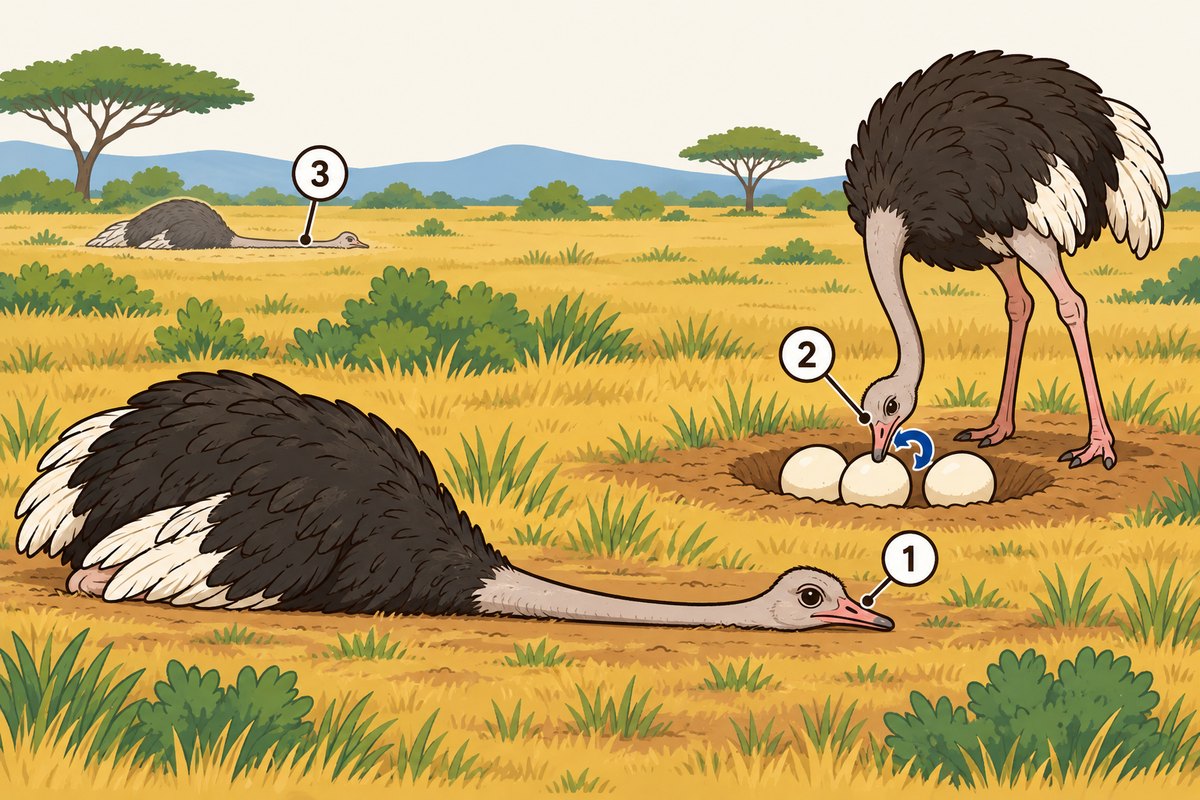
- 1Lying flat with its head and neck stretched along the ground
- 2Lowering its head to turn the eggs in the nest
- 3From far away, the head and neck blend into the ground
Want to know more?
- An ostrich egg is about 15 cm long, and since several females lay eggs in the same nest, one nest can hold up to 50 eggs.
- The eggs are usually kept warm by the dull-colored female during the day and by the black-feathered male at night.
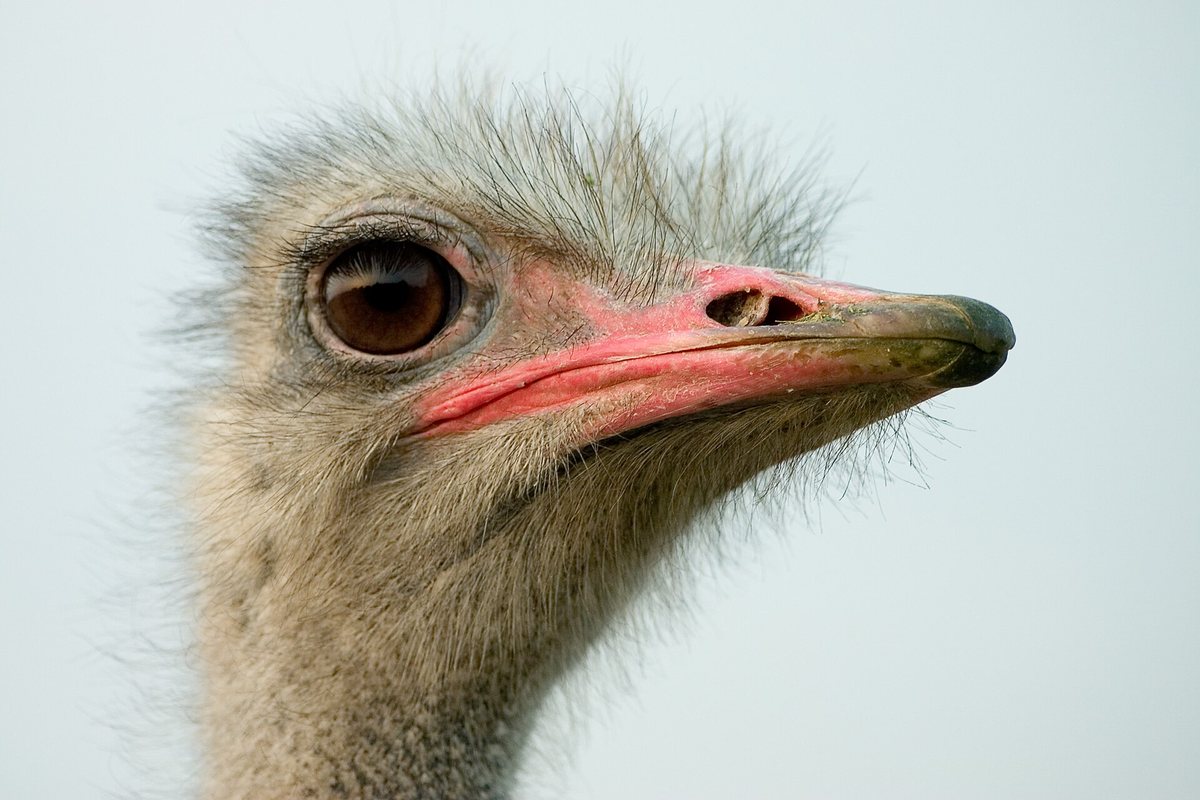
- An ostrich's eye is about 5 cm across, said to be the largest of any bird.
Quick quiz: test yourself
Remember what you just read? Give it a try!Why can an ostrich look like it has buried its head?
Show the answer
- To hide its head from enemies
- To eat food in the sand
- It lies flat with its neck stretched out
It lies flat with its neck stretched out When it cannot run away, an ostrich lies flat with its neck stretched out. Its light head and neck blend into the soil, so from far away it looks like its head is buried.
When it cannot run away, an ostrich lies flat with its neck stretched out. Its light head and neck blend into the soil, so from far away it looks like its head is buried.
Next quiz ›Sources
- OstrichSan Diego Zoo Wildlife Alliance(サンディエゴ動物園)
- OstrichSmithsonian's National Zoo(スミソニアン国立動物園)
- Do ostriches really bury their heads in the sand?Live Science
This article was written after checking the sources above as of 2026-10-03. Explanations may change as research progresses. Photo credits are shown below each photo.
Next fun fact ▶
 AnimalsCan porcupines really shoot their quills?A porcupine shoots its quills at enemies like arrows... we hear it often, but is it really true?

40 surprising animal facts with big photos and short, easy text. A fun-facts book for kids and grown-ups to read together.
See it on Amazon