Does the wind at the beach change direction from day to night?

 First, let me give you the answer in 30 seconds.
Yes, when conditions are right, it does. Land warms up and cools down faster than the sea, so on a clear day a "sea breeze" blows from the sea to the land during the day, and a "land breeze" blows from the land to the sea at night. However, on days when strong winds blow over a wide area, or on cloudy days, the pattern is not clear, so the winds do not switch every single day.
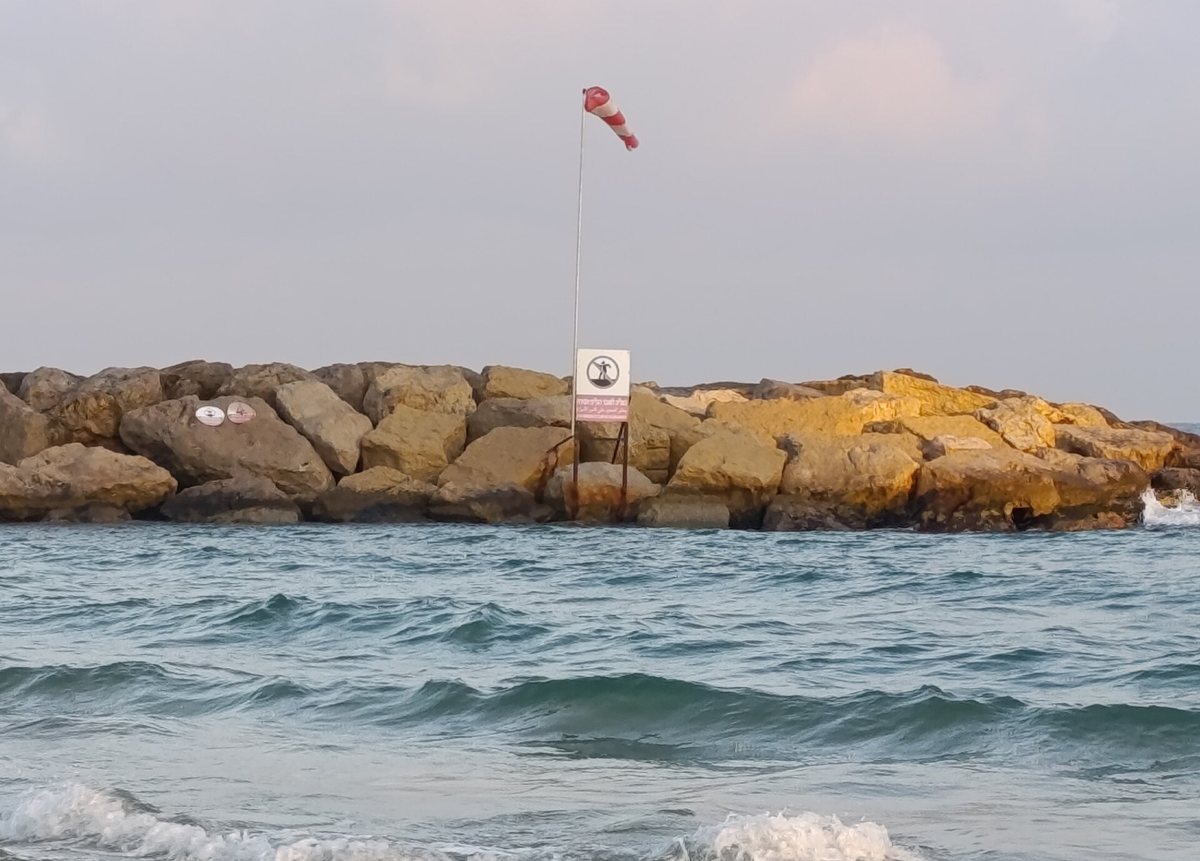
By day, a "sea breeze" blows from sea to land
On a clear day, land warms up much faster than the sea, because the heat in the ground stays in a thin layer near the surface. The sea, on the other hand, lets sunlight reach deep down, and waves and currents stir the water, so the heat spreads out widely and the surface temperature does not rise much. The air over the warm land becomes light and rises, and the cool air over the sea flows in to take its place. This is the sea breeze.
At night, a "land breeze" blows from land to sea
After the sun goes down, it is the land's turn to cool faster than the sea. When the land becomes cooler than the sea surface at night, the cold, heavy air over the land flows out toward the sea. This is the land breeze. A land breeze is usually weaker than a sea breeze. Over cold ground, air does not easily move up and down, and buildings, trees and the shape of the land also get in the way of the flow from land to sea.

The "calm" when the winds switch
In the morning and evening, when the wind changes direction, both the sea breeze and the land breeze weaken, and there may be almost no wind at the shore. In Japanese, these are called the "morning calm" and the "evening calm". The Japan Meteorological Agency calls the winds that blow from sea to land in the daytime and from land to sea at night, together, "land and sea breezes".
The winds don't switch every day
However, this pattern shows up clearly only on days with few clouds and weak winds over a wide area. The Japan Meteorological Agency also says that land and sea breezes are clearer when the difference in air pressure between places is small. On windy or cloudy days, sea and land breezes are hard to notice. The same thing also happens on the shores of large lakes.
Want to know more?
- When the front edge of a sea breeze passes, the temperature can sometimes drop by about 8–11℃.
- At around 1,000–1,500 m up in the sky, air flows the opposite way from the ground, back from land to sea, so the air goes around in a loop.
- Land breezes are seen often from autumn into winter, when the sea is still warm and the land tends to become colder than the sea at night.

Quick quiz: test yourself
On a clear day, which way does the beach wind blow by day?
Show the answer
- From the land to the sea
- From the sea to the land
- It hardly blows at all
From the sea to the land Land warms up faster than the sea. Air over the land rises, and cool air from over the sea flows in. This is the sea breeze.
Land warms up faster than the sea. Air over the land rises, and cool air from over the sea flows in. This is the sea breeze.
Next quiz ›Sources
- 風に関する用語気象庁 (in Japanese)
- The Sea BreezeNOAA JetStream
- Land and sea breezesMeteoSwiss
This article was written after checking the sources above as of 2026-10-03. Explanations may change as research progresses. Photo credits are shown below each photo.