Why do ants walk in a line?

 The key to the answer is the scent that ants leave for one another.
Ants walk in a line because they are following a scent trail (pheromones) left by their nestmates. An ant that finds food marks its way home with scent, other ants follow the same path by smelling it with their antennae, and they add more scent to make the trail stronger. Ants don't see very well, so scent helps them find their way without getting lost.
Signposts made of scent
Ants live in big groups called colonies, which can have millions of members, and they do most of their communicating with scent chemicals called pheromones. When an ant finds food, it marks the path with pheromones as it heads back to the nest. Other ants pick up the scent, mostly with sensors on their antennae, and follow the same path to the food.
The more ants, the stronger the trail
The ants that follow the trail add more of the same scent, so the trail gradually gets stronger. Compared with humans, ants don't see very well, so the scent trail works as a guide that keeps them from getting lost. As a result, they march in a nearly perfect line. For a good food source, ants may use strong, long-lasting scent to call many helpers, while for a small amount of food they may use scent that fades quickly.
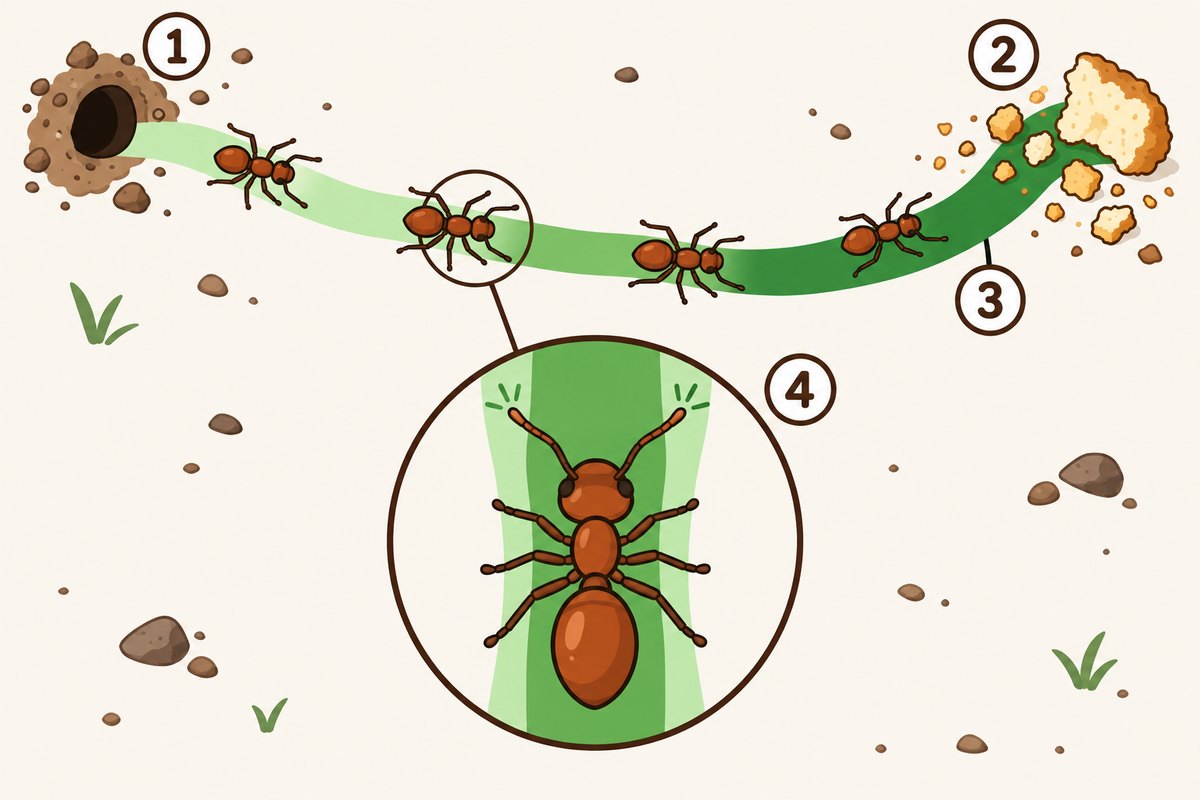
- 1The nest entrance
- 2The food
- 3The scent trail, which grows stronger as more ants add scent
- 4An ant feeling the edges of the trail with its left and right antennae
Comparing scents with two antennae
A research team at Harvard University filmed the antennae of ants following scent trails with high-speed cameras. They found that ants move their left and right antennae in different ways to compare the scent, feeling for the edges of the trail and deciding which way and how much to turn. The team also notes that ants have about 400 genes for odor receptors, far more than the roughly 60 in fruit flies.

What else ants say with scent
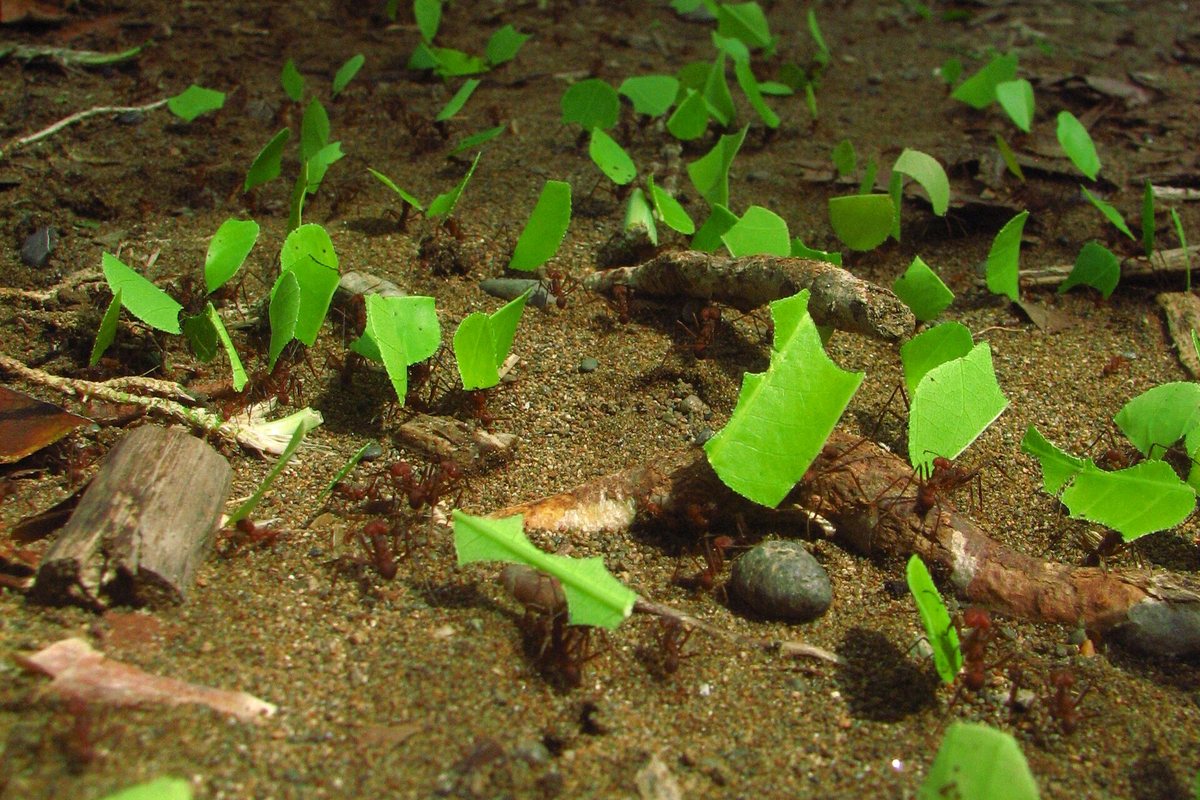
An ant's scent "language" is not just for trails. Each species is said to use up to 20 different pheromones, to defend its territory and to tell nestmates about food, nest sites, or an enemy coming near. Leafcutter ants, which cut and carry leaves, even keep one lane for ants heading to food and another for ants carrying their harvest home, much like lanes on a road.
Want to know more?
- More than 12,000 ant species are known, and an ant brain has about 250,000 nerve cells.
- Army ants, common in Central and South America, move in huge swarms and raid the nests of other insects.
- Each ant may look simple, but researchers say that as a colony, ants can do amazingly complex things.
Quick quiz: test yourself
Remember what you just read? Give it a try!What do ants mainly use to follow their line?
Show the answer
- What they see around them
- A scent trail
- The sun's heat
A scent trail An ant that finds food leaves a pheromone scent on its way home, and its nestmates follow that scent with their antennae.
An ant that finds food leaves a pheromone scent on its way home, and its nestmates follow that scent with their antennae.
Next quiz ›Sources
- CUriosity: Why and how do ants walk in a perfect line?コロラド大学ボルダー校(CU Boulder Today)
- Why do ants walk in a line?BBC Science Focus
- Staying on Track: A Look at How Ants Sense the World [Murthy Lab]ハーバード大学 分子細胞生物学科
This article was written after checking the sources above as of 2026-10-03. Explanations may change as research progresses. Photo credits are shown below each photo.
Next fun fact ▶
 AnimalsWhy do dogs show their belly?A dog rolling over to show its belly is so adorable. But is it really "giving up"?

40 surprising animal facts with big photos and short, easy text. A fun-facts book for kids and grown-ups to read together.
See it on Amazon