What if Earth stopped spinning?

 Let me say this first: it is a "what if" that will not really happen.
This is a "what if" that will not really happen. If Earth suddenly stopped spinning, anything not attached to the ground would keep moving east because of inertia, and any one place would get about half a year of daylight and half a year of night. But if the spin slowed down gradually over a very long time, those sudden changes would not happen.
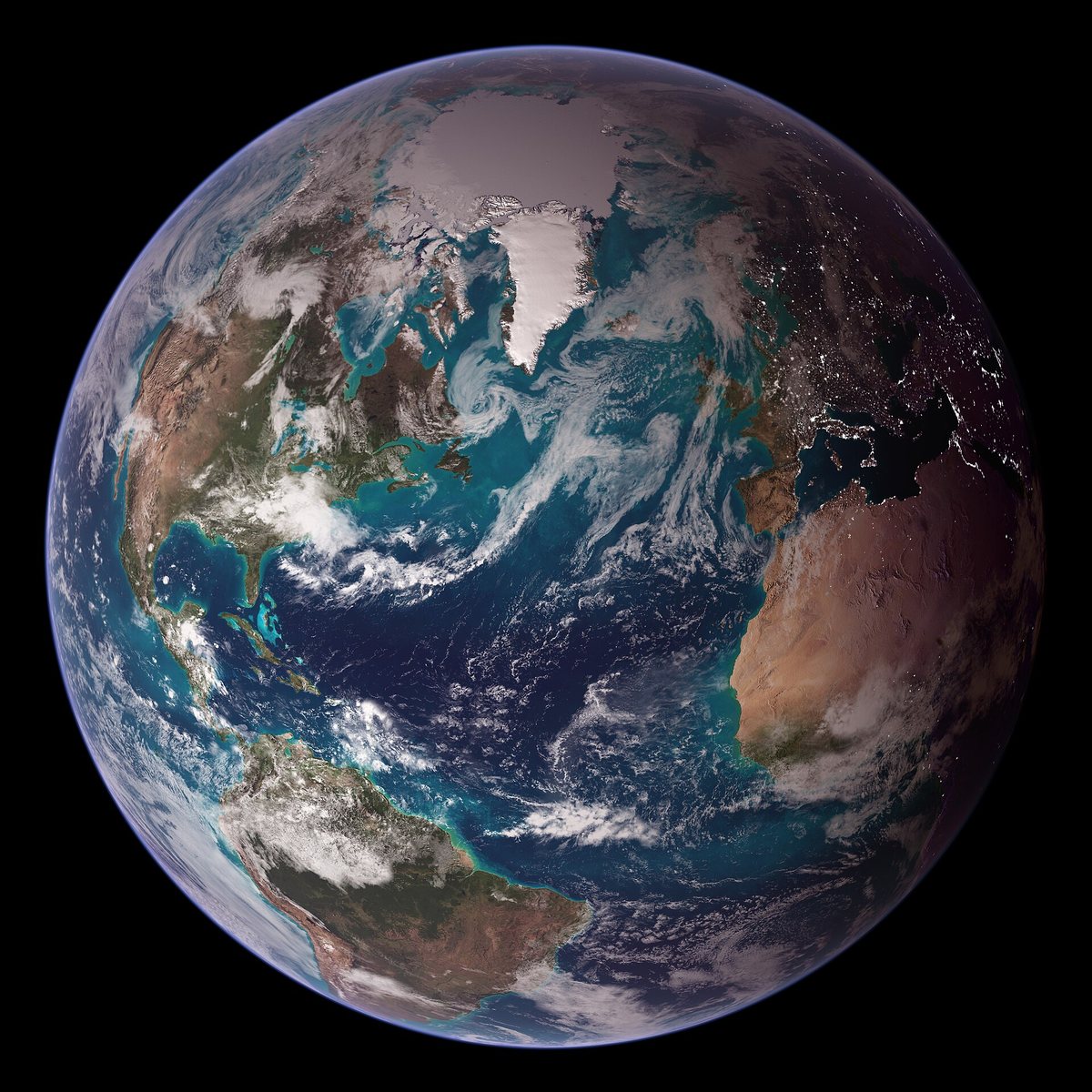
Just a "what if"
Earth keeps turning like a spinning top around an axis that runs between the North and South Poles. What would happen if this spin suddenly stopped? First of all, this is only a "what if" for our imagination; it will not really happen. A NASA scientist answering this question also said it can't happen, before imagining what would follow if it did.
Inertia: things keep moving
Standing on the ground, we are all moving east together with Earth. That speed is fastest at the equator, about 1000 miles per hour (about 1600 km/h), according to NASA. Things that are moving tend to keep moving; this is called "inertia." If only Earth suddenly stopped, anything not attached to the ground would keep going east, parallel to the surface. The speed would depend on where you are (your latitude), and there would be almost no movement at the North and South Poles. Gravity would still be there, so nothing would fly off into space.
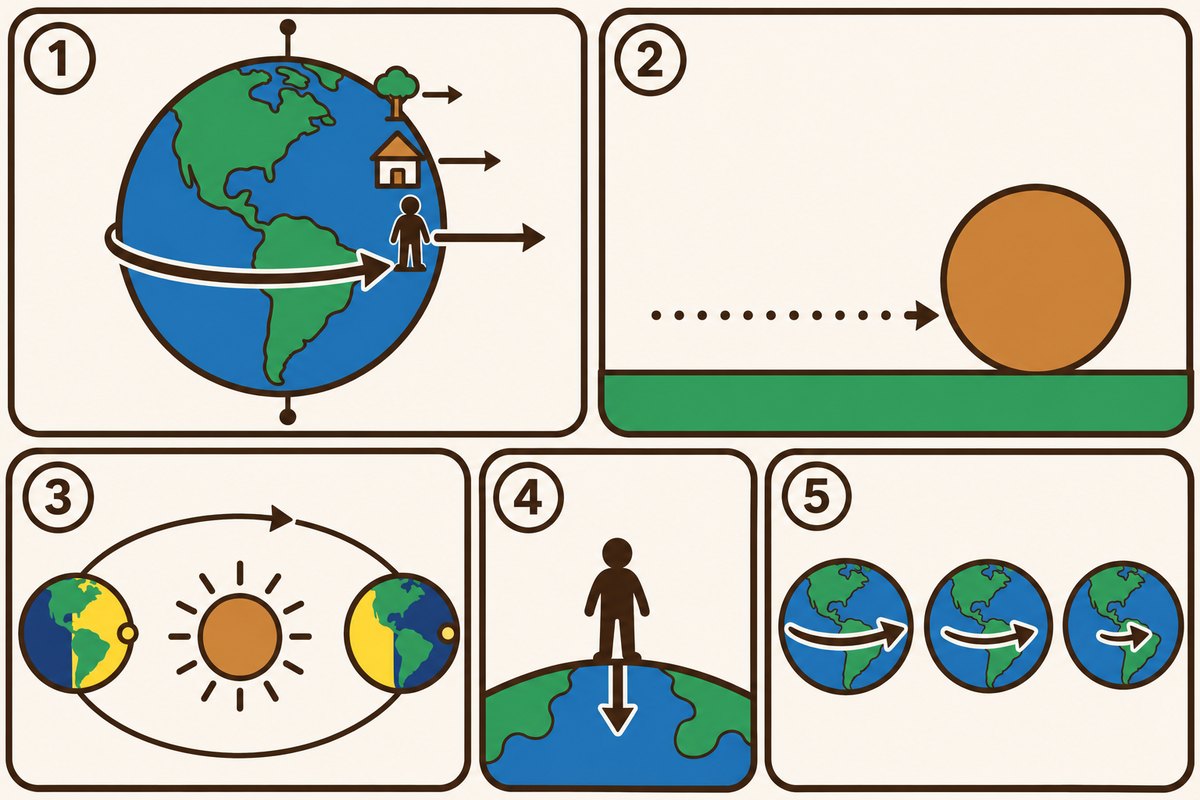
- 1Earth and everything on the ground move east together
- 2If it stopped suddenly, things would keep moving by inertia
- 3As Earth goes around the Sun, a long day and a long night take turns
- 4Gravity remains, so your feet stay on the ground
- 5If the spin slowed down gradually
Half a year of day, half a year of night
If the spin stopped, the way day and night take turns would change a lot, too. Even without spinning, Earth would still travel around the Sun, so any one place would have about half a year of daylight and about half a year of night. According to the Smithsonian National Air and Space Museum, wind patterns would change as well, with air tending to move from the equator toward the poles. The museum also says Earth's magnetic field (the magnet-like force around our planet) would weaken.
Based on NASA and the Smithsonian National Air and Space Museum.

A slow change is a different story
The same museum explains that if the spin slowed down gradually over billions of years, the sudden events of an instant stop would not happen. The big changes only appear in the impossible case of Earth stopping in a moment. Even though we never feel it, we live on a planet that is always on the move.
Want to know more?
- If the spin stopped, people everywhere except at the poles would feel slightly heavier, because the outward force from the spin (centrifugal force) would disappear.
- By NASA's calculation, even today a person with a mass of 70 kg feels about 0.54 pounds (about 245 grams) lighter at the equator than at the North or South Pole.
Quick quiz: test yourself
Remember what you just read? Give it a try!If Earth stopped spinning, how long would daylight last in one place?
Show the answer
- About 1 hour
- About 12 hours
- About half a year
About half a year Even without spinning, Earth would still travel around the Sun, so one place would have about half a year of daylight and about half a year of night.
Even without spinning, Earth would still travel around the Sun, so one place would have about half a year of daylight and about half a year of night.
Next quiz ›Sources
- NASA's Cosmicopia -- Ask Us -- Earth and MoonNASA ゴダード宇宙飛行センター
- If the Earth stopped rotating on its axis, what would happen?スミソニアン航空宇宙博物館(How Things Fly)
This article was written after checking the sources above as of 2026-10-03. Explanations may change as research progresses. Photo credits are shown below each photo.
Next fun fact ▶
 ScienceWhat if everyone on Earth jumped at once?What if everyone in the world jumped together on the count of three? What do you think would happen to Earth?
40 surprising animal facts with big photos and short, easy text. A fun-facts book for kids and grown-ups to read together.
See it on Amazon