Do bulls really get angry at the color red?

 The answer is no. Bulls cannot see red very clearly at all.
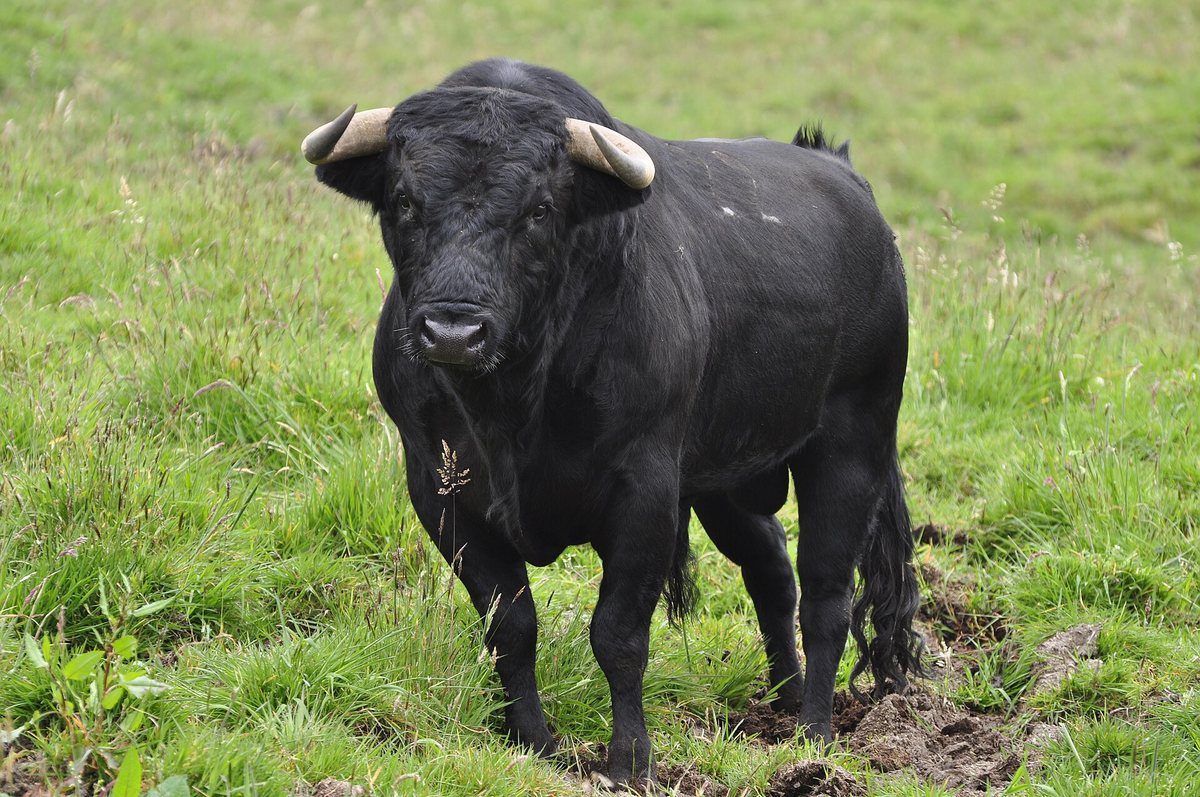
No, it is a myth. Bulls are not angered by the color red. They are thought to react to the movement of the cape as the bullfighter swings it. Cattle have trouble seeing red, and red things may look brown or gray to them. In tests, bulls went after moving things no matter what color they were.
A belief born from the red cape
In a bullfight, the bullfighter swings a small red cloth called a muleta, and the bull charges at it. Because of this famous scene, people all over the world came to believe that "bulls get angry when they see red." But in fact, bulls are thought not to see red clearly at all.
Cattle have trouble seeing red
People have 3 kinds of color-sensing cells (cones) in their eyes, but cattle have only 2. A 1998 study confirmed that cows, goats and sheep have 2 kinds of cones. According to Ohio State University, cattle can tell blue and green apart, but they lack the cells needed to see red, so red things may look brown or gray to them. Still, cattle are not completely color-blind.
Bulls charge at the cape's movement
What the bull charges at is thought to be the movement of the cloth, not its color. Before the muleta, bullfighters also use a large cape called a capote. It is magenta on one side and gold or blue on the other, yet bulls charge it just as fiercely.

Tests showed movement matters more than color
In 2007, the American TV show MythBusters compared color and movement with a real bull. When red, blue and white flags were set up without moving, the bull charged all 3 of them, no matter the color. Then a person in red stood still while 2 people not wearing red moved around. The bull chased the 2 moving people and left the person in red alone.
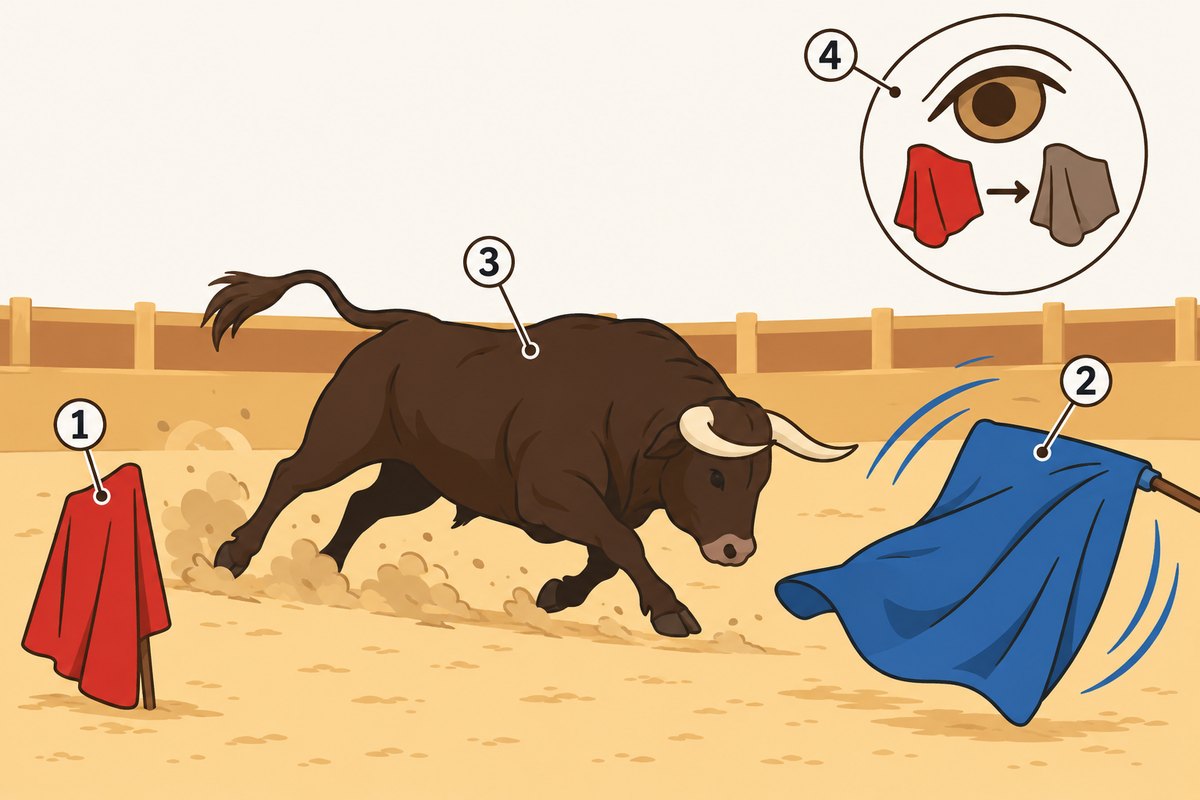
- 1A red cloth that stays still
- 2A blue cloth that moves a lot
- 3The bull charging toward the moving cloth
- 4A comparison suggesting red may look brown or gray to a bull
Want to know more?
- The muleta is red because it is used in the final part of a bullfight, and the color is said to hide stains of blood.
- Cattle can see about 300 degrees around them, but they cannot see directly behind their heads.
- Cattle are sensitive to sudden changes in light, and a sharp shadow, such as one from a post, can make them stop and refuse to move.
Quick quiz: test yourself
Remember what you just read? Give it a try!What really makes a bull charge in a bullfight?
Show the answer
- The cape's movement
- The cape's red color
- The color of the bullfighter's clothes
The cape's movement Cattle have trouble seeing red. Bulls are thought to react to the movement of the cape as the bullfighter swings it, not to its color.
Cattle have trouble seeing red. Bulls are thought to react to the movement of the cape as the bullfighter swings it, not to its color.
Next quiz ›Sources
- Beef Cattle Handling: Physiology and BehaviorOhio State University Extension(オハイオ州立大学)
- Photopigment basis for dichromatic color vision in cows, goats, and sheepVisual Neuroscience(査読論文、1998年。Cambridge University Press)
- Why Do Bulls Charge When they See Red?Live Science
This article was written after checking the sources above as of 2026-10-03. Explanations may change as research progresses. Photo credits are shown below each photo.
Next fun fact ▶
 AnimalsDo ostriches really bury their heads in the sand?When scared, an ostrich hides by burying its head in the sand... we hear it often, but is it really true?

40 surprising animal facts with big photos and short, easy text. A fun-facts book for kids and grown-ups to read together.
See it on Amazon