How many stomachs does a cow have?

 First, here is the answer in 30 seconds.
Cows are often said to have "four stomachs," but in fact they have one stomach divided into four compartments. The first and largest compartment is home to countless tiny microbes that break down the tough parts of grass that people cannot digest. Thanks to them, cows can keep their big bodies going on grass alone.

Not four stomachs, but four compartments
A cow's stomach is divided into four compartments: the rumen, the reticulum, the omasum and the abomasum. In Japan people often say cows have four stomachs, but U.S. university guides describe it as one stomach with four compartments. Even the rumen and the reticulum are only separated by a fold of tissue, not fully apart.
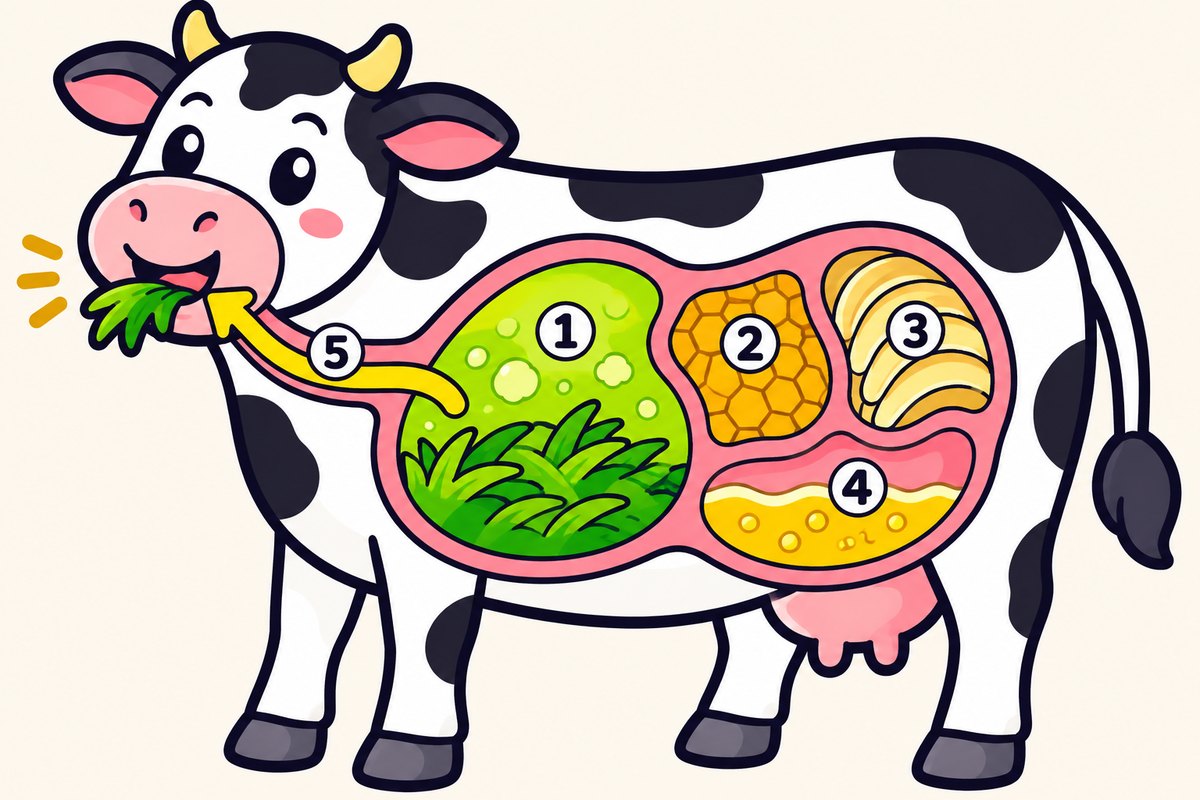
- 1Rumen: microbes break down grass
- 2Reticulum: honeycomb pattern inside
- 3Omasum: folds absorb water and other materials
- 4Abomasum: digests food with gastric juices
- 5Bringing grass back up to chew again (chewing the cud)
The rumen is a fermentation tank
The rumen is the largest. According to Mississippi State University, it can hold up to about 150 liters in an adult cow. Bacteria, other tiny organisms and fungi live inside and break down the tough walls of plant cells. The substances made in the process become the cow's main source of energy. So a cow eating grass is really teaming up with the microbes in its stomach.

Bringing food back up to chew
A cow brings swallowed grass back up into its mouth and chews it again. This is called chewing the cud, or ruminating. Cows spend about one third of their time doing it. The more they chew, the more saliva they make, up to about 47 liters a day in an adult cow.
Each compartment has a job
The reticulum has a honeycomb pattern on the inside. The omasum is full of folds that look like the pages of a book, and it absorbs water and other materials. The last compartment, the abomasum, digests food with gastric juices and works most like a human stomach.
Want to know more?
- Because its folds stack up like pages, the omasum has the nickname "butcher's bible" in English.
- Other animals with the same four-compartment stomach include sheep, goats and deer.
- One teaspoon of rumen contents is estimated to hold about 150 billion microorganisms.

Sources
- Understanding the Ruminant Animal Digestive SystemMississippi State University Extension
- Myth: Cattle have four stomachsWashington State University Department of Animal Sciences
- From Feed to Milk: Understanding Rumen FunctionPenn State Extension
This article was written after checking the sources above as of 2026-10-03. Explanations may change as research progresses. Photo credits are shown below each photo.
Next fun fact ▶
 AnimalsDo fish sleep? Why don't they close their eyes?When does the fish in a tank sleep? Its eyes always seem to be open.

40 surprising animal facts with big photos and short, easy text. A fun-facts book for kids and grown-ups to read together.
See it on Amazon