What color is hippo sweat?

 First, here is the answer in 30 seconds.
The liquid that comes out of a hippo's skin starts colorless and turns red or orange within a few minutes. That is why it has long been called "blood sweat," but it is neither blood nor the same kind of sweat people make. Research by Kyoto Pharmaceutical University and others found red and orange pigments that absorb ultraviolet light, and also help keep bacteria in check.
Called "blood sweat"
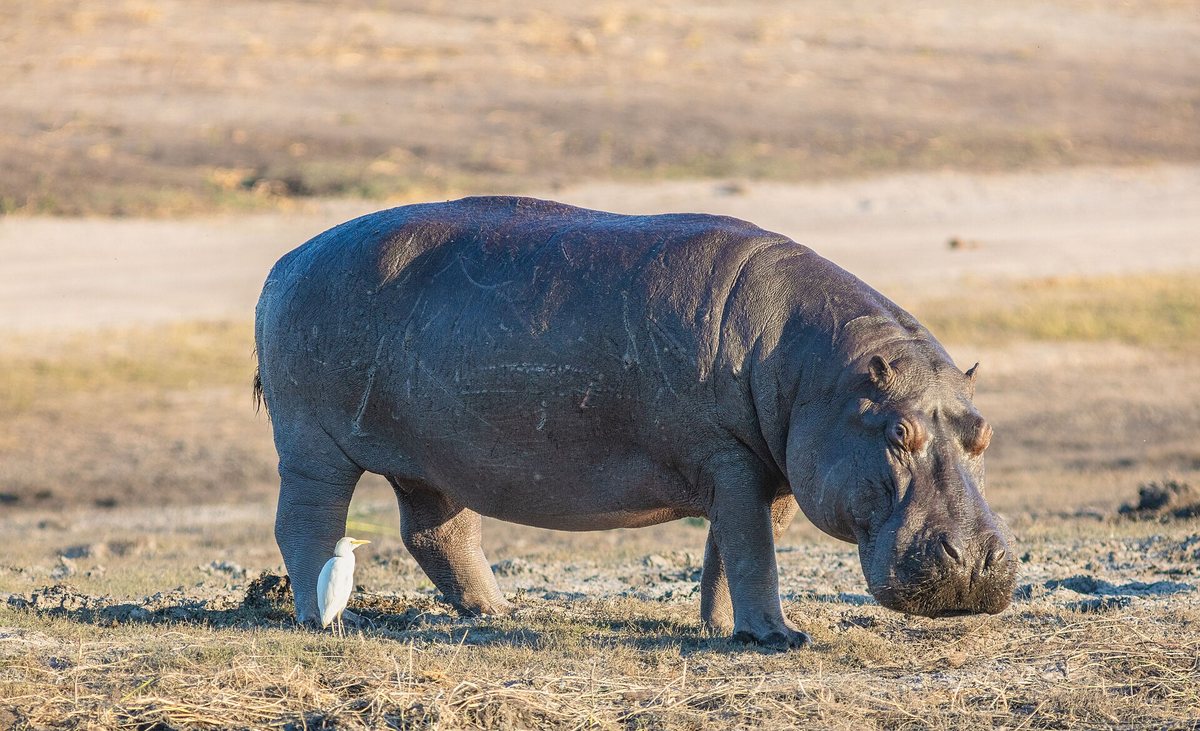
Sometimes a reddish liquid oozes from a hippo's skin. Because the animal looks as if it is covered in blood, people long ago believed that hippos sweat blood. But it is not blood. Hippos do not have the glands that make human-style sweat. Instead, the liquid comes from larger glands deep in the skin.
From colorless to red, then brown
When it first comes out, the liquid has no color. Within a few minutes it turns red or orange, and over time it becomes brownish. In 2004, a research team from Kyoto Pharmaceutical University and others collected this liquid from the skin of hippos at a zoo in Tokyo and found two pigments, one red and one orange.
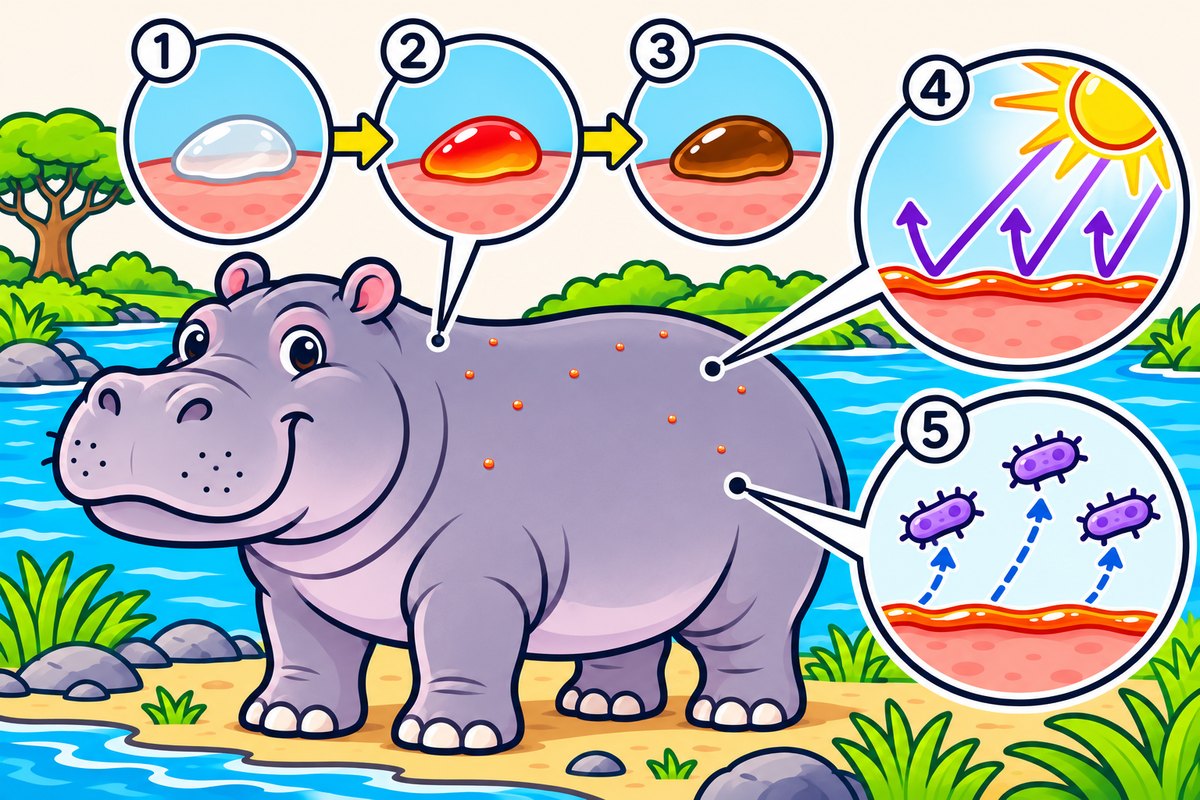
- 1No color when it first comes out
- 2Turns red or orange within minutes
- 3Becomes brownish over time
- 4Blocks ultraviolet light (a natural sunscreen)
- 5Helps keep bacteria from growing
A natural sunscreen
Both pigments absorb ultraviolet light well. For hippos living under the strong African sun, they are thought to act as a natural sunscreen. The red pigment was also found to slow the growth of bacteria that cause disease. Some researchers think this may be linked to the fact that wounds from fights between males rarely become infected.

Pigments that fade quickly
These pigments are so unstable that on their own they quickly fade. The research team thinks the sticky substance released along with them may help the color last longer. Hippos are said to release more of this liquid when they are out of the water.
Want to know more?
- The red pigment was named hipposudoric acid and the orange one norhipposudoric acid. The research was published in the science journal Nature in 2004.
- Researchers have talked about sunscreens inspired by hippo skin, but the instability of the pigments is said to be a big challenge.

Sources
- Hippos beat the burnNature News
- Red Sweat: Hippo skin oozes antibiotic sunscreenScience News
This article was written after checking the sources above as of 2026-10-03. Explanations may change as research progresses. Photo credits are shown below each photo.
Next fun fact ▶
 AnimalsWhy do koalas sleep so much?Have you noticed that the koalas at the zoo always seem to be asleep? There is a good reason for that.

40 surprising animal facts with big photos and short, easy text. A fun-facts book for kids and grown-ups to read together.
See it on Amazon