Why do dolphins sleep with only half their brain?

 Let me give you the answer in about 30 seconds first.
Dolphins sleep one half of the brain at a time, taking turns, in what is called "unihemispheric sleep." The awake half is thought to handle swimming and rising to the surface to breathe, and to stay aware of the surroundings and the rest of the group. It is also believed to help them keep moving in cold water to stay warm.
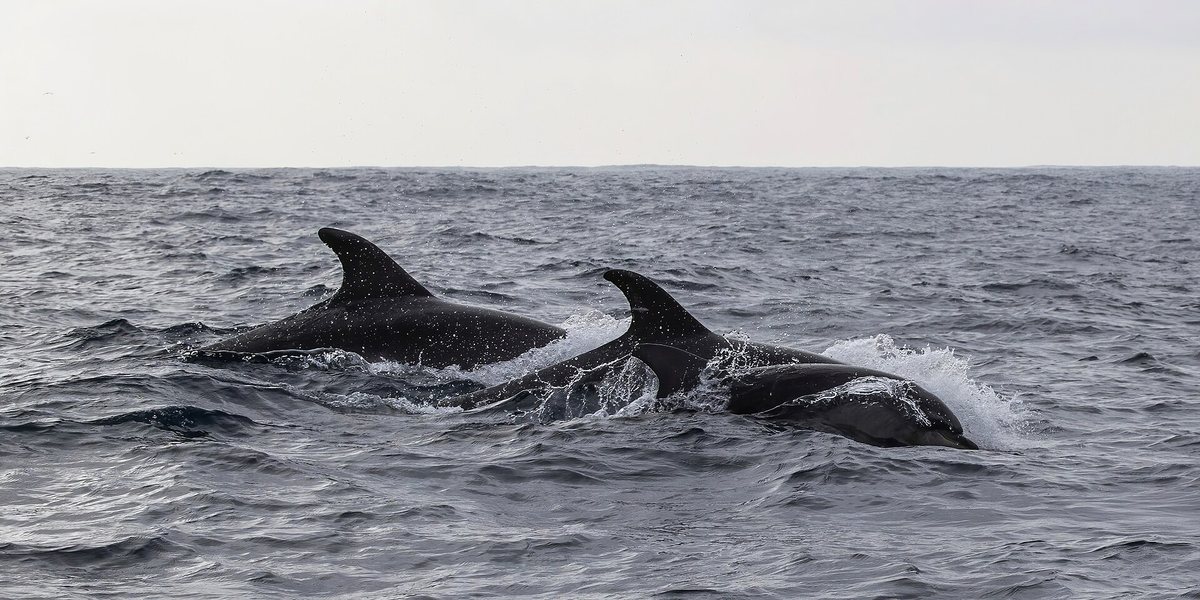
Sleeping with one eye open
In 1964, an American researcher noticed that resting dolphins kept only one eye closed. Later, Russian researchers studied the brain's electrical signals (brain waves) and confirmed that while one half of the brain was asleep, the other half was awake. This is called "unihemispheric sleep." The half of the brain opposite the closed eye is asleep, and the half opposite the open eye is awake.
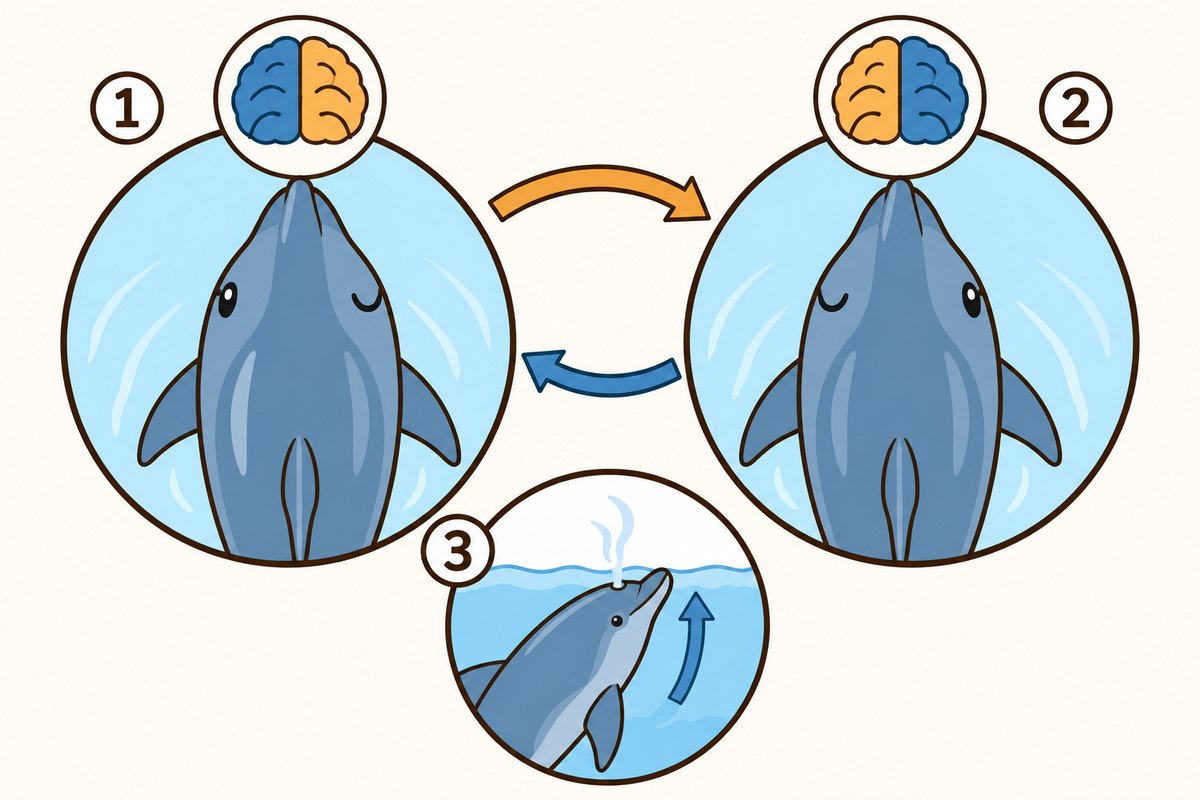
- 1The brain half on the left of the picture sleeps, and the eye on the opposite (right) side closes
- 2The sides switch: the right brain half sleeps and the left eye closes
- 3The awake half of the brain keeps swimming and surfaces to breathe
Breathing while asleep
Dolphins live in the sea, but they are not fish. They are mammals that breathe air with lungs. During unihemispheric sleep, the awake half of the brain is thought to take charge of swimming and rising to the surface to breathe. That way, they can keep breathing even while they sleep.
Keeping watch and staying with the group
Dolphins are also thought to use the open eye to watch out for danger and to swim alongside others in their group. In dolphins swimming in groups, the open eye was seen facing their companions, and when a companion moved to the other side, the open eye switched too. However, even in Amazon river dolphins, which have poor eyesight, 72% of their sleep was unihemispheric, so keeping watch is not thought to be the only reason.

Staying warm
Another idea is that it helps them stay warm. Water easily takes heat away from the body, so dolphins are thought to keep moving their flippers and tails while sleeping so they do not get cold. In a study of 1 bottlenose dolphin over 2 days, it slept for 50% of the recorded time, and 79% of its sleep was one-sided. Sometimes both halves of the brain fell into a light sleep at the same time, but it very rarely closed both eyes.
Want to know more?
- In dolphins, no clear signs have been found of "REM sleep," the stage of sleep in which most dreaming is thought to happen.
- During unihemispheric sleep, the temperature of the sleeping half of the brain was observed to drop, while the awake half stayed the same.
- Sleeping with half the brain at a time is not only seen in dolphins. It is also seen in fur seals in the water and in birds such as ducks.

Quick quiz: test yourself
Remember what you just read? Give it a try!What happens to a dolphin's brain when it sleeps?
Show the answer
- Both halves sleep deeply
- It doesn't sleep at all
- Each half sleeps in turn
Each half sleeps in turn Each half of a dolphin's brain takes turns sleeping. The awake half is thought to let it keep swimming and come up to breathe.
Each half of a dolphin's brain takes turns sleeping. The awake half is thought to let it keep swimming and come up to breathe.
Next quiz ›Sources
- Meet the Animals That Literally Sleep with One Eye OpenScientific American(パドヴァ大学の神経生理学者による解説)
- Relationship between sleep and eye state in Cetaceans and PinnipedsArchives Italiennes de Biologie(PubMed Central 収蔵)
This article was written after checking the sources above as of 2026-10-03. Explanations may change as research progresses. Photo credits are shown below each photo.
Next fun fact ▶
 Human BodyWhy do we dream?Happy dreams, strange dreams... Why do we dream while we sleep?

40 surprising animal facts with big photos and short, easy text. A fun-facts book for kids and grown-ups to read together.
See it on Amazon