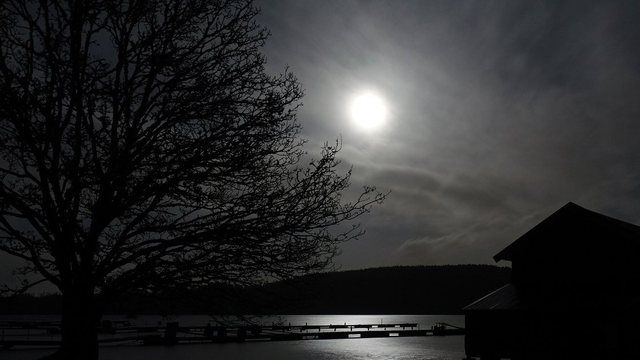
Why is space so dark?

 The key is something all around us: air.
Space looks dark because there is almost no air to scatter sunlight in every direction. Earth's daytime sky is bright and blue because air scatters sunlight. Also, the universe is thought to have begun about 13.8 billion years ago, so light from very distant stars has not reached us yet, and the night sky stays dark.
Air makes the sky bright
Earth's daytime sky is bright because sunlight hits the air and gets scattered in all directions. The tiny molecules in air (the very small particles things are made of) scatter blue light the most, so the sky looks blue. Because scattered light reaches our eyes from every direction, even parts of the sky away from the Sun look bright.
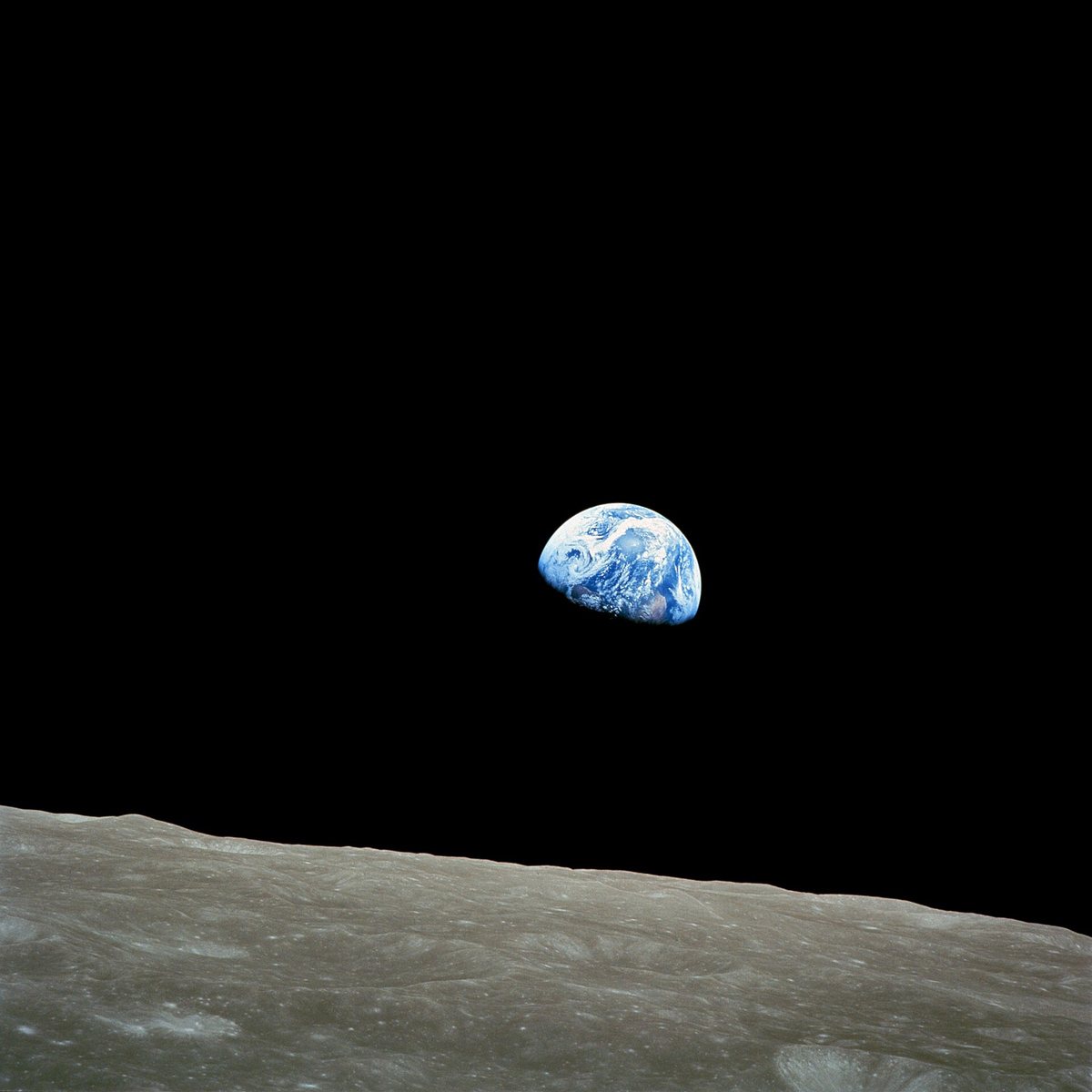
Without air, the sky is black
In space, though, there is almost no air to scatter light toward our eyes. So apart from the Sun and the stars themselves shining, everything looks pitch black. NASA explains that on the Moon, which has no air, the sky is black during both the day and the night.
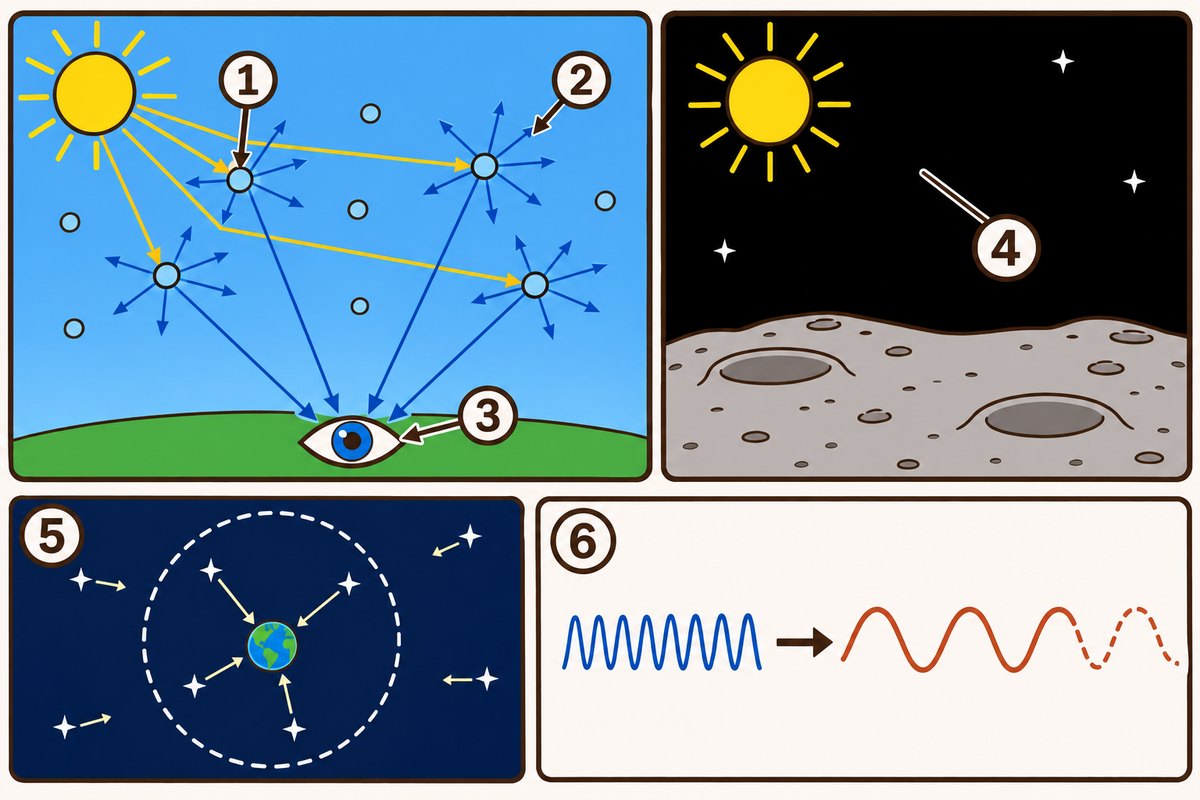
- 1Air molecules that scatter sunlight
- 2Blue light, which scatters especially well
- 3Scattered light reaches the eye from every direction
- 4On the airless Moon, the sky is black even by day
- 5The region whose light has already reached Earth, and the region whose light has not
- 6As the universe expands, light is stretched until we cannot see it

So many stars, so why dark?
Then why is the night sky dark? If the universe went on forever, had stars everywhere, and had always existed without changing, every line of sight would end at a star, and the whole night sky would shine. This puzzle is called Olbers' paradox (a problem that seems not to add up). It is named after Heinrich Olbers, a German doctor and amateur astronomer who made it widely known in the 19th century.
The answer: the universe has an age
The leading answer today is that the universe is not infinitely old. It is thought to have begun with the Big Bang about 13.8 billion years ago. Light also takes time to travel, so we can only see stars whose light has had time to reach us. On top of that, the universe keeps expanding, and light from very distant stars gets stretched into kinds of light our eyes cannot see, such as infrared.
Based on NASA's StarChild and BBC Science Focus.
Want to know more?
- People have wondered why the night sky is dark since ancient Greece. The writer Edgar Allan Poe also suggested the sky is dark because the universe is not infinitely old.
- Mars has a thin atmosphere of mostly carbon dioxide filled with fine dust, so its daytime sky looks orange or reddish, and near sunset the sky around the Sun turns blue-gray.
- The way light from stars moving away shifts toward red is often compared to how an ambulance siren sounds lower as it drives away.
Quick quiz: test yourself
Remember what you just read? Give it a try!What scatters sunlight to make Earth's daytime sky bright?
Show the answer
- Water in clouds
- Air
- Dust from space
Air Tiny molecules in the air scatter sunlight in all directions, so the sky looks bright. In space there is almost no air, so it looks black.
Tiny molecules in the air scatter sunlight in all directions, so the sky looks bright. In space there is almost no air, so it looks black.
Next quiz ›Sources
- StarChild Question of the Month for December 2002 (Why is space dark?)NASA Goddard Space Flight Center(StarChild)
- Why is the sky dark at night?BBC Science Focus Magazine(天体物理学者 Becky Smethurst 博士の解説)
- Why Is the Sky Blue?NASA Space Place
This article was written after checking the sources above as of 2026-10-03. Explanations may change as research progresses. Photo credits are shown below each photo.
Next fun fact ▶
 SpaceIs it true there's no sound in space?In movies, explosions in space go off with a huge boom. But can you really hear them in space?

40 surprising animal facts with big photos and short, easy text. A fun-facts book for kids and grown-ups to read together.
See it on Amazon