Why does honey hardly ever spoil?

 I have summed up its secret to lasting so long in 30 seconds.
Honey rarely spoils because several things work together: it has very little water and a lot of sugar, it is strongly acidic, and an enzyme added by honeybees produces hydrogen peroxide. Because of this, bacteria and mold can hardly grow in it. However, if you leave the lid open and it absorbs moisture, it can go bad.
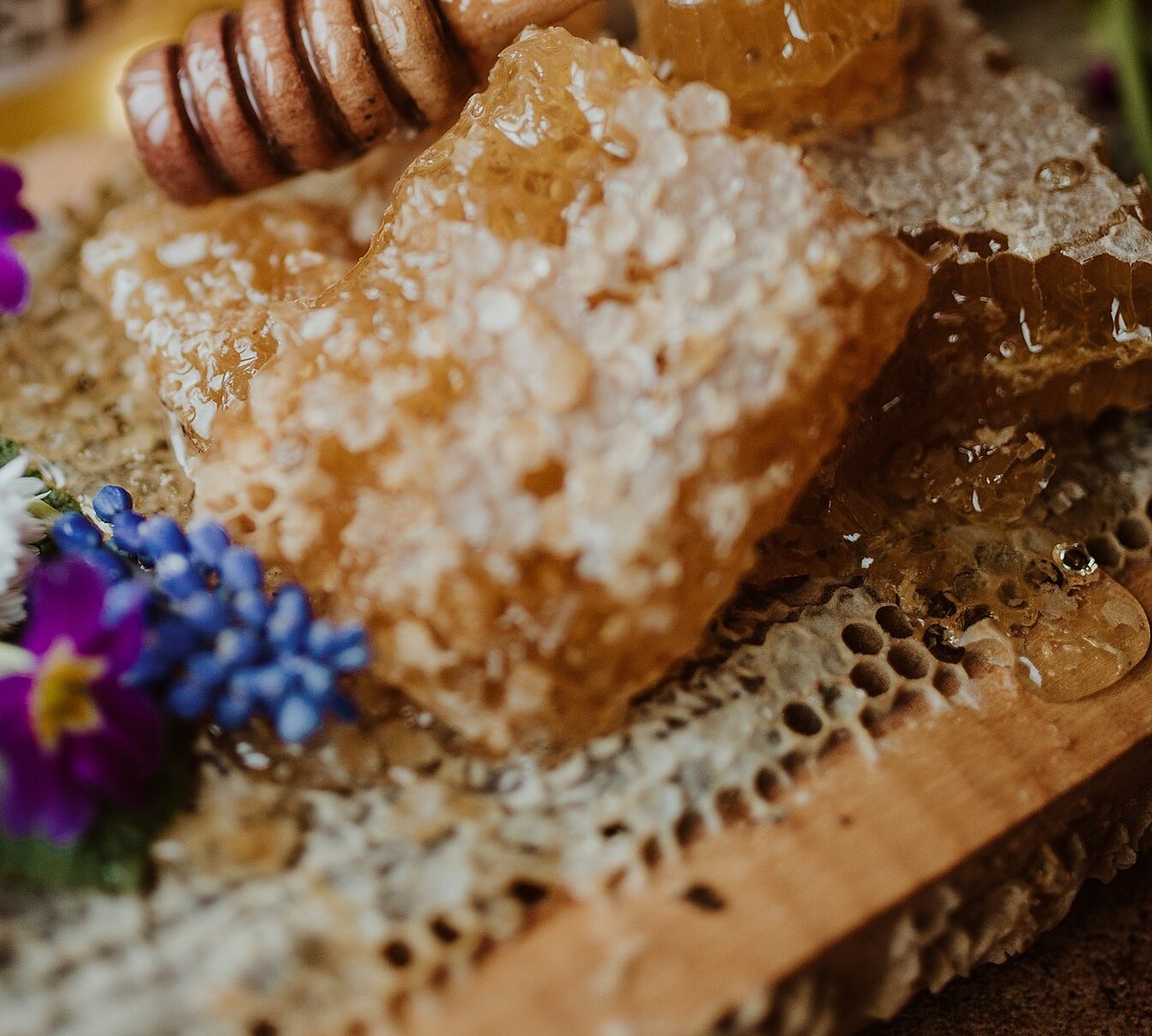
Little water, lots of sugar
Flower nectar is a runny liquid that is 60–80% water. Honeybees carry it to the hive and fan it with their wings to dry out the water, turning it into a very thick sugar liquid. In a liquid with that much sugar, water is pulled out of the bodies of bacteria, so most microbes cannot grow.
Strongly acidic
Honey is an acidic food with a pH of about 3–4.5. Many bacteria have a hard time growing in such a sour environment.
A disinfectant made by a bee enzyme
Honeybees add an enzyme called glucose oxidase to the nectar. This enzyme turns part of the sugar into gluconic acid and hydrogen peroxide. Hydrogen peroxide is a substance that kills microbes, and it is also used as a disinfectant. Researchers explain that this enzyme keeps the nectar from spoiling until the sugar becomes thick enough.

It can still spoil
There are even stories of honey thousands of years old being found unspoiled in Egyptian ruins. However, honey easily absorbs moisture from the air. Experts warn that if you leave the lid open and the water content rises, it can spoil. When you store honey, it is important to close the lid tightly.
Want to know more?
- Never give honey to babies under 1 year old. It can cause infant botulism, and the bacteria behind it are not killed by normal cooking.
- Molasses, another sugary syrup, has a pH of about 5.5, so it is less acidic than honey, and even though it keeps a long time, it eventually spoils. Honey lasts so long because of several reasons working together.

Quick quiz: test yourself
Why does honey rarely spoil?
Show the answer
- It has little water and lots of sugar
- It contains preservatives
- It is made in cold places
It has little water and lots of sugar Very little water and lots of sugar, strong acidity, and hydrogen peroxide made by an enzyme all work together, so bacteria and mold can hardly grow.
Very little water and lots of sugar, strong acidity, and hydrogen peroxide made by an enzyme all work together, so bacteria and mold can hardly grow.
Next quiz ›Sources
- The Science Behind Honey's Eternal Shelf LifeSmithsonian Magazine(カリフォルニア大学デービス校 ハニー・アンド・ポリネーションセンターへの取材)
- The role of honey in the ecology of the hive (Frontiers in Nutrition, 2022)Frontiers in Nutrition(シドニー大学ほか)
- ハチミツを与えるのは1歳を過ぎてから。厚生労働省 (in Japanese)
This article was written after checking the sources above as of 2026-10-03. Explanations may change as research progresses. Photo credits are shown below each photo.