How does rain form?

 In fact, it started as a droplet so tiny it could float in the air.
Rain forms when tiny water droplets in a cloud collide and merge, growing big and heavy enough to fall. Cloud droplets are too small to fall on their own, but millions of them together make 1 raindrop. Rain can also start as ice crystals in a cloud that grow and then melt as they fall.
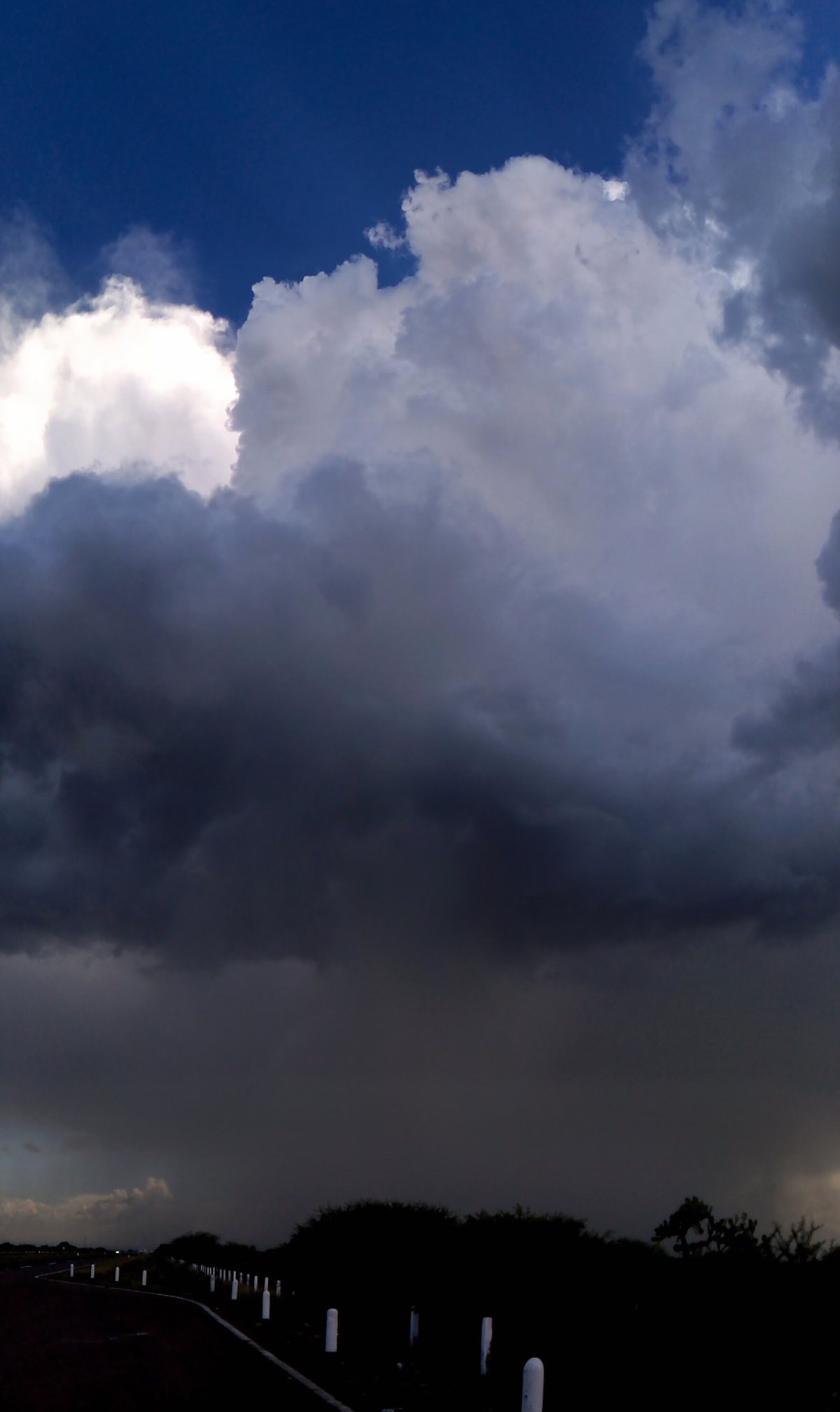
Cloud droplets are too small to fall
Clouds are made of water vapor and very tiny drops of water called cloud droplets. According to the US Geological Survey (USGS), cloud droplets are too small to fall as rain. They fall so slowly that the upward winds holding up the cloud, called updrafts, keep them up. You can read more about why clouds seem to float in our article "Why don't clouds fall out of the sky?"
Droplets form around specks of dust
Rain begins with the birth of cloud droplets. When air rises and cools, water vapor in the air turns into liquid water. The water gathers on even tinier specks of dust, salt or smoke, which act as a core, and becomes cloud droplets. According to the US National Oceanic and Atmospheric Administration (NOAA), these specks come in many sizes, so the cloud droplets end up being different sizes too.
Bumping and merging into bigger drops
Larger droplets fall faster than smaller ones. As they fall, they bump into smaller droplets and often stick together into one bigger drop. This is called collision and coalescence. When a drop grows big enough that it falls faster than the updraft, it drops out of the cloud as rain. The USGS explains that it takes millions of cloud droplets to make just 1 raindrop.
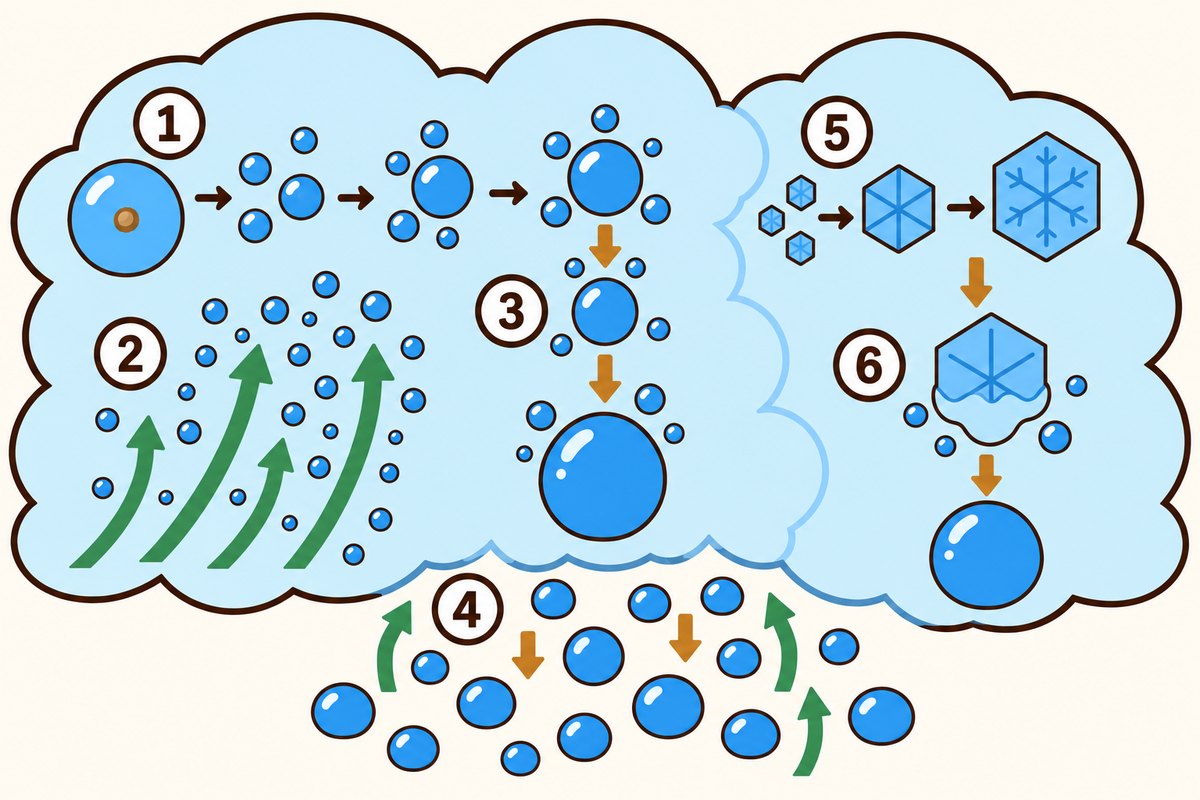
- 1Cloud droplets forming around specks of dust
- 2The rising air (updraft) that holds small droplets up
- 3Droplets colliding, merging and growing bigger
- 4Raindrops falling from the cloud
- 5Ice crystals growing in the upper part of the cloud
- 6Ice melting on the way down and turning into rain

Rain can also start as ice
There is another, more efficient way to make drops big enough for rain. Ice crystals in a cloud take in the water vapor around them and grow quickly. These grown ice crystals may fall as snow, or melt on the way down and fall as rain.
Want to know more?
- Small raindrops (with a radius of less than 1 millimeter) are round. As they grow, air pushes on their bottoms and flattens them, and at about 2 to 3 millimeters across they look a bit like a hamburger bun.
- In a USGS table, raindrops in heavy rain are about 2 millimeters across and fall at about 6.7 meters per second.
- NOAA describes an experiment that floats 2 ping pong balls in the air from a hair dryer, so they bump into each other like cloud droplets.
Quick quiz: test yourself
Remember what you just read? Give it a try!What is the main way tiny cloud droplets turn into raindrops?
Show the answer
- Droplets bump into each other and merge
- Lightning heats them so they swell
- Wind squashes them together
Droplets bump into each other and merge Larger droplets fall and merge with smaller ones, and millions of droplets together make 1 raindrop.
Larger droplets fall and merge with smaller ones, and millions of droplets together make 1 raindrop.
Next quiz ›Sources
- Precipitation and the Water CycleUSGS(アメリカ地質調査所)
- Learning Lesson: Atmospheric CollisionsNOAA(アメリカ海洋大気庁)
This article was written after checking the sources above as of 2026-10-03. Explanations may change as research progresses. Photo credits are shown below each photo.
Next fun fact ▶
 NatureWhy is seawater salty?Have you ever been surprised by how salty the water tasted when you swam in the sea?

40 surprising animal facts with big photos and short, easy text. A fun-facts book for kids and grown-ups to read together.
See it on Amazon