How old is the Earth, and how do we know?

 The clue was, believe it or not, stones that fell from the sky.
Earth is thought to be about 4.6 billion years old (the US Geological Survey calculates 4.54 billion years). Earth's oldest rocks have been remade and are gone, so scientists dated meteorites and Moon rocks that formed at about the same time, using radiometric dating, which measures how fast uranium turns into lead.
The answer: about 4.6 billion years
Earth is thought to be about 4.6 billion years old. A science talk organized by the Science Council of Japan and Japan's education ministry also explained that Earth and the other planets of the Solar System formed about 4.6 billion years ago. The US Geological Survey (USGS) gives a more precise figure: 4.54 billion years, with an uncertainty of less than 1 percent.
Earth's own rocks can't tell us
Surprisingly, we cannot read Earth's age directly from Earth's own rocks. The planet's surface is constantly being remade by moving plates, the huge slabs of rock that cover Earth, so no rocks from its very beginning have been found. The oldest rocks found so far are in Canada and are about 4.03 billion years old, and tiny crystals about 4.3 billion years old have been found in Western Australia. This tells us Earth is at least 4.3 billion years old.
An hourglass inside rocks
The tool for measuring age is called radiometric dating. Elements in rocks and minerals, such as uranium, slowly turn into a different element, lead, at a steady pace over a very long time. Like sand falling in an hourglass, measuring how much has changed lets scientists calculate how long ago the rock formed.

Clues from meteorites and the Moon
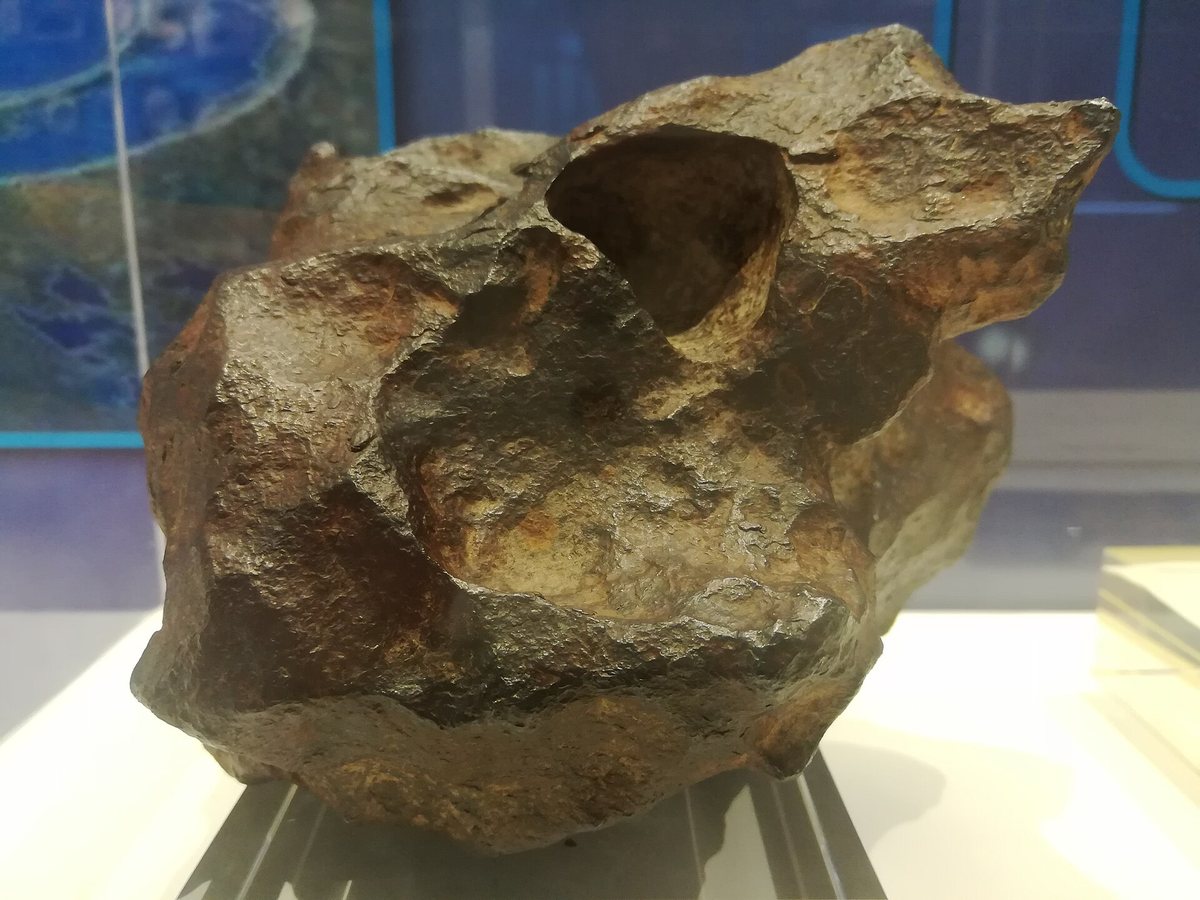
So scientists turned to meteorites, rocks that fall to Earth from space. Meteorites are pieces of asteroids and are thought to have formed at about the same time as Earth. More than 70 meteorites have been dated, and they formed between 4.53 and 4.58 billion years ago. The oldest Moon rocks brought back by space missions are 4.4 to 4.5 billion years old. Earth's age is calculated by comparing the lead in Earth with the lead in meteorites.
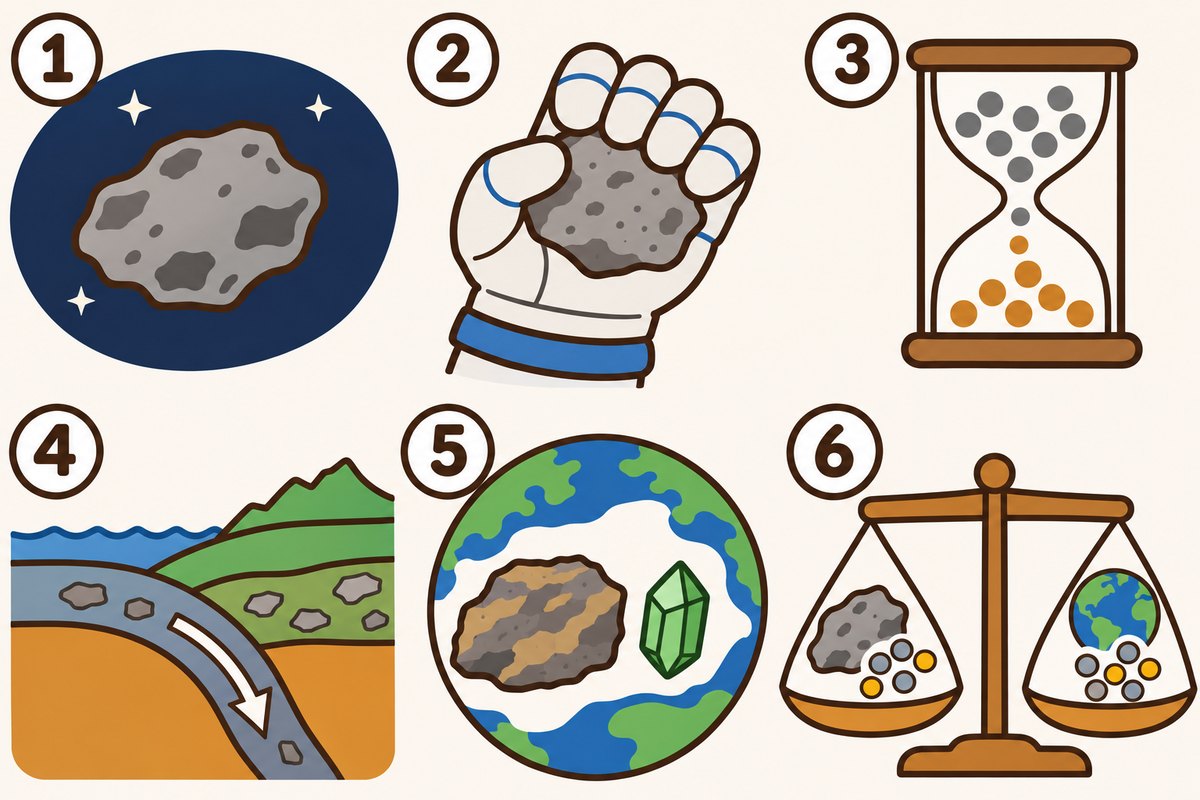
- 1Meteorites that formed around the same time as Earth
- 2Moon rocks brought back by astronauts
- 3Age is measured by how fast uranium slowly turns into lead
- 4Plate movement remakes old rocks
- 5Old rocks and small crystals that remain on Earth
- 6Comparing the lead in meteorites and on Earth
Want to know more?
- The calculation of Earth's age uses lead from an iron meteorite called the Canyon Diablo meteorite.
- An explainer from Caltech in the US gives a range, saying Earth is thought to be between 4.5 and 4.8 billion years old.
- According to the USGS, the Milky Way galaxy is calculated to be 11 to 13 billion years old, which fits well with Earth's age.
Quick quiz: test yourself
Remember what you just read? Give it a try!What gave scientists a big clue to Earth's age?
Show the answer
- Dinosaur fossils
- Meteorites that fell from space
- The amount of seawater
Meteorites that fell from space Earth's oldest rocks are gone, so scientists dated meteorites that formed at about the same time as Earth, using radiometric dating.
Earth's oldest rocks are gone, so scientists dated meteorites that formed at about the same time as Earth, using radiometric dating.
Next quiz ›Sources
- Age of the EarthUSGS(アメリカ地質調査所)
- How old is Earth?Cool Cosmos(カリフォルニア工科大学 IPAC)
- サイエンスカフェ「星くずから地球へ」開催案内日本学術会議・文部科学省 (in Japanese)
This article was written after checking the sources above as of 2026-10-03. Explanations may change as research progresses. Photo credits are shown below each photo.
Next fun fact ▶
 SpaceWhy Doesn't the Moon Fall to Earth?The Moon stays so close to Earth—so why doesn't it fall down?

40 surprising animal facts with big photos and short, easy text. A fun-facts book for kids and grown-ups to read together.
See it on Amazon