Does cracking your knuckles make them bigger?

 Researchers have actually compared the hands of people who crack their knuckles and people who don't.
Research suggests that's a myth. Studies comparing people who habitually crack their knuckles with people who don't found no difference in how common hand osteoarthritis is, the kind of arthritis that can thicken and change the shape of joints. The "pop" is thought to happen when a gap forms in the fluid inside the joint.
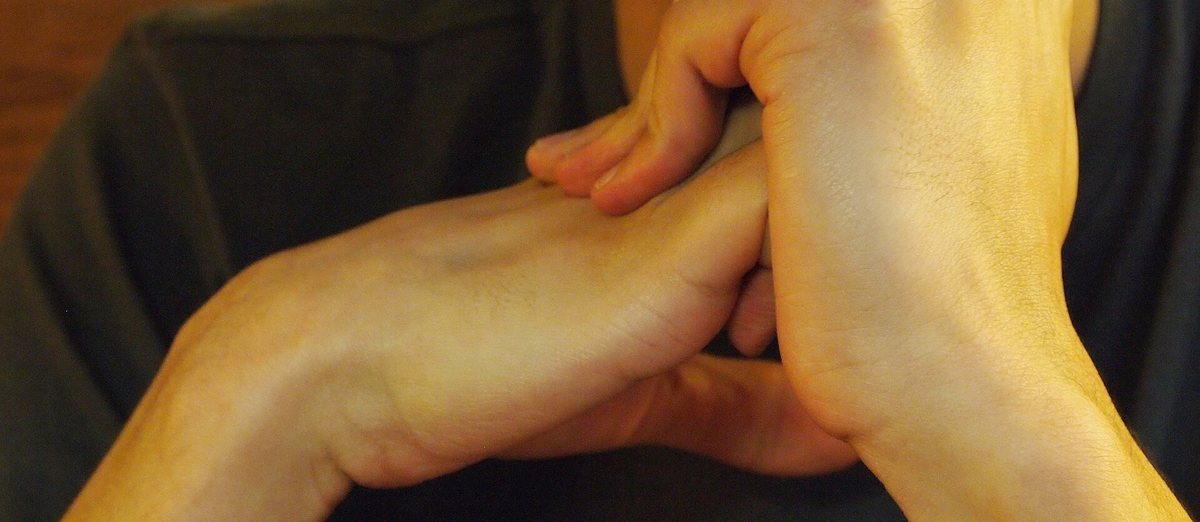
A widely known saying
The idea that cracking your knuckles makes them bigger, or gives you arthritis, is widely known. A 2011 paper in the journal of the American Board of Family Medicine also describes it as a common urban legend. Knuckle cracking is not unusual: depending on the group studied, 25 to 54% of people do it.
The pop is the sound of a gap forming
Scientists have long studied what makes the popping sound. The first scientific study came out in 1947, and in 1971 researchers suggested it was the sound of a bubble bursting inside the joint. In 2015, a research team filmed finger joints being pulled using MRI (a machine that takes pictures inside the body), almost like a video. They reported that the sound happens not when a bubble bursts, but at the moment a gap (a cavity) forms in the fluid inside the joint.
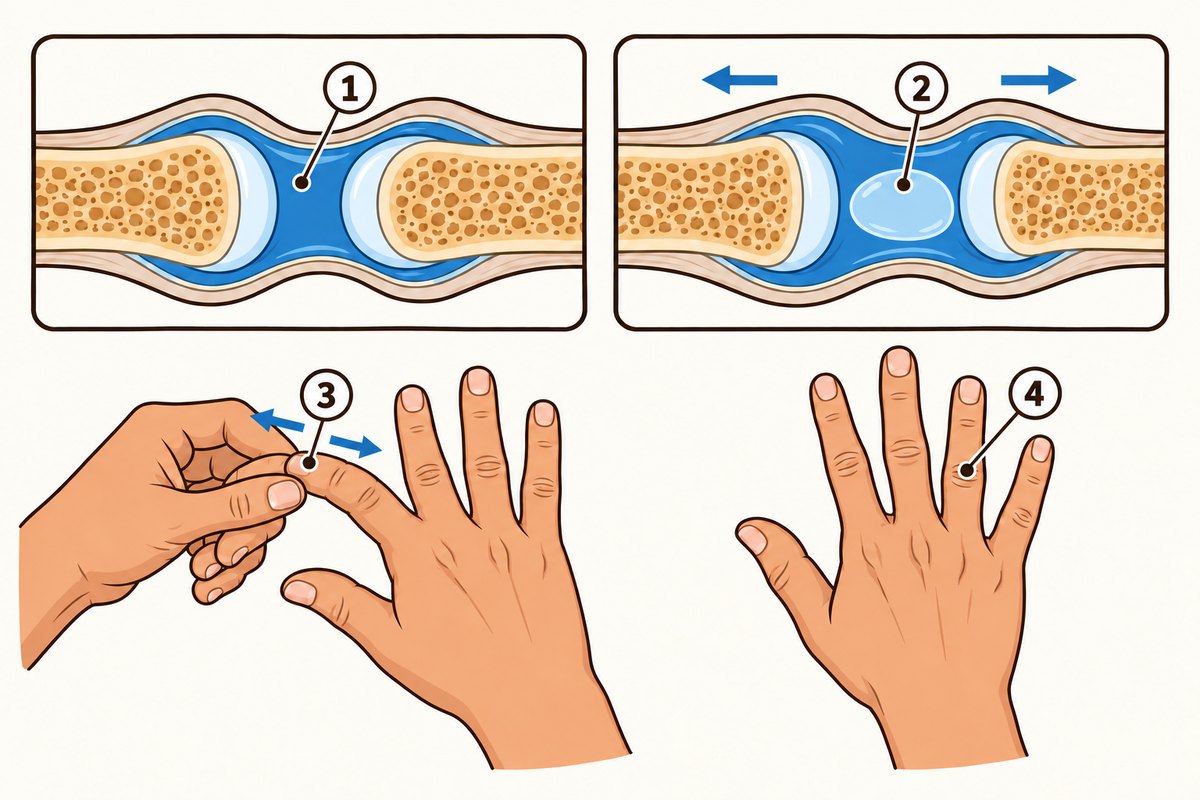
- 1The fluid-filled gap in the joint before pulling
- 2The cavity that forms in the fluid when the joint is pulled
- 3Pulling a finger to crack it
- 4A hand with joints that have not grown thicker, for comparison

Comparisons found no extra arthritis
So do the joints get bigger? A 1990 study looked at 300 people aged 45 or older and compared 74 habitual knuckle crackers with 226 people who did not crack. Hand arthritis was not more common in either group. A 2011 study of 215 people aged 50 to 89 also found that the share of people with arthritis was about the same: 18.1% among crackers and 21.5% among non-crackers.
From a 2011 study of 215 people aged 50 to 89.
Some things are still unclear
However, the 1990 study also reported that crackers more often had hand swelling and weaker grip strength. In that study, knuckle cracking was also linked to manual work, nail biting, smoking and drinking alcohol. No link has been found with the kind of arthritis that thickens and reshapes joints, but other possible effects are still not clearly understood.
Want to know more?
- Once a joint has cracked, it usually cannot be cracked again for at least 15 minutes.
- The 2015 study took 3.2 MRI images per second to capture the moment a finger joint cracks.
- Surveys found that 34% of 11-year-old children and 25% of adults aged 45 or older crack their knuckles.
Quick quiz: test yourself
Remember what you just read? Give it a try!How does arthritis compare in knuckle crackers and non-crackers?
Show the answer
- Far more in crackers
- About the same
- Far more in non-crackers
About the same In a 2011 study, 18.1% of crackers and 21.5% of non-crackers had arthritis, about the same.
In a 2011 study, 18.1% of crackers and 21.5% of non-crackers had arthritis, about the same.
Next quiz ›Sources
- Knuckle Cracking and Hand OsteoarthritisThe Journal of the American Board of Family Medicine(査読論文、2011年)
- Effect of habitual knuckle cracking on hand functionAnnals of the Rheumatic Diseases(PMC 掲載の査読論文、1990年)
- Real-Time Visualization of Joint CavitationPLOS ONE(査読論文、2015年)
This article was written after checking the sources above as of 2026-10-03. Explanations may change as research progresses. Photo credits are shown below each photo.
Next fun fact ▶
 Human BodyDoes shaving make hair grow back thicker?Have you heard that shaving makes hair come back thicker?

40 surprising animal facts with big photos and short, easy text. A fun-facts book for kids and grown-ups to read together.
See it on Amazon