Do octopus arms really think for themselves?

 They say about two-thirds of its nerve cells are in its arms and body, not in its head.
Partly, yes. About two-thirds of an octopus's nerve cells are in its arms and body, and an arm can taste what its suckers touch and even make a reaching movement when cut off from the brain. But learning happens in the brain, and the brain and arms share information, so the arms are not acting completely on their own.
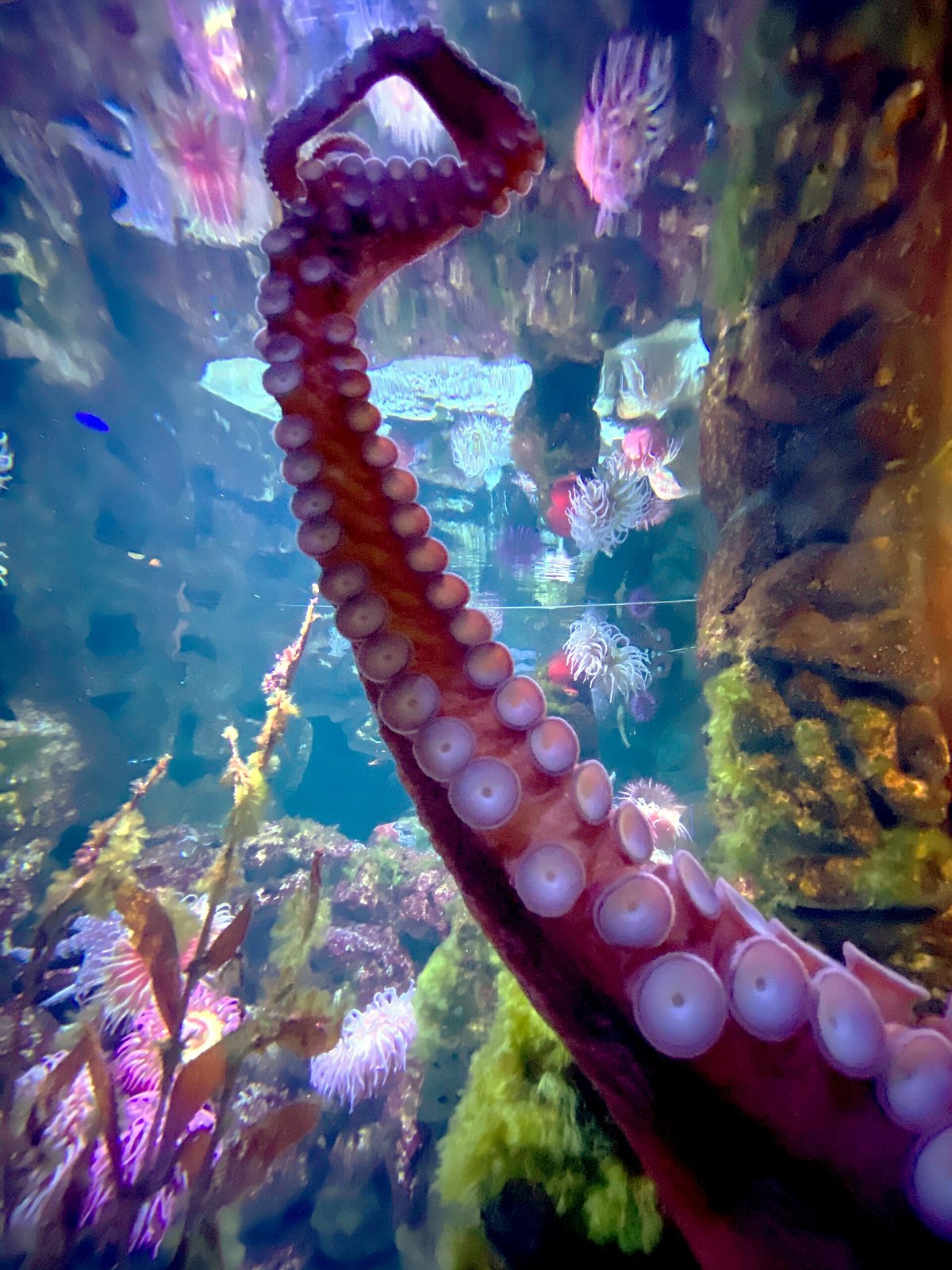
Two-thirds of the nerve cells are in the arms and body
An octopus has more than 500 million nerve cells (cells that carry information around the body), and about two-thirds of them are in its arms and body rather than in the brain in its head. In dogs and other animals with backbones, most nerve cells are gathered in the brain, so the octopus is built in a very unusual way. Each of its 8 arms is lined with more than 200 suckers.
Suckers that taste by touch
In 2020, a research team at Harvard University reported that the surface of an octopus's suckers has sensors that pick up the "taste" of whatever they touch. The sensors react to substances that do not dissolve well in water, and they are thought to help an arm quickly tell whether it is touching a rock or a crab it can eat.
Even a cut-off arm can reach
In a study published in the journal Science in 2001, arms whose connection to the brain had been cut still made an almost normal reaching movement when they were touched or stimulated with electricity. Scientists think the basic way of reaching is built into the nerves of the arm itself. One view is that the brain's job is to start these movement "patterns" stored in the arm and adjust how big they are.

Still connected to the brain
So do the arms move with no help from the brain at all? In research by the Okinawa Institute of Science and Technology (OIST) and others, 5 out of 6 octopuses learned to put one arm into a maze they could not see inside and get food. After learning, they chose the right path even with arms they had not used before. Learning is thought to happen in the brain, and that information is then shared with the arms. A researcher described it as "one brain and 8 very clever arms."
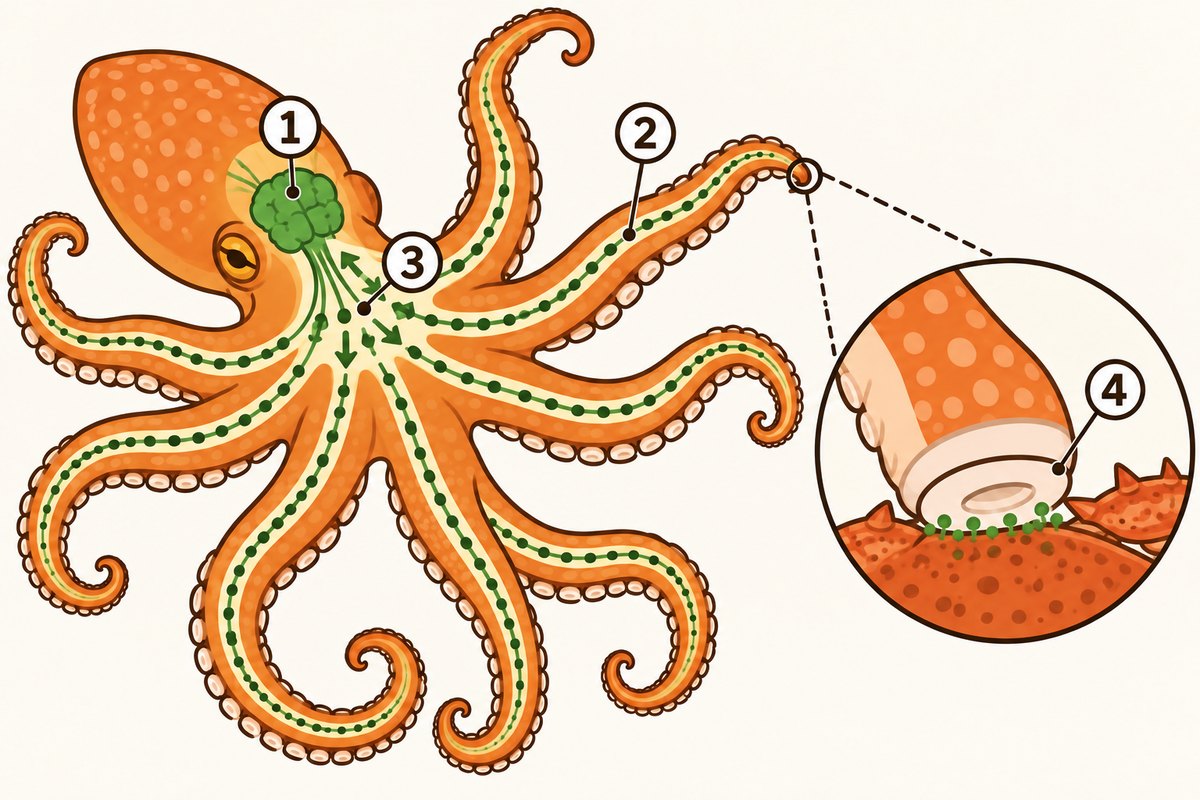
- 1The brain inside the head (one mass)
- 2Nerve cords running along the eight arms
- 3Information traveling back and forth between brain and arms
- 4Diagram of suckers tasting what they touch
Want to know more?
- The taste sensors in the suckers reacted to terpenes, a group of natural substances that do not dissolve well in water.
- When an octopus brings food to its mouth, it bends its boneless arm as if into 3 parts, creating an elbow-like joint on the spot.
- In the OIST experiments, 5 out of 6 octopuses also learned to tell whether a tube they touched was rough or smooth.
Quick quiz: test yourself
Remember what you just read? Give it a try!Where are most of an octopus's nerve cells?
Show the answer
- Almost all in the brain
- About two-thirds in the arms and body
- All inside the suckers
About two-thirds in the arms and body About two-thirds of an octopus's nerve cells are in its arms and body, not in the brain. Even so, learning happens in the brain.
About two-thirds of an octopus's nerve cells are in its arms and body, not in the brain. Even so, learning happens in the brain.
Next quiz ›Sources
- Do octopuses' arms have a mind of their own?沖縄科学技術大学院大学(OIST)
- Octopus' suction cups hold its taste and touch sensorsHarvard Gazette(ハーバード大学)
- Control of octopus arm extension by a peripheral motor program(Science, 2001)Hebrew University of Jerusalem(論文情報ページ)
- Embodied Organization of Octopus vulgaris Morphology, Vision, and LocomotionFrontiers in Physiology(査読論文)
This article was written after checking the sources above as of 2026-10-03. Explanations may change as research progresses. Photo credits are shown below each photo.
Next fun fact ▶
 AnimalsWhy Do Squid Release Ink? And How Is Octopus Ink Different?Ink is not merely black water, is it?

40 surprising animal facts with big photos and short, easy text. A fun-facts book for kids and grown-ups to read together.
See it on Amazon