Why Do Squid Release Ink? And How Is Octopus Ink Different?

 Squid and octopuses release ink to protect themselves from danger. Depending on how much mucus is mixed in, the ink can become a spreading smoke screen or a small decoy that looks like another animal.
Squid and octopuses release ink mainly to defend themselves. The ink contains melanin, a dark pigment, and can block a predator’s view or form a decoy that looks like another animal, giving the real animal time to escape. The amount of mucus mixed into the ink changes how it spreads; it can become a thin, spreading smoke screen or a blob that keeps its shape as a decoy.
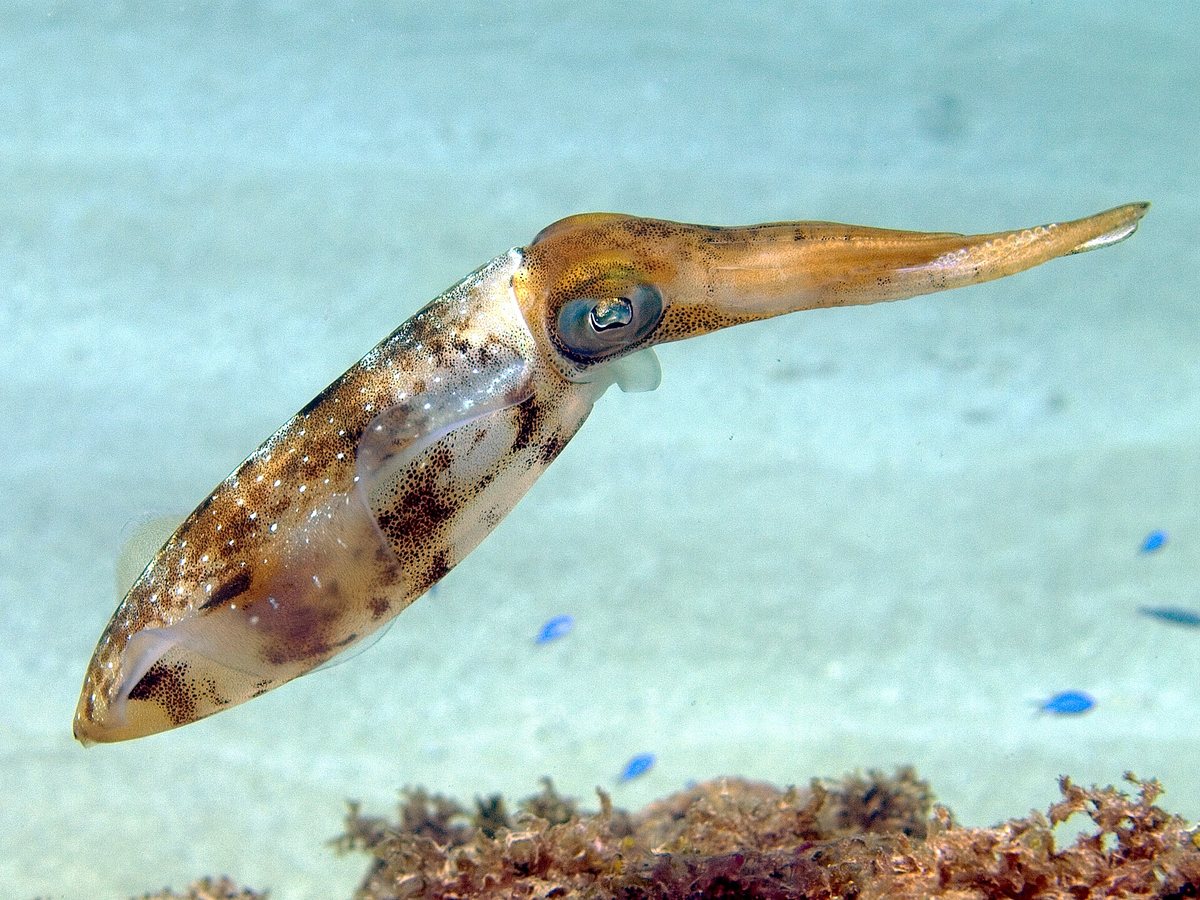
An ink sac and melanin
Squid and octopuses belong to a group called cephalopods. Many species make dark ink in an ink sac inside the body. When a predator comes near, they squirt the ink out through a tube called a siphon. The dark color comes from melanin, the same kind of pigment that helps color human hair and skin. The ink is not just black water; it is a tool for confusing an enemy.
How mucus changes the ink
As the ink passes through the siphon, mucus can be mixed in. With only a little mucus, the ink spreads easily and makes a dark smoke screen that hides the animal from view. Octopuses are famous for this. With more mucus, the ink can form small blobs that look like other octopuses. These are called pseudomorphs, and they work as decoys that draw a predator’s attention. The ink of cuttlefish is brownish and is called "sepia."
Some species can change the amount of mucus and use more than one form.
Different ways to use ink, and clogged gills
This does not mean that squid always make decoys and octopuses always make smoke screens. Some species can change the thickness of their ink and use it in more than one way. The ink also spreads with the help of moving water. Cephalopods draw water into the body, pass it over the gills to breathe, and then push it out through the siphon. They use that flow to send out ink, so they need some space around them. If they suck their own ink back in, it can clog their gills.

A squid that hunts with ink
Most cephalopods use ink for defense, but a small squid called the Japanese pygmy squid also uses ink when hunting. It may squirt ink between itself and its prey, then grab the prey, or send ink off to one side and attack from another direction. For this little squid, ink is not only a way to escape. It is also a clever hunting tool.
Want to know more?
- There are more than 300 species of squid, living in oceans from shallow water to the deep sea.
- Squid can also change the color of their skin with pigment cells to hide from enemies.
- In some species, ink may do more than block sight: it can briefly confuse a predator’s senses.
Quick quiz: test yourself
What changes the way ink spreads in the water?
Show the answer
- The amount of mucus mixed in
- The temperature of the seawater
- The size of the ink sac
The amount of mucus mixed in As ink passes through the siphon, mucus is mixed in. With little mucus it spreads like a smoke screen; with more mucus it can form small decoy blobs called pseudomorphs.
As ink passes through the siphon, mucus is mixed in. With little mucus it spreads like a smoke screen; with more mucus it can form small decoy blobs called pseudomorphs.
Next quiz ›Sources
- Splatoon characters’ ink ammo was inspired by real octopuses and squidScience News Explores
- ink sacEncyclopaedia Britannica
- SquidNational Geographic
This article was written after checking the sources above as of 2026-10-03. Explanations may change as research progresses. Photo credits are shown below each photo.