Why does pineapple make your tongue tingle?

 The main cause is an enzyme found in pineapple.
The main cause is said to be bromelain, an enzyme in pineapple that breaks down protein. When you eat fresh pineapple, this enzyme acts on the surface of your mouth, making your tongue tingle and sting. Enzymes are sensitive to heat, so bromelain stops working when pineapple is heated well.
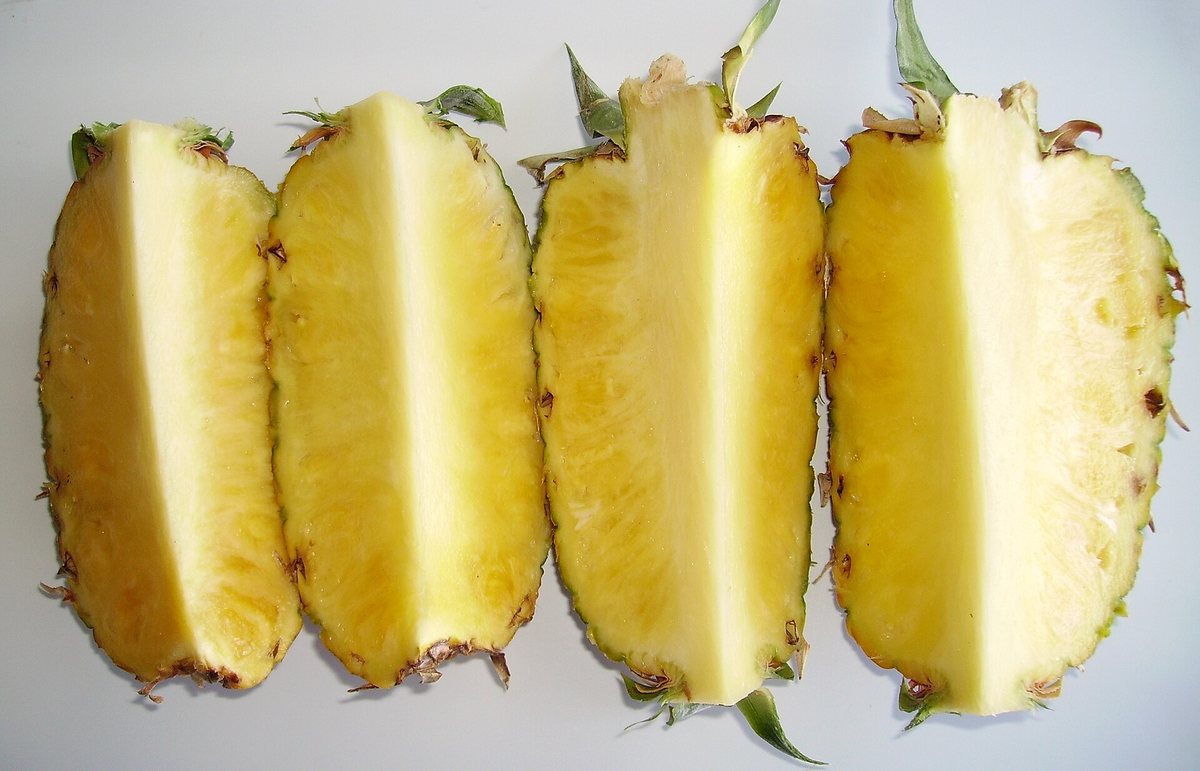
The culprit: a protein-digesting enzyme
Bromelain is a group of enzymes, found in the fruit and stem of the pineapple plant, that break down protein. An enzyme is a substance that helps break things down or turn them into something else. According to an institute of the US National Institutes of Health, pineapple has long been used as a kind of medicine in South and Central America.
Why your tongue tingles
An article from Monash University Malaysia explains that bromelain is the reason your mouth can feel itchy or sore after eating a lot of pineapple. This protein-digesting enzyme goes to work inside your mouth. Some people think it is an allergy or the fruit's acid, but the article says that while acidity can add to the discomfort, the main cause is bromelain.
Heat stops it working
Enzymes are sensitive to heat: when warmed, they change shape and stop working. A researcher quoted in the Monash article says the temperature needs to be above 68°C. In a 2010 study at Kasetsart University in Thailand, bromelain taken from pineapple fruit lost none of its activity at 40°C even after 60 minutes, and about 83% of its activity remained at 50°C, but heating it at 80°C for 8 minutes stopped almost all of its activity.
From a 2010 study at Kasetsart University, Thailand (enzyme taken from the fruit).

Why canned pineapple stings less
The same paper also mentions another study that tested processed pineapple cubes and juice sold in stores and found no protein-digesting activity at all. The enzyme is thought to have been inactivated by processes such as sterilization. This is likely also why canned pineapple, which is heated when it is made, is less likely to make your tongue tingle. The Monash article also says that jams and jellies will set if the pineapple is heated.
Want to know more?
- In the Kasetsart University study, about 51% of bromelain's activity remained after heating at 60°C for 8 minutes.
- Bromelain is also used in a medicine that removes damaged tissue from severe burns, which was approved in the US in 2022.
- Bromelain taken from the pineapple stem is broken down by heat more easily than bromelain taken from the fruit.

Quick quiz: test yourself
What mainly makes your tongue tingle when you eat pineapple?
Show the answer
- The fruit's sour acid
- Tiny spiky fibers
- An enzyme that breaks down protein
An enzyme that breaks down protein The main cause is an enzyme called bromelain. It is sensitive to heat: heating at 80°C for 8 minutes stopped almost all of its activity.
The main cause is an enzyme called bromelain. It is sensitive to heat: heating at 80°C for 8 minutes stopped almost all of its activity.
Next quiz ›Sources
- Mouth itchy when pineapple is consumed? Trust us, you're not allergicMonash University Malaysia, School of Science(マレーシアのモナシュ大学 理学部)
- Effect of Temperature on the Stability of Fruit Bromelain from Smooth Cayenne PineappleKasetsart Journal (Natural Science)(査読論文、2010年。タイのカセサート大学)
- BromelainNational Center for Complementary and Integrative Health(アメリカ国立衛生研究所の機関)
This article was written after checking the sources above as of 2026-10-03. Explanations may change as research progresses. Photo credits are shown below each photo.