Does a snail become a slug without its shell?

 In fact, the shell is an important part of the body, joined to it by muscle.
No. A snail's shell is part of its body, joined to it by a strong muscle inside, and organs such as the stomach are protected within the shell. A snail cannot leave its shell, and trying to remove it would badly hurt the snail. Slugs are different animals whose shells shrank over a long evolutionary history.
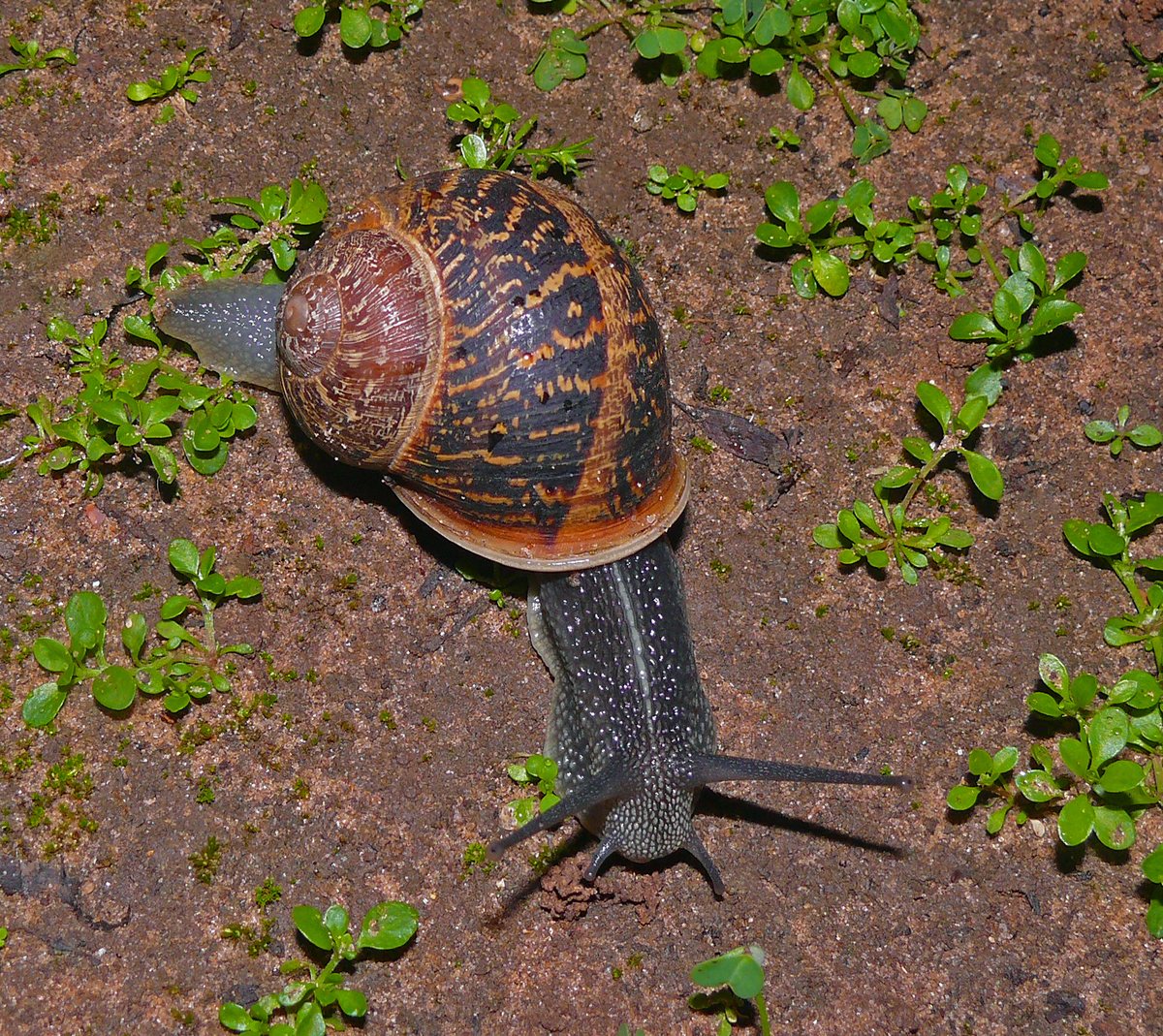
The shell is part of the body
A snail cannot leave its shell. Inside the shell is a strong muscle that holds the body firmly in place. The snail tightens this muscle to pull its body into the shell. Organs such as the stomach are also protected inside the shell. The shell is not a borrowed home like a hermit crab's, but part of the snail's body. Forcing the shell off would badly injure the snail.
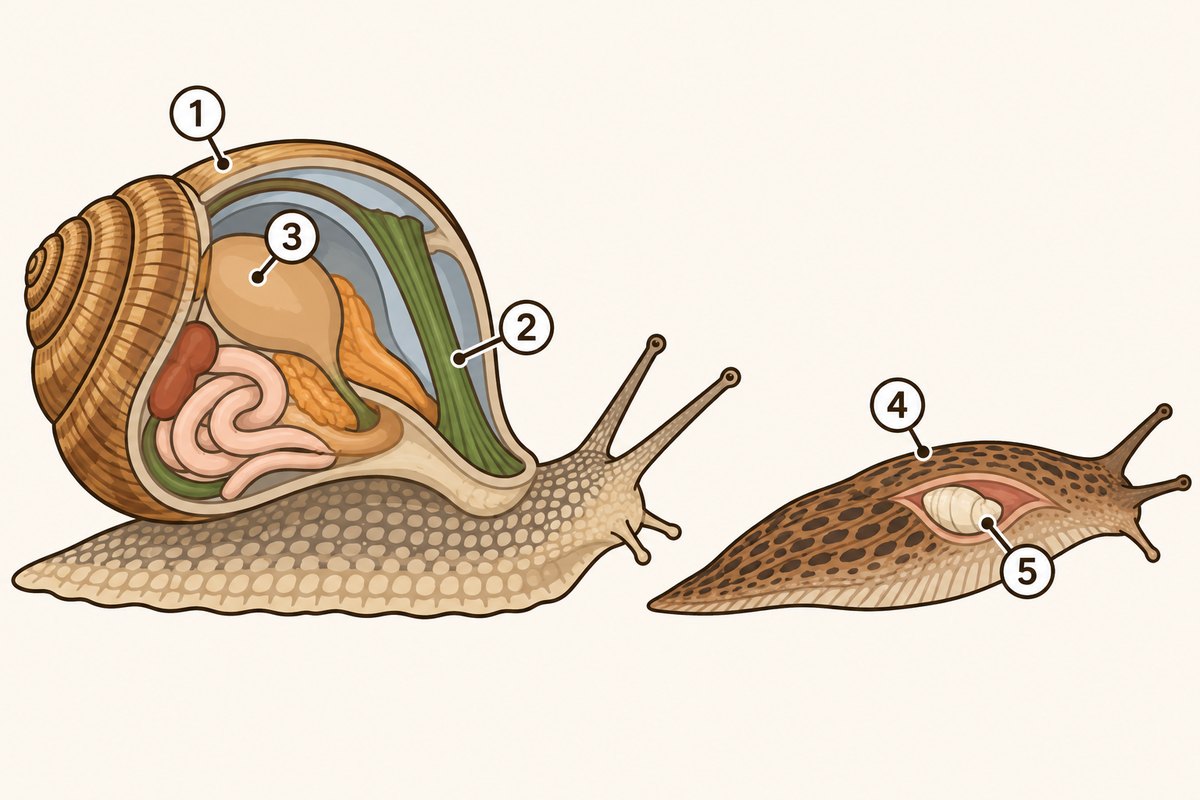
- 1The shell, which is part of the body
- 2Strong muscle connecting the inside of the shell to the body
- 3Internal organs such as the stomach, protected inside the shell
- 4A slug, which belongs to a different group from snails
- 5A tiny shell remaining inside a slug's body
What the shell protects
The shell has important jobs. A researcher at the Carnegie Museum of Natural History explains that the shell protects snails from predators and keeps them from drying out. That is why snails stay inside their shells on dry days. Without the shell, the snail would lose both of these 2 kinds of protection.

Slugs came from evolution
So where did slugs come from? A slug is not a snail that has taken off its shell. Over a very long time, some members of the snail family evolved smaller shells and tucked them inside their bodies. This change is thought to have happened separately more than 10 times. In fact, most slugs still have a small shell inside their bodies.
Based on the Carnegie Museum of Natural History.
Good and bad sides of no shell
Having no outer shell has good and bad sides. Slugs are not protected from predators or drying out, but they need less calcium to build a shell, and they can squeeze into tiny gaps. Between snails and slugs there are also "semi-slugs," which carry a shell too small to hold their whole body, and they are said to have evolved separately at least 22 times.
Want to know more?
- Early in their development, snails go through a curious change: the head and foot twist 180° relative to the shell and internal organs.
- One idea is that on islands with few predators and little calcium, smaller shells were an advantage, helping the change from snails to semi-slugs to slugs.
Quick quiz: test yourself
Remember what you just read? Give it a try!What is the shell of most slugs like?
Show the answer
- They have none at all
- A small shell inside the body
- A big shell carried on the back
A small shell inside the body Slugs evolved smaller shells tucked inside their bodies. Most slugs still have a small shell inside.
Slugs evolved smaller shells tucked inside their bodies. Most slugs still have a small shell inside.
Next quiz ›Sources
- What's So Good About Being a Slug?Carnegie Museum of Natural History(カーネギー自然史博物館)
- How to Wear Your Shell: Snail vs. MonoplacophoranCarnegie Museum of Natural History(カーネギー自然史博物館)
- Wild About Illinois Land Snails and Slugs: armed snaggletoothIllinois Department of Natural Resources(イリノイ州自然資源局)
- Snails and slugsAustralian Museum(オーストラリア博物館)
This article was written after checking the sources above as of 2026-10-03. Explanations may change as research progresses. Photo credits are shown below each photo.
Next fun fact ▶
 AnimalsWhy can't penguins fly?Penguins are birds with real wings. So why can't they fly?

40 surprising animal facts with big photos and short, easy text. A fun-facts book for kids and grown-ups to read together.
See it on Amazon