Why is Venus the hottest planet if it isn't closest to the Sun?

 The answer lies in something that wraps Venus up completely.
Venus is the hottest planet because its very thick atmosphere, made mostly of carbon dioxide, traps heat (the greenhouse effect). The surface is about 467°C, hot enough to melt lead. Mercury is closer to the Sun, but it has almost no atmosphere to hold heat, so it gets very cold at night.
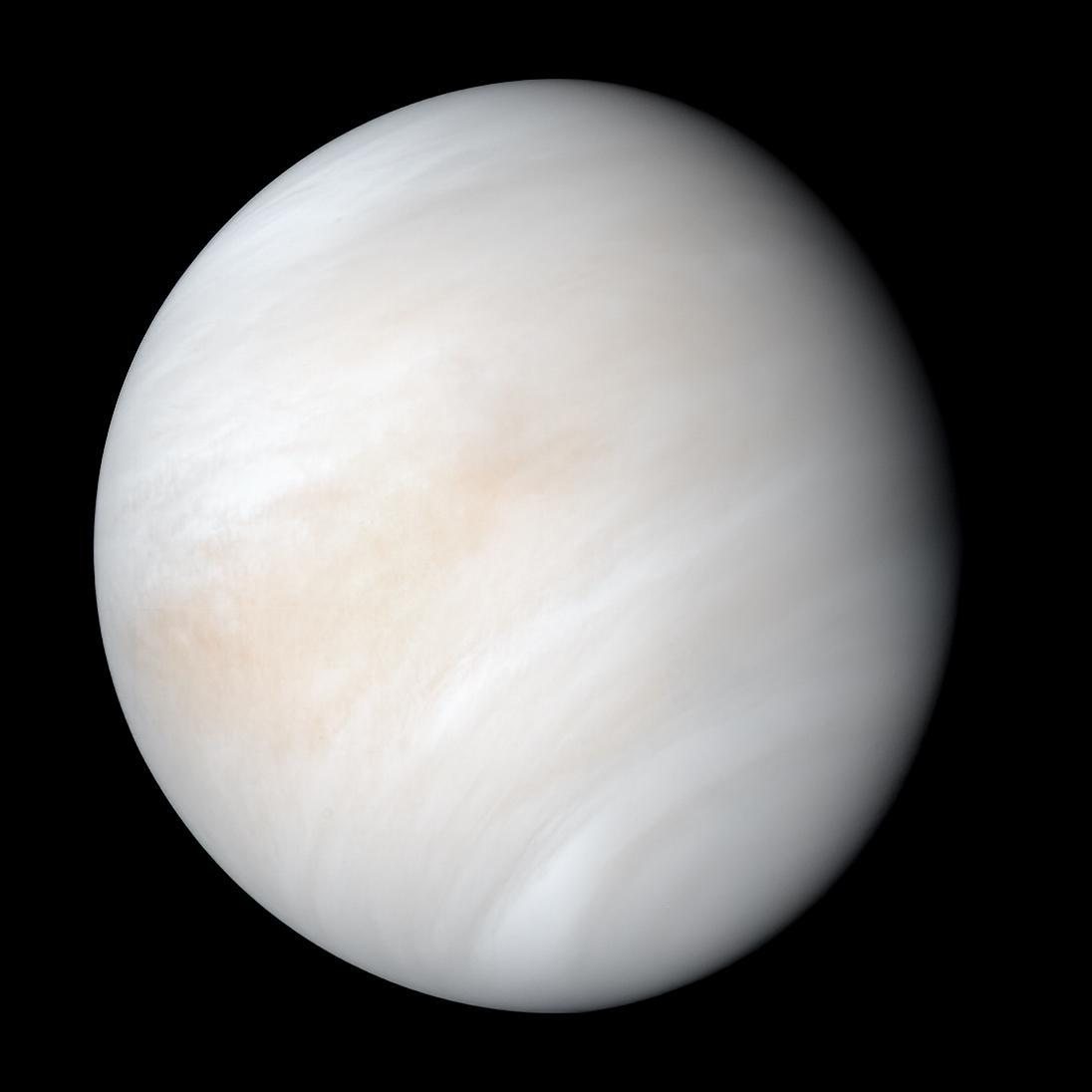
Farther than Mercury, yet hotter
On average, Mercury is 58 million km from the Sun and Venus is 108 million km away. Venus is much farther out than Mercury, yet according to NASA, its surface temperature reaches about 467°C. That is hot enough to melt lead, and hotter than Mercury, the innermost planet.
Based on NASA's explanation.
A thick atmosphere that traps heat
The reason is the thick atmosphere covering Venus. It is mostly carbon dioxide, and it traps heat through the same greenhouse effect involved in Earth's warming. On Venus this effect runs out of control, so it is called a "runaway greenhouse effect." The air pressure at the surface is 93 times that at sea level on Earth.
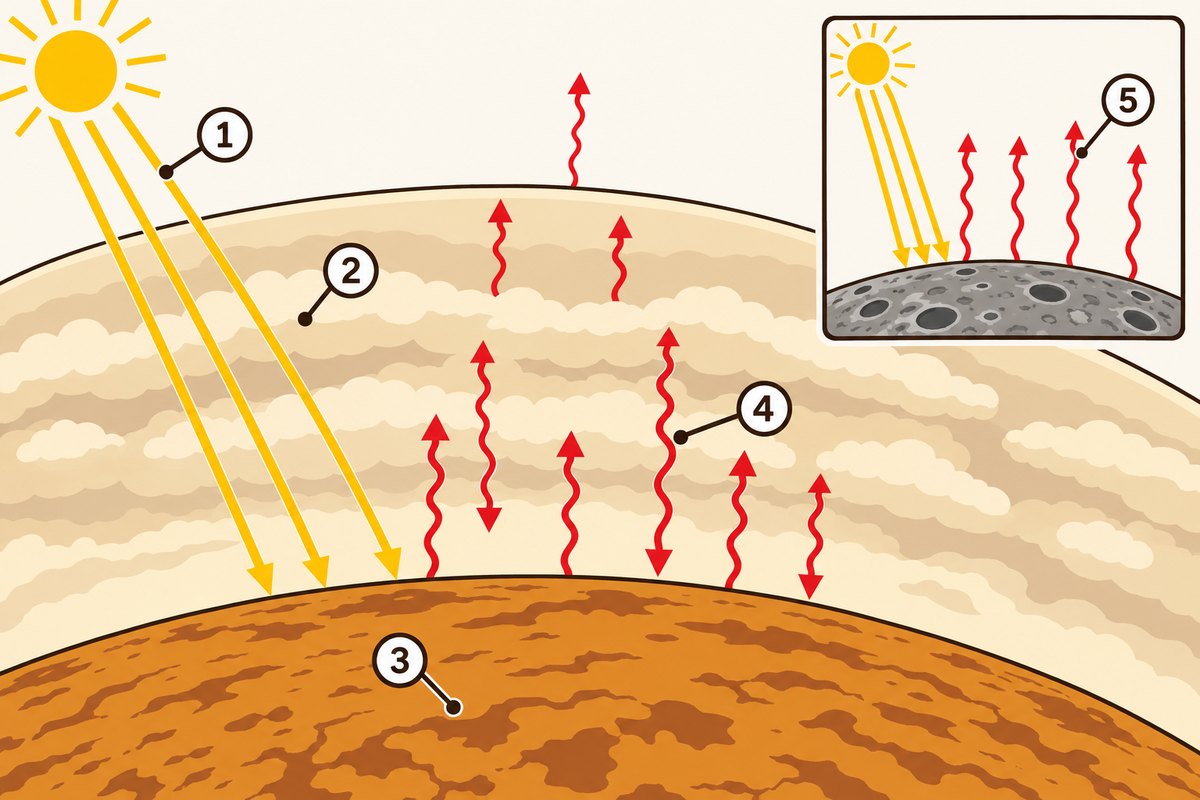
- 1Sunlight reaching the ground
- 2The thick atmosphere, mostly carbon dioxide
- 3Venus's scorching surface
- 4Heat trapped, bouncing between the air and the ground
- 5On Mercury, with almost no atmosphere, heat escapes to space

Airless Mercury cools at night
Mercury, on the other hand, has hardly anything you could call an atmosphere, only a very thin "exosphere." Daytime temperatures reach 430°C, but with no atmosphere to hold the heat, nights drop to minus 180°C. NASA also says the title of hottest planet belongs to Venus, thanks to its dense atmosphere.
Acid clouds and fierce winds
Venus is covered in thick clouds made of sulfuric acid. High above Venus, where Japan's Venus orbiter Akatsuki made its studies, a powerful wind called "super-rotation" blows at up to 100 meters per second. JAXA calls Venus Earth's "sibling planet" because it is almost the same size as Earth, but its environment is completely different.
Want to know more?
- Venus spins in the opposite direction to Earth, and one turn takes 243 Earth days.
- If the Sun-Earth distance is 1 astronomical unit, Venus orbits at 0.72 astronomical units and Mercury at 0.4.
- According to JAXA, Venus has nearly 100 times as much atmosphere as Earth.
Quick quiz: test yourself
Remember what you just read? Give it a try!What is the main reason Venus is hotter than Mercury?
Show the answer
- It is the closest planet to the Sun
- Its thick atmosphere traps heat
- Its volcanoes never stop erupting
Its thick atmosphere traps heat Venus's thick atmosphere, made mostly of carbon dioxide, traps heat in a "runaway greenhouse effect," so the surface reaches about 467°C.
Venus's thick atmosphere, made mostly of carbon dioxide, traps heat in a "runaway greenhouse effect," so the surface reaches about 467°C.
Next quiz ›Sources
- Venus: FactsNASA Science
- Mercury: FactsNASA Science
- 金星探査機「あかつき」JAXA 宇宙科学研究所 (in Japanese)
This article was written after checking the sources above as of 2026-10-03. Explanations may change as research progresses. Photo credits are shown below each photo.
Next fun fact ▶
 SpaceDo astronauts really get taller in space?Have you heard that people grow taller when they go to space?

40 surprising animal facts with big photos and short, easy text. A fun-facts book for kids and grown-ups to read together.
See it on Amazon