Why do AI-made pictures get hands and fingers wrong?
 Because hands are small, yet shaped in a very complicated way.
In pictures, hands usually take up only a small space, yet each finger bends on its own, and hands come in many shapes, angles and grips, and can be hidden behind other parts of the body. Researchers explain that learning such complex hands from images and text is hard, so AI can draw the wrong number of fingers or fingers bent in impossible ways.
Building a picture from noise, step by step
Many picture-making AIs use a method called a "diffusion model." As a technical article from NVIDIA, a computer chip company, explains, during training the model sees images being destroyed bit by bit with added noise, and practices doing the reverse: removing the noise. To make a picture, it starts from an image full of noise, like the static on an old TV, and removes the noise little by little (for example, 2% at a time), over and over. What kind of picture comes out depends on the images it was trained on.
Common mistakes with hands
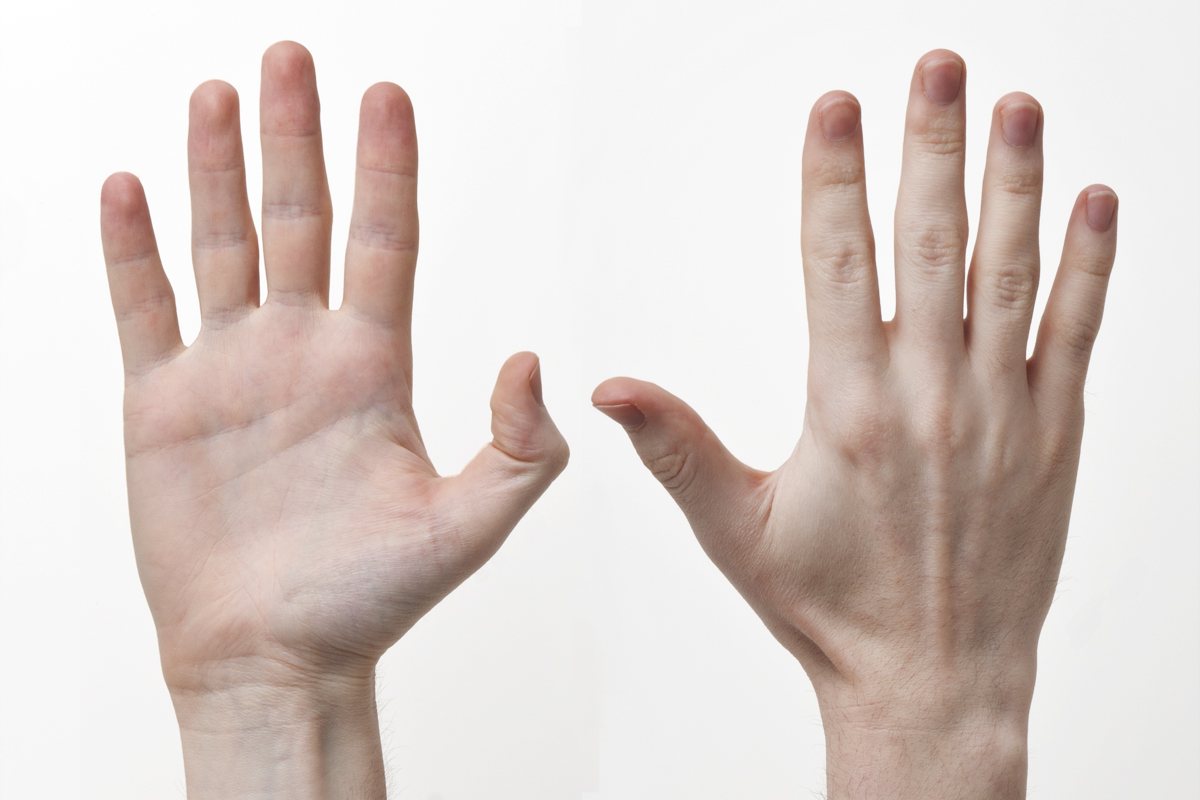
A study published in 2024 says that AI that turns text into images can draw people that look like real photos, but hands often come out unnatural. Common mistakes include the wrong number of fingers, oddly shaped hands, fingers bent in impossible directions, and strange ways of holding things.
Why hands are so hard
The researchers list several reasons hands are hard. Hands take up only a small part of an image, yet each finger can bend on its own at many different angles. Hands also come in many shapes, sizes and directions, and can be hidden behind other parts of the body. On top of that, the way a hand grips something changes a lot depending on the object's size and shape. So even an AI trained on millions of images can still struggle with hands.
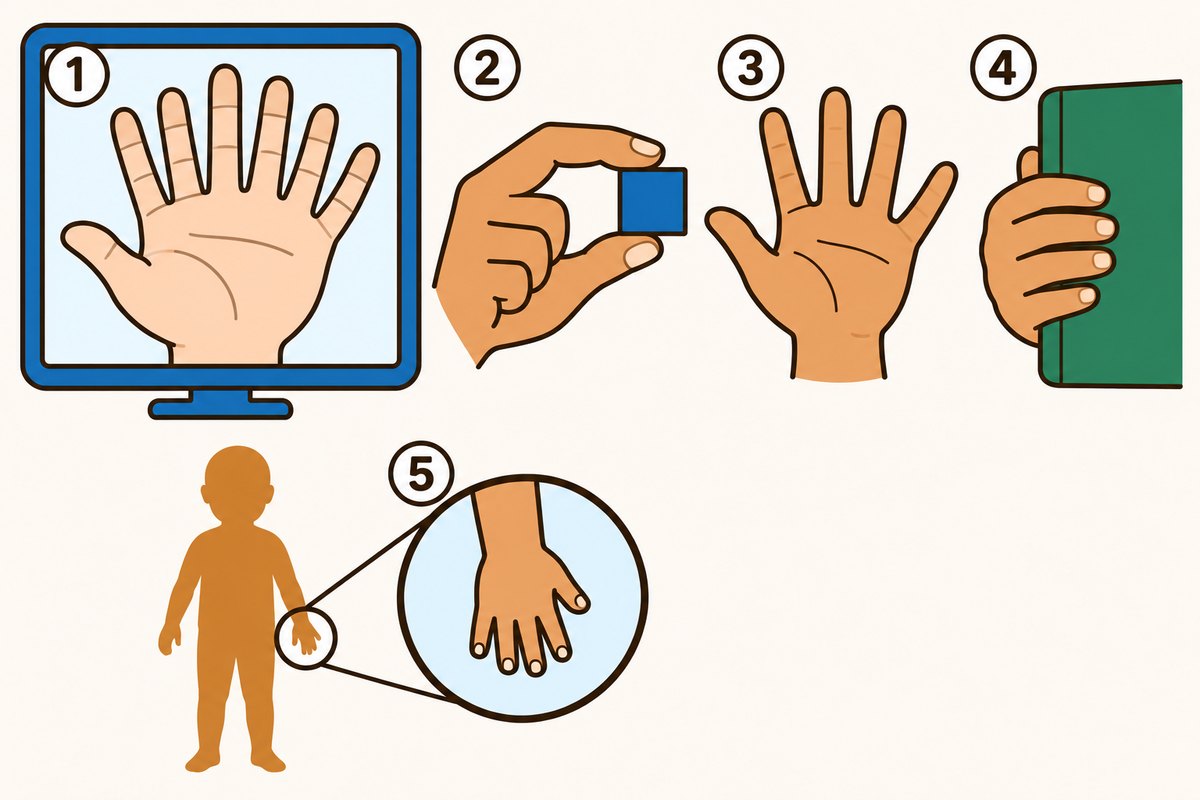
- 1An example of an AI picture with the wrong number of fingers
- 2A hand pinching an object
- 3A hand with fingers spread
- 4A hand partly hidden by an object
- 5A hand that looks tiny in a picture (zoomed in)
Research to fix the hands
In this study, the researchers first used the text to create the 3D shape of the body and hands and the positions of their joints, then used that as a guide to make the picture. Their experiments showed that using data describing how hands are built leads to more natural-looking hands. Still, finding good ways to build hand information into picture-making systems is a problem researchers are still working on.
Want to know more?
- Diffusion models are also at the heart of Stable Diffusion, a system that creates images from text.
- Researchers point out that everyday text instructions rarely describe the pose of the hands, which also makes hands harder to draw.
Quick quiz: test yourself
Remember what you just read? Give it a try!Why is it hard for AI to draw hands?
Show the answer
- Hand colors are hard to draw
- There are no photos of hands at all
- Small in images, yet complex in motion
Small in images, yet complex in motion Hands take up only a small part of an image, yet each finger bends on its own, and their shapes, angles and grips vary a lot.
Hands take up only a small part of an image, yet each finger bends on its own, and their shapes, angles and grips vary a lot.
Next quiz ›Sources
- HanDiffuser: Text-to-Image Generation With Realistic Hand AppearancesCVPR 2024(Computer Vision Foundation 掲載の査読論文)
- Generative AI Research Spotlight: Demystifying Diffusion-Based ModelsNVIDIA Technical Blog
- Explained: Generative AIMIT News(マサチューセッツ工科大学)
This article was written after checking the sources above as of 2026-10-03. Explanations may change as research progresses. Photo credits are shown below each photo.
Next fun fact ▶
 TechnologyWhy does a phone battery last less over time?Does your battery seem to run out faster than when it was new? Many people have noticed that.

40 surprising animal facts with big photos and short, easy text. A fun-facts book for kids and grown-ups to read together.
See it on Amazon