Why does a phone battery last less over time?

 Let's look at the lithium ions traveling back and forth inside the battery.
Because the lithium-ion battery in a phone ages chemically as you use it, so the amount of charge it can hold slowly goes down. Inside, lithium ions travel back and forth between 2 electrodes. One known cause is that some of them get trapped in a film on the electrode surface, leaving less lithium to use.
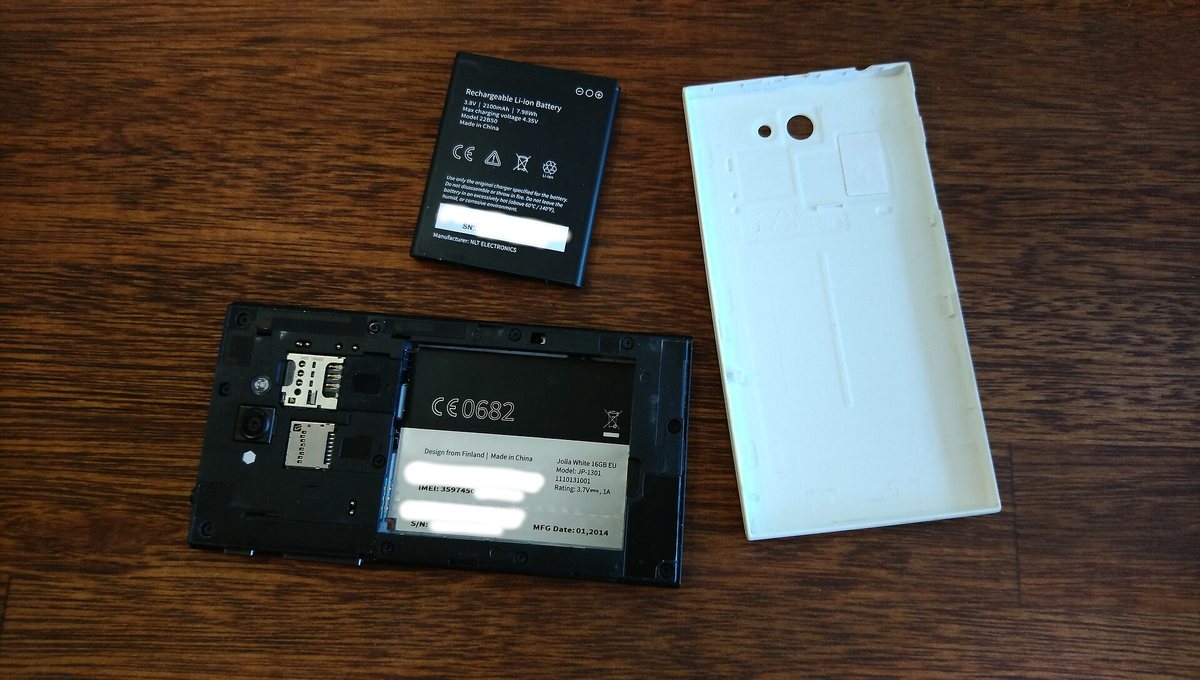
Lithium ions travel back and forth inside
Phone batteries are lithium-ion batteries. According to the Nobel Prize website, when the battery is charged, lithium ions move into the negative electrode, which is made of carbon. When the battery is used, the lithium ions flow to the positive electrode, and electricity is produced. Because the ions move between the electrodes without reacting with their surroundings, the battery lasts a long time and can be charged hundreds of times.
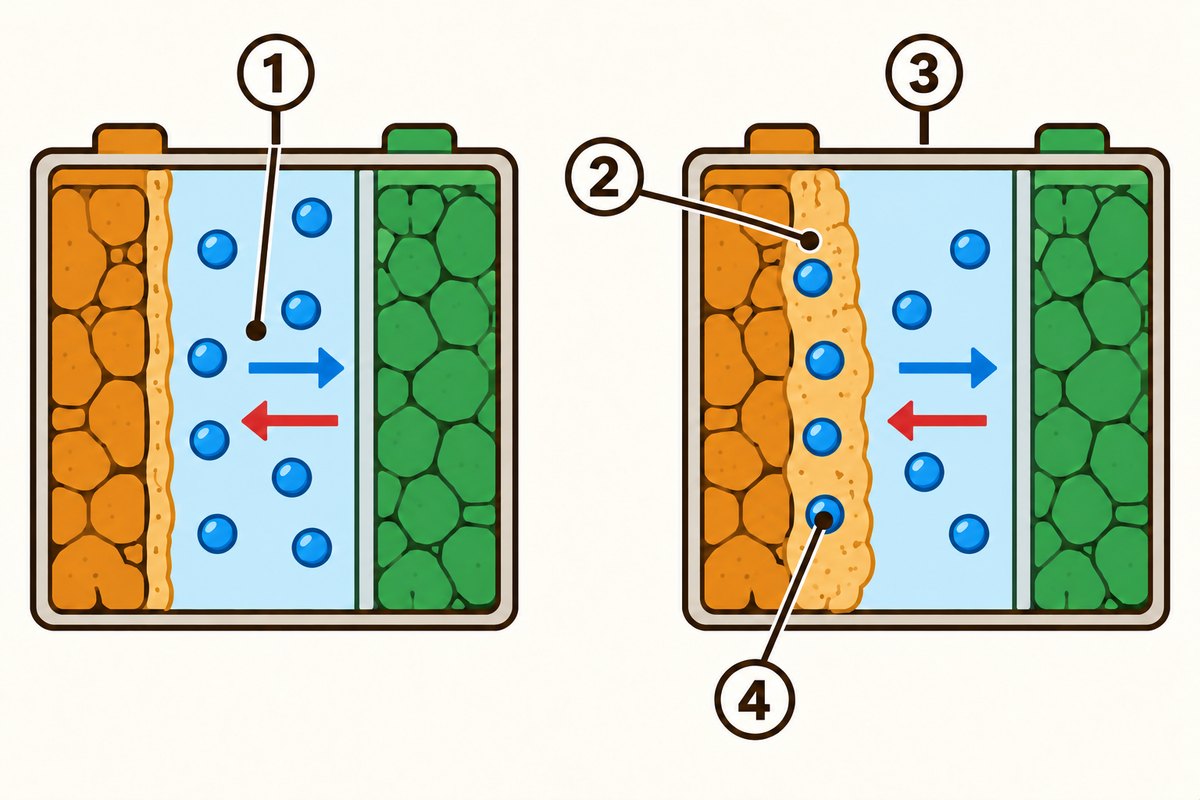
- 1Lithium ions free to move in a new battery
- 2The film that forms on the electrode surface
- 3A well-used battery
- 4Lithium ions trapped in the film and unable to move
Rechargeable batteries slowly age
Even so, it cannot stay the same forever. Apple explains that all rechargeable batteries are consumable parts, and as they age chemically, the amount of charge they can hold goes down. Using a total of 100% of the battery's capacity counts as 1 charge cycle, and the capacity drops slightly with each one. Using up one cycle can take several days.
Lithium gets trapped in a film
So what is happening inside? An article from The Electrochemical Society about research at Argonne National Laboratory in the US explains that the negative electrode reacts with the liquid inside the battery (the electrolyte), forming a film on the electrode surface. For every liquid molecule that breaks down, 1 lithium ion gets trapped in the film. The more lithium gets trapped, the lower the battery's capacity becomes.

The benchmark: 80% capacity
According to Apple, batteries in iPhone 14 and earlier models are designed to keep 80% of their original capacity at 500 charge cycles. For iPhone 15, it is 80% at 1000 cycles. Also, an aged battery is more likely to shut down suddenly in the cold or when the charge is low.
From Apple's support page.
What you can do to make it last
Apple says devices like the iPhone work best at surrounding temperatures of 0 to 35°C, and that heat above 35°C can permanently reduce battery capacity. Apple suggests not charging or leaving devices in hot places or direct sun for long periods, taking the device out of its case if it gets hot while charging, and keeping it about half charged when storing it for a long time.
Want to know more?
- The first lithium-ion batteries went on sale in 1991, made by a Japanese electronics company (Nobel Prize website).
- If your battery seems to drain faster in the cold, that is only temporary. It goes back to normal once the battery warms up (Apple).
- Apple says the ideal comfort zone for its devices is 16 to 22°C.
Quick quiz: test yourself
Remember what you just read? Give it a try!What is the main reason a phone battery lasts less over time?
Show the answer
- Electricity leaks out
- The battery ages chemically
- The screen gets old
The battery ages chemically As you use it, the battery ages chemically inside. Lithium gets trapped in a film and in other ways, so it can hold less charge.
As you use it, the battery ages chemically inside. Lithium gets trapped in a film and in other ways, so it can hold less charge.
Next quiz ›Sources
- iPhone battery and performanceApple サポート
- Batteries - Maximizing PerformanceApple
- Batteries - Why Lithium-ion?Apple
- Popular information: The Nobel Prize in Chemistry 2019The Nobel Prize(ノーベル財団)
- Finding the Causes of Battery “Capacity Fade”The Electrochemical Society(電気化学会)
This article was written after checking the sources above as of 2026-10-03. Explanations may change as research progresses. Photo credits are shown below each photo.
Next fun fact ▶
 TechnologyHow can computers do everything with just 0s and 1s?Computers use only 0s and 1s, yet they can handle letters and photos. Isn't that curious?

40 surprising animal facts with big photos and short, easy text. A fun-facts book for kids and grown-ups to read together.
See it on Amazon