Why do clock hands turn clockwise?

 If we trace it back, we find the shadow of a tool far older than any clock.
Clock hands are said to turn clockwise because they copied the shadow of sundials, which people had used for a very long time. In the Northern Hemisphere, a sundial's shadow moves in the clockwise direction. When mechanical clocks appeared in Europe around 1300, clockmakers kept this familiar direction.
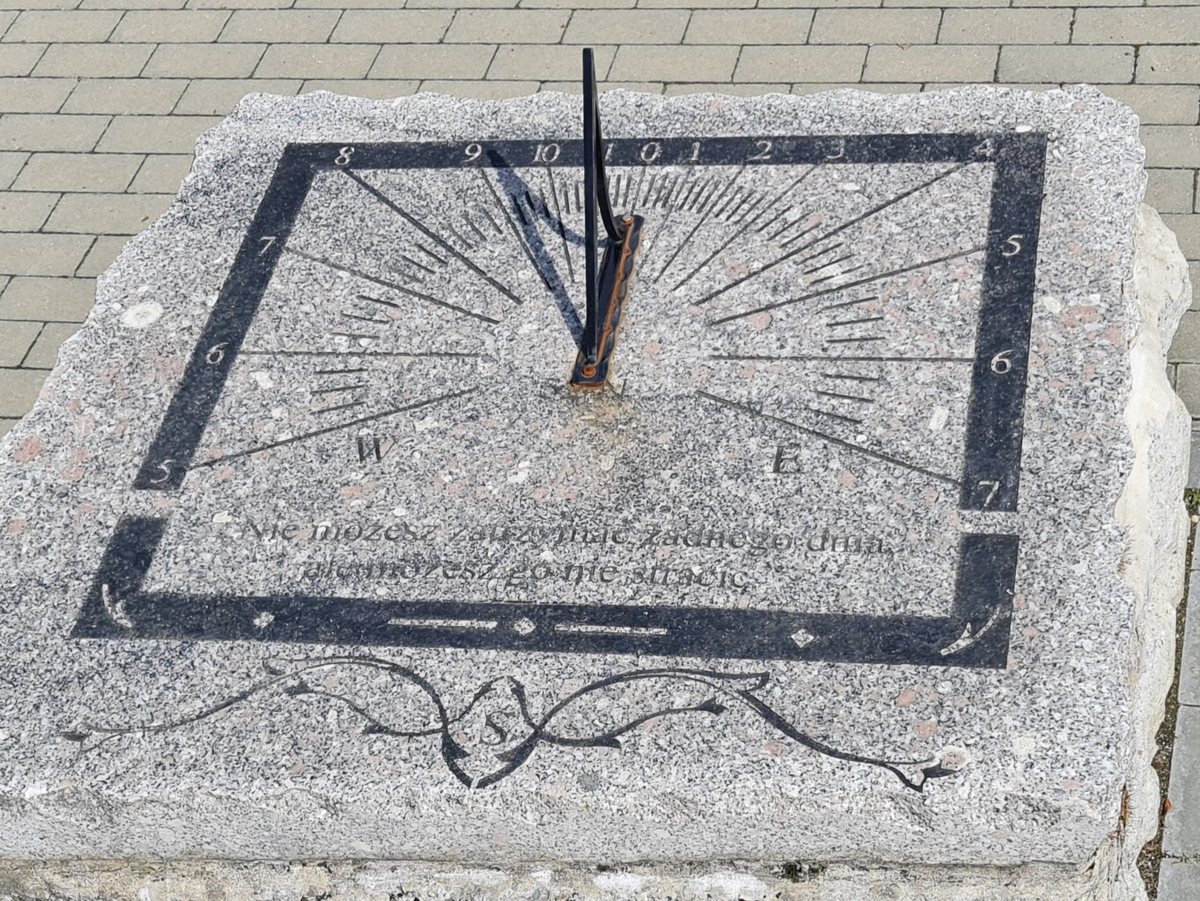
A sundial's shadow turns clockwise
Clock hands are said to turn clockwise because they copied the moving shadow of sundials, which were used long before clocks. In the Northern Hemisphere, the sun rises in the east, crosses the southern sky and sets in the west. Because of this, the shadow cast by a sundial's pointer moves around in the clockwise direction.
Mechanical clocks kept the shadow's motion
The first clocks people ever made were sundials, which tell the time from the position of the sun's shadow. They were used in ancient Egypt and other places, and stayed part of everyday life for a long time. Around 1300, when gear-driven mechanical clocks appeared in Europe, clockmakers are said to have kept the clockwise motion of sundials that people were used to. Some say it was natural to match the familiar movement of the shadow so that people would accept the new device, but there is no clear record to prove it.
Based on explanations from Kodansha Blue Backs, Country Life and others.
Shadows turn the other way in the south
However, shadows turn clockwise only in the Northern Hemisphere. If you build a sundial in the Southern Hemisphere, in places such as Australia or Argentina, its shadow turns the other way. Clocks everywhere still run clockwise because, when clockmaking began, the places that made clocks were all in the Northern Hemisphere. The Southern Hemisphere simply adopted the clock face that had taken shape in the north.

Some clocks run backward
In fact, the clockwise direction is not set by any industrial standard. Clockmakers have simply followed a long tradition. That is why some clocks run the other way. A clock in the cathedral of Florence, Italy, and a clock with Hebrew letters in Prague, Czech Republic, both run counterclockwise. In 2014, the clock on the congress building in Bolivia, South America, was changed to run counterclockwise to match the Southern Hemisphere.
Want to know more?
- In Japan, barbershops once sometimes used clocks that ran counterclockwise, so customers could read the time normally when they saw the clock in the mirror.
- The direction of clock hands is so standard around the world that we even name directions after it: "clockwise" and "counterclockwise."
Quick quiz: test yourself
Remember what you just read? Give it a try!What is said to be the origin of clockwise clock hands?
Show the answer
- The movement of a sundial's shadow
- The flow of a water clock
- The phases of the moon
The movement of a sundial's shadow In the Northern Hemisphere, a sundial's shadow moves clockwise. Clockmakers who built mechanical clocks are said to have kept this familiar motion.
In the Northern Hemisphere, a sundial's shadow moves clockwise. Clockmakers who built mechanical clocks are said to have kept this familiar motion.
Next quiz ›Sources
- 時計の針はなぜ右回りなのか? 文字盤が0ではなく12から始まる理由とは?(織田一朗)講談社 ブルーバックス (in Japanese)
- Curious Questions: Why do clocks go clockwise?Country Life
- Why do clocks go clockwise?BBC Science Focus Magazine
This article was written after checking the sources above as of 2026-10-03. Explanations may change as research progresses. Photo credits are shown below each photo.
Next fun fact ▶
 CultureWhy does a day have 24 hours?A day has 24 hours. Not 10, not 100. So why 24?

40 surprising animal facts with big photos and short, easy text. A fun-facts book for kids and grown-ups to read together.
See it on Amazon