Was Snakes and Ladders born in India?

 The answer is India. And at first, it was less about winning and more about thinking over one's deeds and feelings.
Yes, it is thought to have been born in India. It comes from a board game called "Gyan Chaupar" (the game of knowledge). Its squares were labeled with deeds and states of mind: for example, a snake on the "anger" square sent you down, and a ladder on the "compassion" square took you up. By the late 19th century, it was being sold in Britain as a children's game.
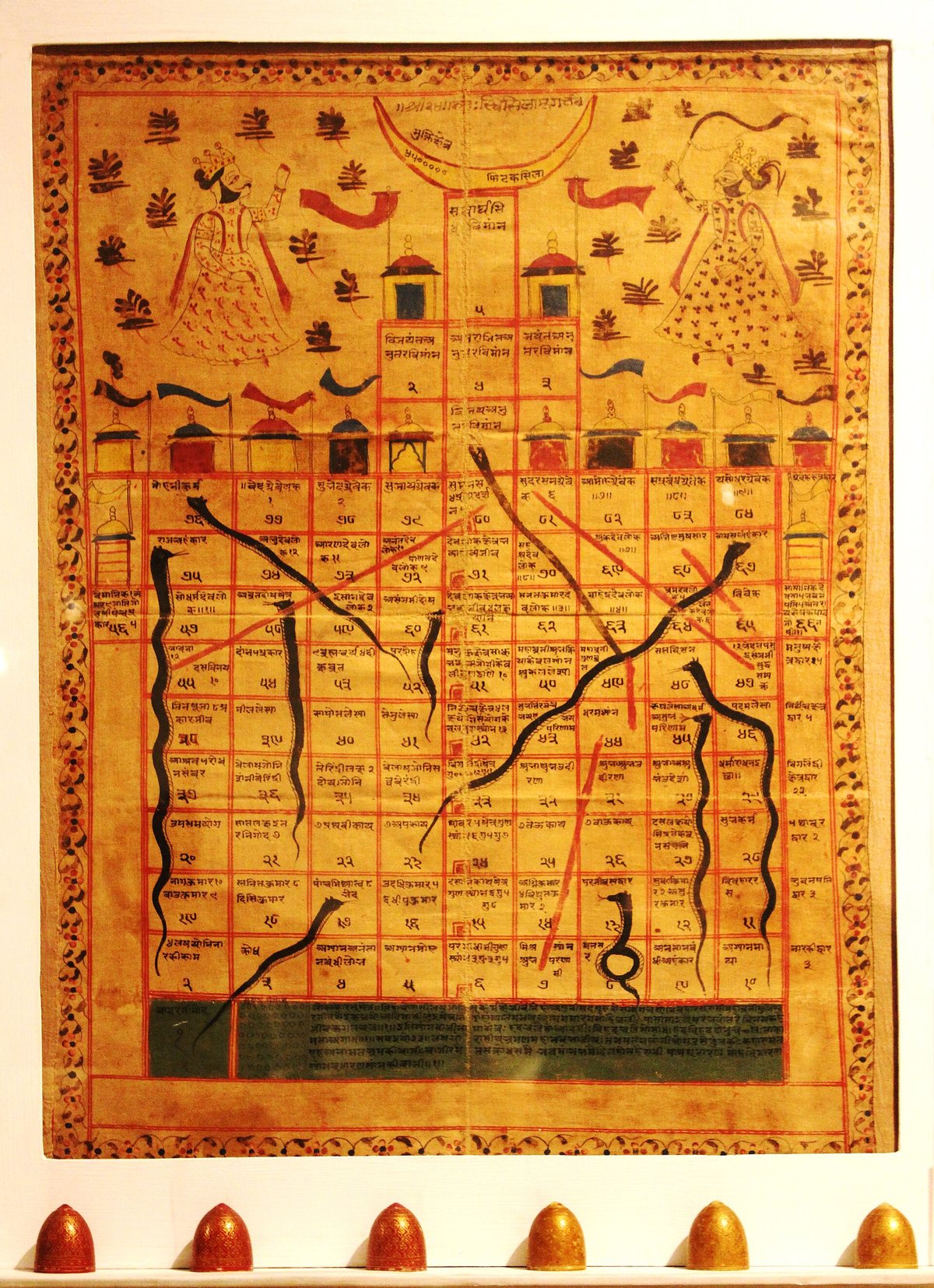
India's "game of knowledge"
Snakes and Ladders is thought to have been born in India. It comes from a board game called "Gyan Chaupar," which means "the game of knowledge." In different regions it also had names such as "Moksha Pat" and "Paramapada Sopanam."
Snakes for anger, ladders for compassion
On the Indian boards, each square was labeled with a deed or a state of mind. On an old board in the British Library, snakes on the squares for "anger" and "greed" send you back down, while ladders from the square for "compassion" take you up. It was not a race to reach the top first, as it is today, but a game played over and over while thinking about life and one's actions. Many kinds of boards were made by people of different religions.
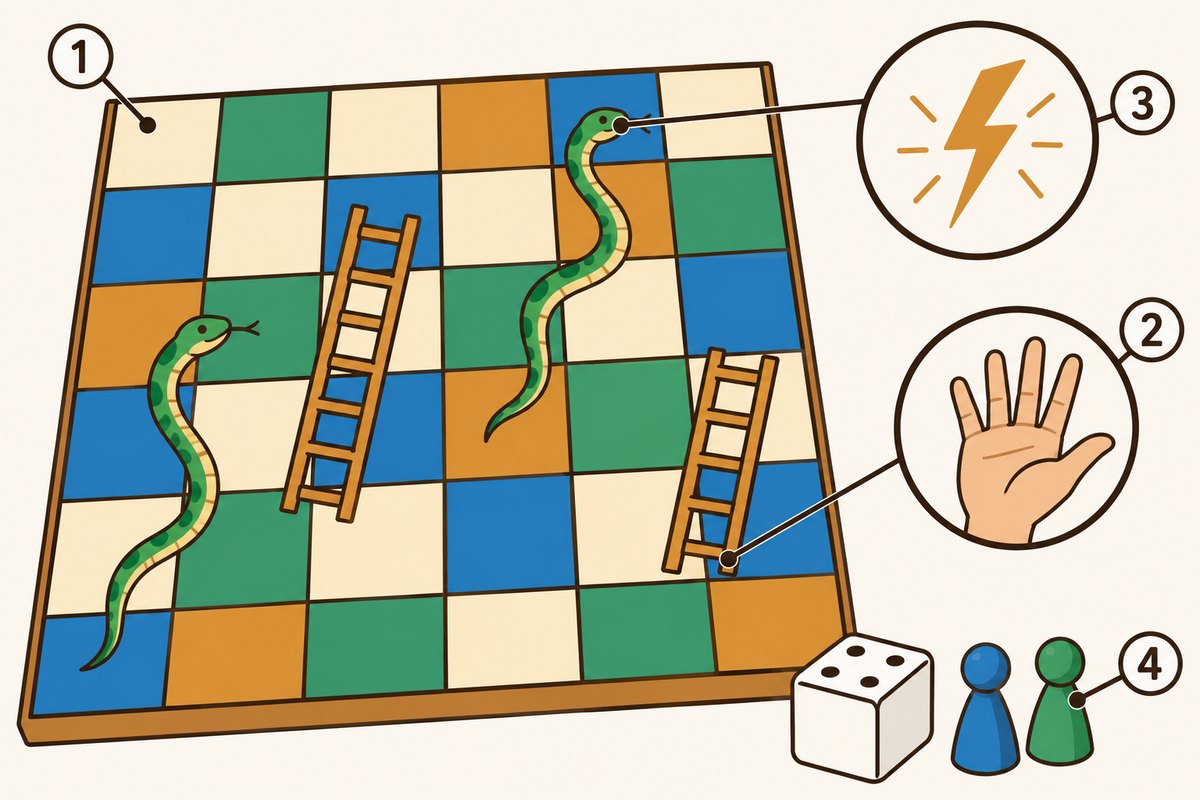
- 1A colorful game board
- 2A “kindness” square where a ladder takes you up
- 3An “anger” square where a snake takes you down
- 4Playing pieces
No one knows exactly when it began
No one knows for sure when it began. One claim says a 13th-century saint invented it, but this is not certain. Among old boards gathered by researchers, some date from the late 15th century, and the number of squares varies: 72, 84, 100 or 128. The British Library holds a board that an Englishman, Richard Johnson, had painted in Lucknow, northern India, around 1780-82. Each square is labeled with its meaning in Persian and Hindi.

Through Britain to the world
In time, the game traveled to Britain. In 1892, a London toymaker took out a patent on it. By then, most of the meanings of the squares had disappeared. Today, children all over the world roll the dice, climb the ladders and slide down the snakes.
Want to know more?
- According to a record from around 1895, people in India played this game using cowrie shells instead of dice.
- The Victoria and Albert Museum in London has a game called "Kismet" (fate), made in England around 1895. It has 13 snakes and 8 ladders; it was designed in England and printed in Bavaria, Germany.
Quick quiz: test yourself
Remember what you just read? Give it a try!On an old Indian board in the British Library, which squares had snakes?
Show the answer
- The "compassion" square
- The "anger" and "greed" squares
- The finish square
The "anger" and "greed" squares Snakes on the "anger" and "greed" squares send you back down, while ladders from the "compassion" square take you up.
Snakes on the "anger" and "greed" squares send you back down, while ladders from the "compassion" square take you up.
Next quiz ›Sources
- Gyan Chaupar to Snakes and Ladders: How a game about a karmic journey became a plaything for kidsScroll.in
- Johnson 5,8: Design for a game of snakes and ladders, gyan chauparBritish Library
- Kismet (board game, ca.1895)Victoria and Albert Museum
This article was written after checking the sources above as of 2026-10-03. Explanations may change as research progresses. Photo credits are shown below each photo.
Next fun fact ▶
 CultureWhy do playing cards have four suits?Spades, hearts, clubs and diamonds. Why are there four kinds of suits?

40 surprising animal facts with big photos and short, easy text. A fun-facts book for kids and grown-ups to read together.
See it on Amazon