Why is there an offside rule in football?

 It is said to stop attackers from simply waiting near the goal.
Offside is said to exist to stop attackers from simply waiting near the opponent's goal. A player is penalised when, at the moment a teammate plays the ball, he or she is closer to the goal line than both the ball and the second-last opponent, and then gets involved in play. Just standing in that position is not an offence.
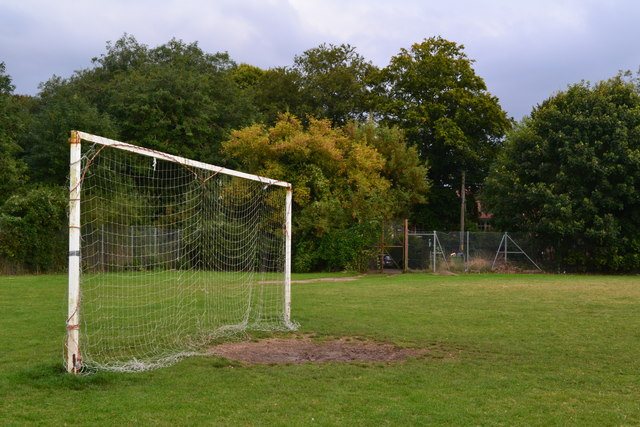
A rule against waiting by the goal
The offside rule in football (soccer) is said to exist to stop attackers from standing near the opponent's goal and waiting for a long ball. Because of this rule, a team has to move forward by passing the ball among teammates and pulling the defenders out of position.
What an offside position is
The Laws of the Game, set by the International Football Association Board (IFAB), define an offside position like this. Any part of the head, body or feet is in the opponents' half (not counting the halfway line), and is closer to the opponents' goal line than both the ball and the second-last opponent. Hands and arms are not counted. A player level with the second-last opponent, or with the last two opponents, is not in an offside position.
Standing there is not an offence
The key point is that being in an offside position is not an offence in itself. A player is penalised only if he or she is in that position at the moment a teammate plays or touches the ball, and then gets involved in play, for example by touching the ball or getting in an opponent's way. There is also no offside offence when a player receives the ball directly from a goal kick, a throw-in or a corner kick.

The rule has changed over time
The offside rule has changed over time. In England, from the 1925 season, the number of defending players an attacker needed between himself and the goal line to stay onside was cut from three to two. It is said this was done to bring more goals and more exciting matches.
Want to know more?
- After an offside offence, the match restarts with an indirect free kick for the other team, taken where the offence happened.
- For judging offside, the upper edge of the arm is set at the line of the bottom of the armpit.

Quick quiz: test yourself
Which defender decides offside?
Show the answer
- The one nearest the ball
- Only the goalkeeper
- The second-last opponent
The second-last opponent A player is in an offside position when closer to the goal line than both the ball and the second-last opponent, and is penalised if he or she then gets involved in play.
A player is in an offside position when closer to the goal line than both the ball and the second-last opponent, and is penalised if he or she then gets involved in play.
Next quiz ›Sources
- Law 11 - OffsideIFAB (The International Football Association Board) Laws of the Game
- Law 11: Offside (IFAB Laws of the Game 2026-27)The Football Association
- Herbert Chapman takes charge for the first timeArsenal Football Club
This article was written after checking the sources above as of 2026-10-03. Explanations may change as research progresses. Photo credits are shown below each photo.