Why do glasses fog up?

 The fog is actually made of very tiny water droplets on the lens.
Glasses fog up because invisible water vapor in the air is cooled on the lens surface, which is colder than the air around it, and turns into tiny water droplets that stick to the lens. These droplets scatter light in all directions, so the lens looks cloudy and it becomes hard to see.
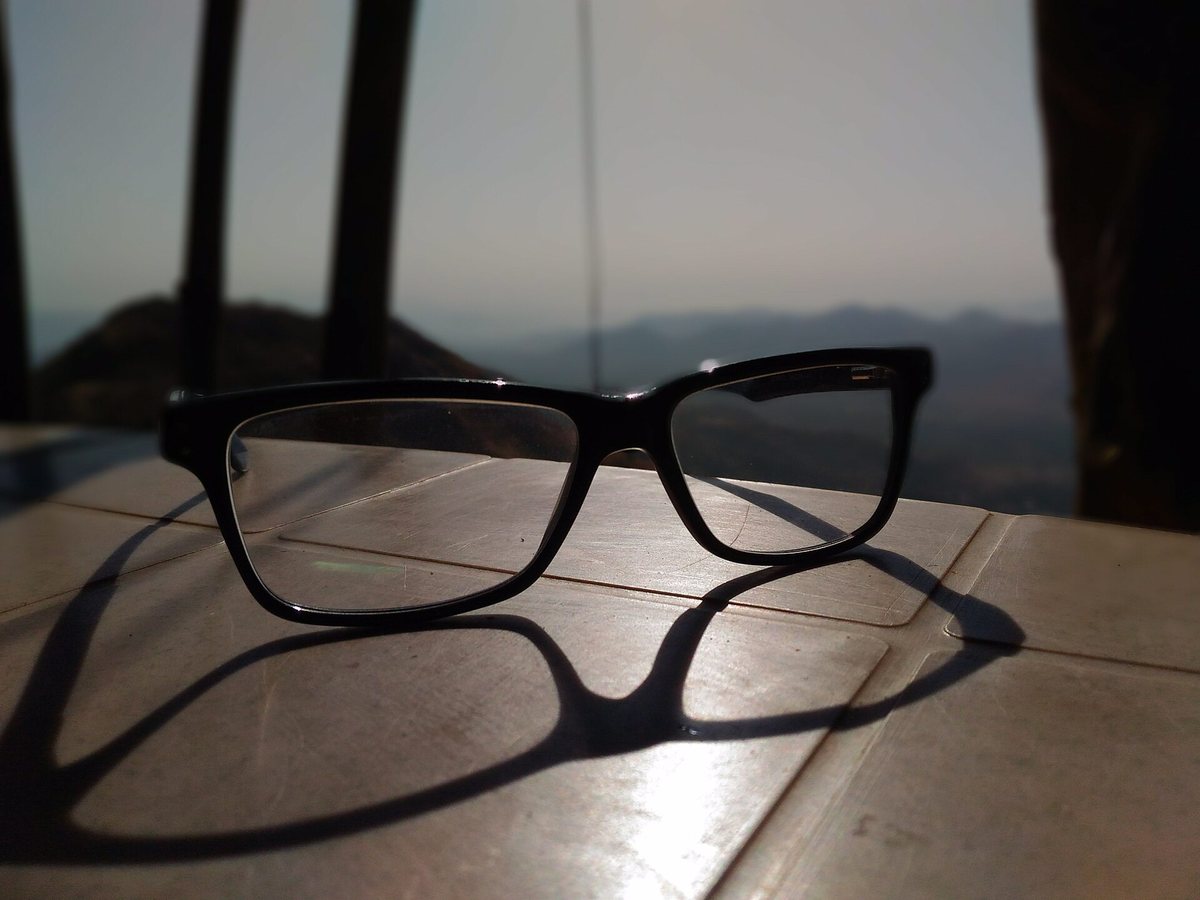
Fog is made of tiny droplets
Air always contains water vapor, which is water in the form of a gas. When water vapor cools and turns back into liquid water, it is called condensation. Fogged glasses are lenses covered with many tiny droplets formed by condensation. The U.S. Geological Survey (USGS) explains that when you wear glasses and go from a cool, air-conditioned room to the outside on a humid day, your lenses fog up because tiny water droplets coat them through condensation.
The key is the dew point
If you keep cooling air, at a certain temperature it can no longer hold all its water vapor as a gas. This temperature is called the dew point, and if the air cools even more, water vapor comes out as liquid water. According to the U.S. National Weather Service, the higher the dew point, the more moisture there is in the air. When moist air touches a lens and the air next to it is cooled below the dew point, the lens fogs up. The same thing happens on a cold lens when you walk into a warm room from the cold outdoors.
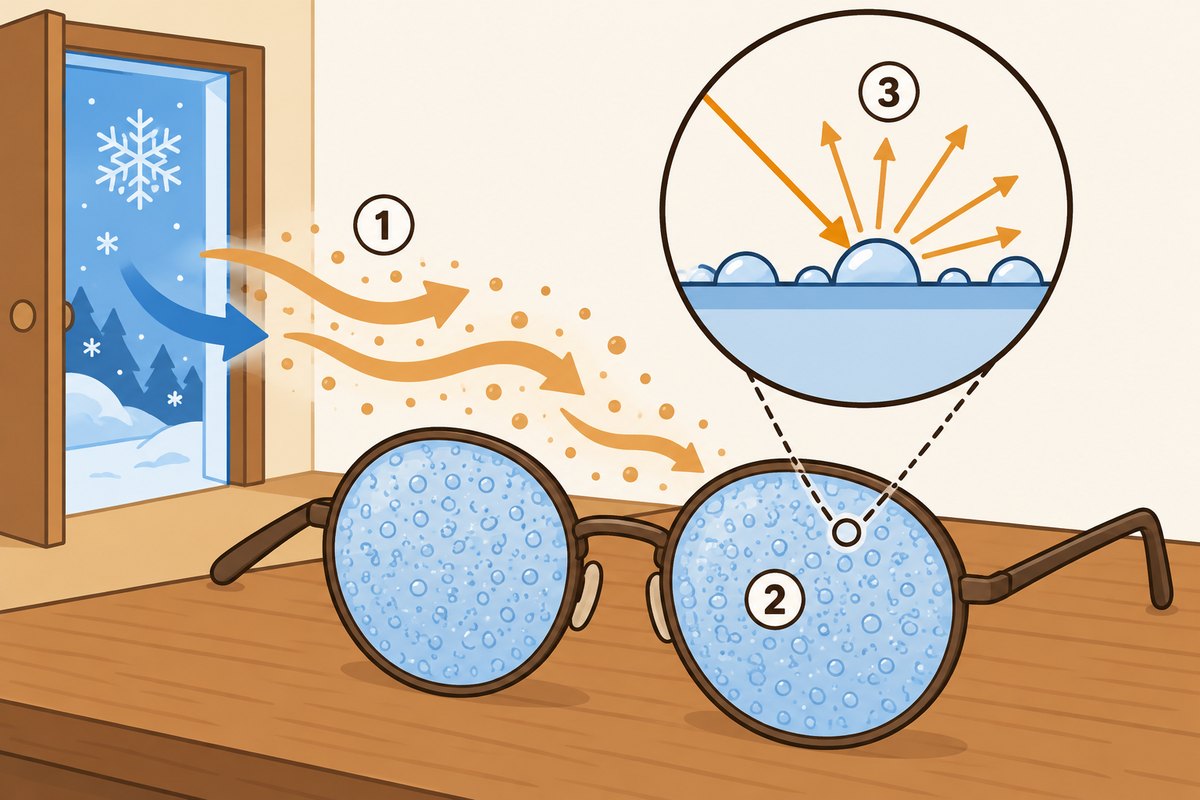
- 1Warm, moist air touching the cold lenses
- 2Tiny water droplets stuck to the lens surface
- 3Light scattering in many directions because of the droplets

Why masks fog up glasses
Glasses fog up when you wear a face mask for the same reason. According to an article by surgeons in India in a medical journal, if there is a gap between the top edge of the mask and your face, the air you breathe out travels upward. When this warm breath touches the cooler lenses, it condenses into tiny droplets. The droplets scatter light, making it harder to see clearly.
Ways to prevent fogging
The same article suggests ways to prevent fogging, such as fitting the top edge of the mask snugly against your nose and face, or placing a folded tissue under the mask over the bridge of your nose to soak up moisture. A very thin film of diluted liquid soap on the lenses makes water spread into a thin, flat, clear layer instead of gathering into fog. A well-ventilated room is also said to help prevent fogging.
Want to know more?
- There are also lenses with anti-fog coatings. Lenses made of polycarbonate, a type of plastic, are said to clear faster than glass lenses.
- Scuba divers have long rubbed spit or diluted liquid soap on the inside of their goggles to keep them from fogging.
- When the inside of a car window gets misty and wet, that is condensation too. The USGS says it happens especially after people have been breathing out moist air.
Quick quiz: test yourself
Remember what you just read? Give it a try!What is the fog on glasses made of?
Show the answer
- Dust on the lens
- Very tiny water droplets
- Tiny scratches on the lens
Very tiny water droplets Water vapor in the air is cooled by the cold lens and turns into tiny droplets. The droplets scatter light, so the lens looks foggy.
Water vapor in the air is cooled by the cold lens and turns into tiny droplets. The droplets scatter light, so the lens looks foggy.
Next quiz ›Sources
- Condensation and the Water CycleU.S. Geological Survey(USGS)Water Science School
- Why Dewpoint vs. Humidity?National Weather Service(アメリカ国立気象局)
- How to Prevent Fogging of Spectacle Glasses When Wearing a Face MaskIndian Journal of Surgery(PMC 掲載)
This article was written after checking the sources above as of 2026-10-03. Explanations may change as research progresses. Photo credits are shown below each photo.
Next fun fact ▶
 NatureHow do ocean waves form?Where do the waves rolling in one after another at the beach come from?

40 surprising animal facts with big photos and short, easy text. A fun-facts book for kids and grown-ups to read together.
See it on Amazon