How do ocean waves form?

 The main force that makes waves is the wind blowing over the sea.
Most of the waves you see at the beach are made by wind blowing across the sea surface. Friction between the wind and the water passes the wind's energy into the water, and small ripples grow into waves. What travels across the ocean is energy, not water; the water itself mostly moves around in circles in the same place.
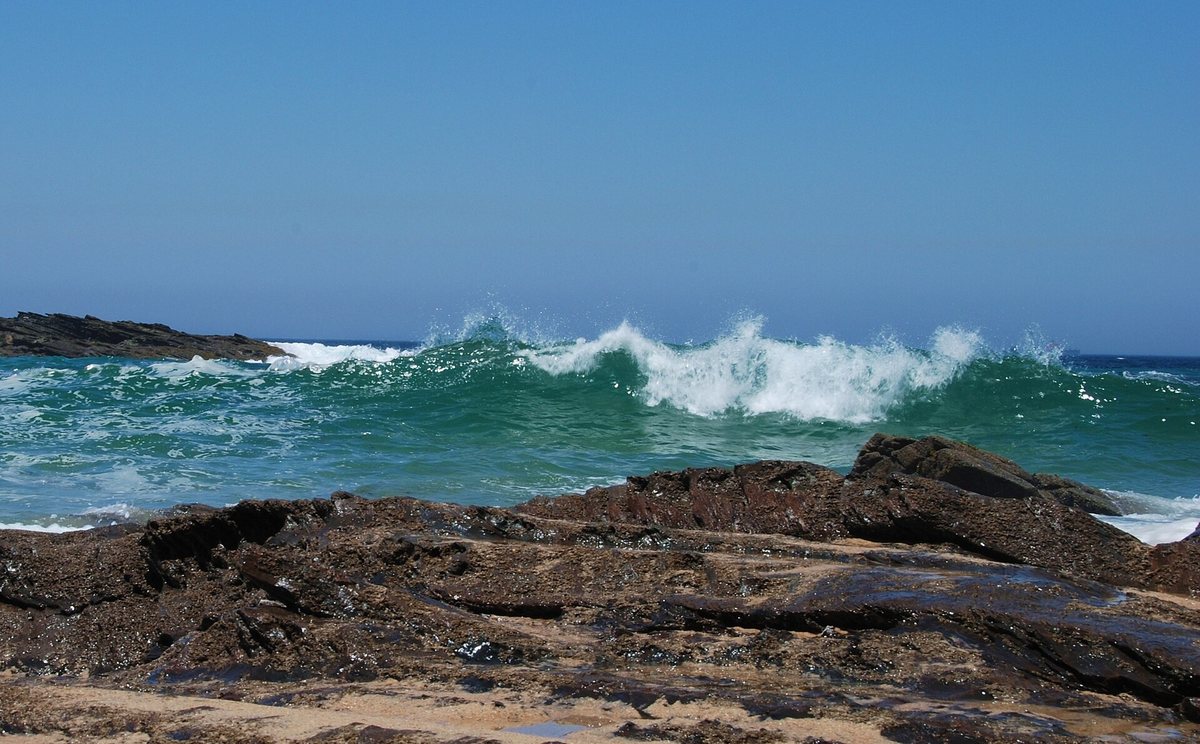
Wind rubs the sea and makes waves
According to NOAA, the U.S. National Oceanic and Atmospheric Administration, the waves you usually see at the beach are surface waves made by wind blowing over the sea. As the wind blows, friction between the air and the water surface moves some of the wind's energy into the water. It is just like the ripples that form when you blow across a cup of water. Once waves form and the surface gets rougher, it is easier for the wind to push the water, and the waves grow bigger.
3 things that make waves big
How big wind waves get depends on 3 things: the wind's strength (it must move faster than the wave crests), how long the wind blows, and the distance of open water the wind blows across without changing direction. Storms of the same size can make much bigger waves in the wide Pacific Ocean than in other oceans. As the wind keeps blowing, whitecaps appear, and eventually the waves start to break.
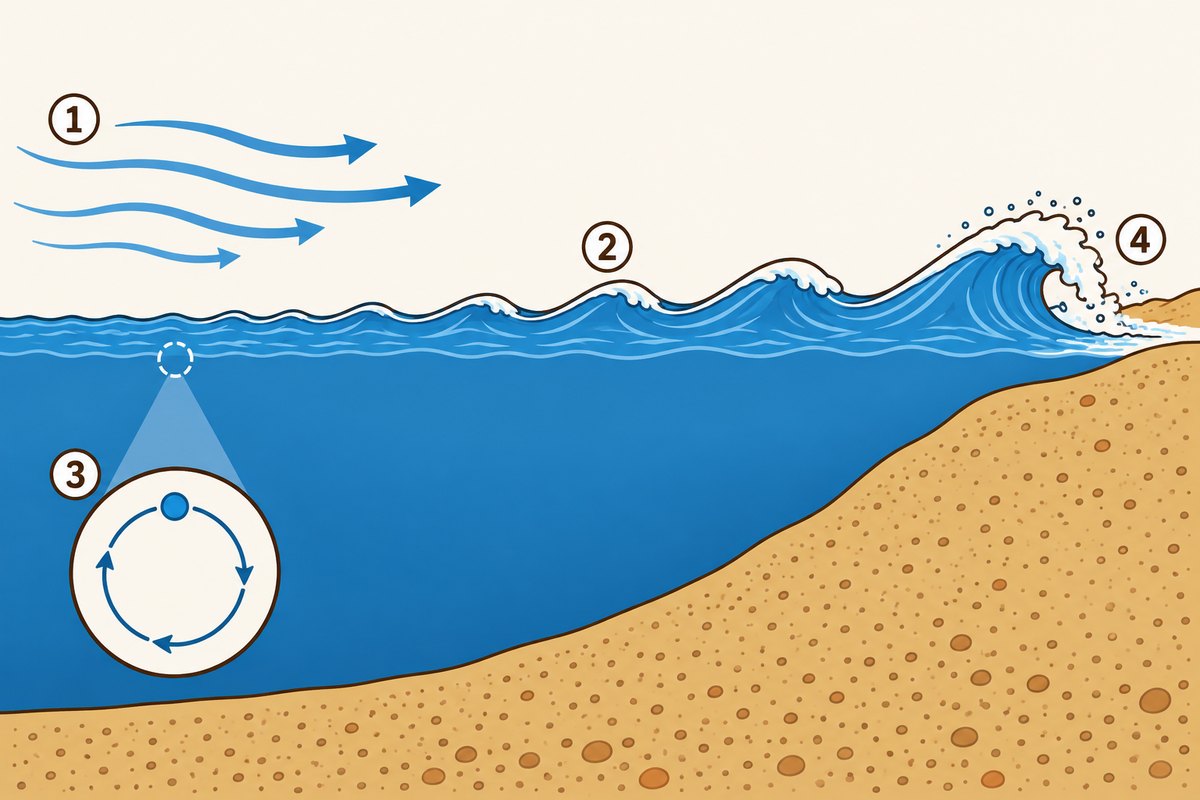
- 1Wind blowing over the sea surface and giving energy to the waves
- 2Waves growing from ripples into big waves
- 3As a wave passes, a bit of water moves in a circle in almost the same spot
- 4A wave tipping forward and breaking on a shallow beach
Energy travels, not water
Watching waves, it feels as if water is flowing toward you, but what waves carry is energy. When a wave reaches a floating object, the object moves forward and up, then down and back, ending up almost where it started. The water moves in circles in the same way. Waves that travel far away from a storm are called swells, and they can travel thousands of kilometers without changing their height or period.

Why waves break on the shore
As a wave passes, not only the surface but also the water below it moves in circles, down to about half the wavelength (the distance from one wave crest to the next). Near a shallow shore, the lower part of the wave is slowed by the seafloor, pushing the crest higher. Waves can grow up to about 1.5 times their deep-water height, until the crest tumbles over and the wave breaks.
Want to know more?
- Strong storms like hurricanes can cause a long wave called a storm surge, with their strong winds and low pressure. Undersea earthquakes, landslides and volcanic eruptions can cause tsunamis.
- Waves made by the pull of the Sun and Moon are the tides. Tsunamis have nothing to do with tides and can happen at any tide.
- Big-wave surfing in Hawaii is possible because swells made by large winter storms in the Pacific Ocean arrive from about November to March.
Quick quiz: test yourself
Remember what you just read? Give it a try!What mainly makes the waves you usually see at the beach?
Show the answer
- Wind blowing over the sea
- The Moon's gravity
- Undersea earthquakes
Wind blowing over the sea Friction between wind and water passes the wind's energy into the water and makes waves. The Moon's pull makes tides, and undersea earthquakes cause tsunamis.
Friction between wind and water passes the wind's energy into the water and makes waves. The Moon's pull makes tides, and undersea earthquakes cause tsunamis.
Next quiz ›Sources
- Why does the ocean have waves?NOAA National Ocean Service
- What causes ocean waves?NOAA Ocean Exploration
- WavesNOAA JetStream(アメリカ海洋大気庁の気象学習サイト)
This article was written after checking the sources above as of 2026-10-03. Explanations may change as research progresses. Photo credits are shown below each photo.
Next fun fact ▶
 NatureWhy is sea level rising?They say the sea is slowly getting higher. Whatever could be happening?

40 surprising animal facts with big photos and short, easy text. A fun-facts book for kids and grown-ups to read together.
See it on Amazon