Does lightning never strike the same place twice?

 The key lies in how lightning "chooses" where to strike.
No, that's a myth. Lightning often strikes the same place more than once. Tall, pointy objects that stand alone are hit again and again, and the Empire State Building in the United States is said to be struck an average of 23 times a year.
The saying is a figure of speech
The saying "lightning never strikes the same place twice" is also used as a figure of speech, meaning that rare bad luck won't happen to the same person or place again. It sounds comforting, but it isn't true about real lightning. The US National Weather Service (NWS) lists it as one of the common myths about lightning and explains that lightning often strikes the same place repeatedly.
Three things that attract lightning
According to the NWS, the main things that decide where lightning strikes are height, a pointy shape, and standing alone, away from other objects. Metal on your body, or a cell phone, does not attract lightning. Trees and mountains, which have little or no metal, are struck many times a year. A NOAA research laboratory also explains that lightning usually strikes the tallest object.
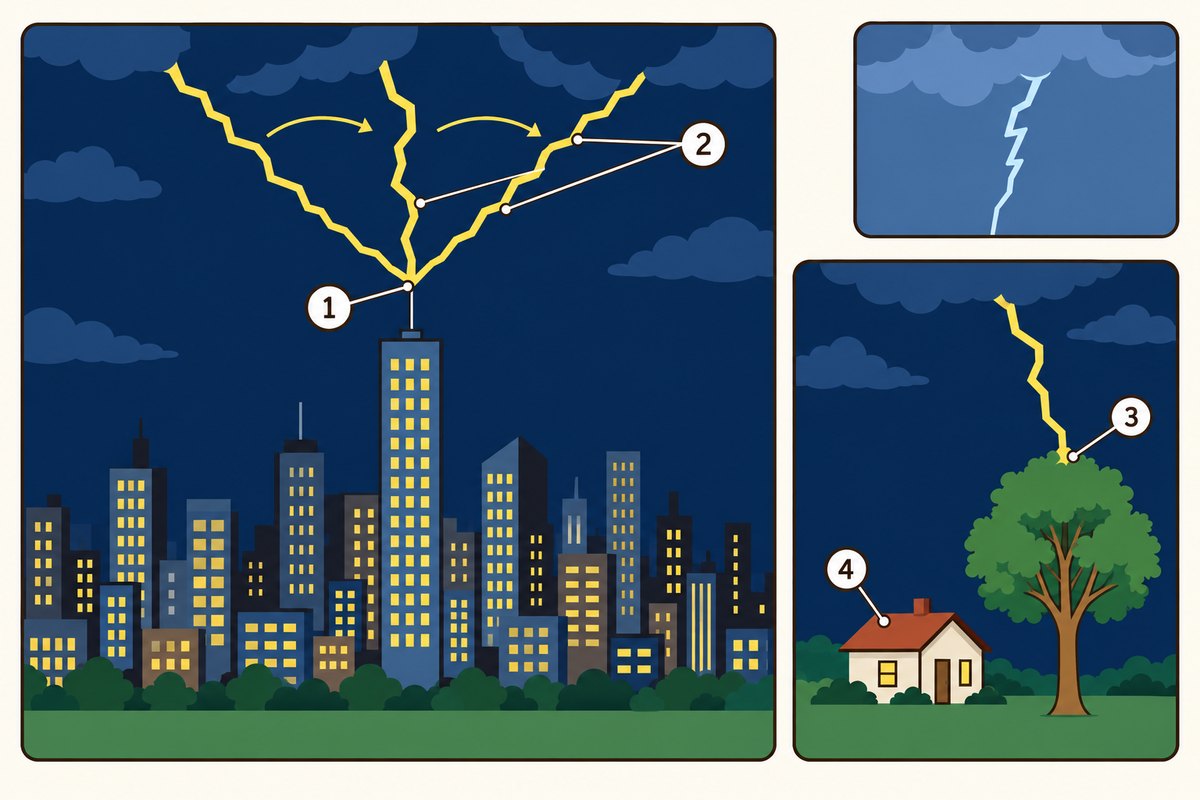
- 1The top of a tall building that lightning strikes again and again
- 2Lightning hitting the same tip at different times
- 3A tree standing alone, taller than its surroundings
- 4A low house, for comparison with the tall tree
A building struck 23 times a year
Tall buildings that stand out are exactly the kind of place lightning likes to hit. The Empire State Building in New York is said to be struck an average of 23 times a year. The NOAA laboratory states plainly that, contrary to folk wisdom, lightning does hit the same spot (or almost the same spot) more than once.

One flash can use the same path many times
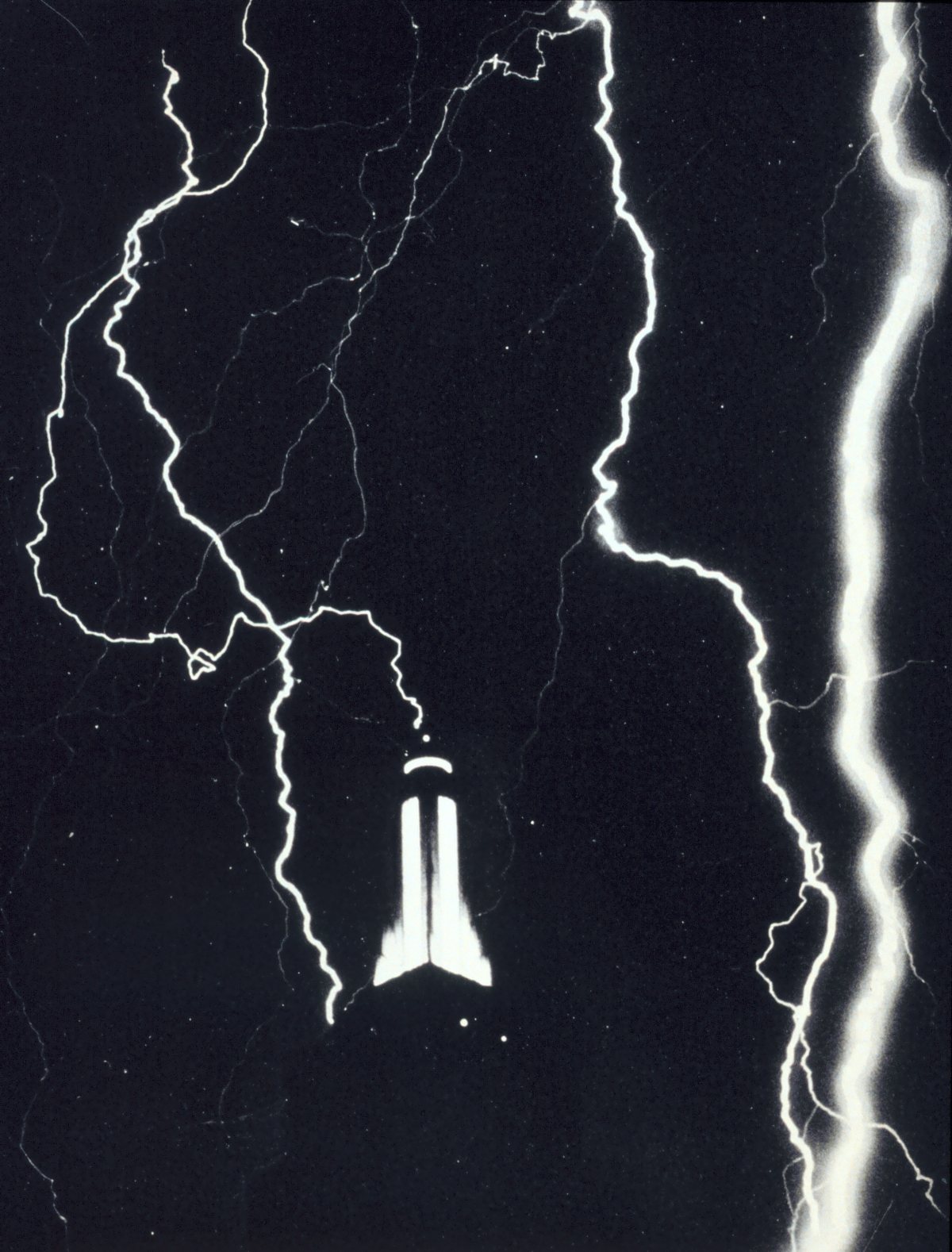
In fact, even within one lightning flash, electricity can race down the same path several times. Many flashes that reach the ground contain one, or as many as 20, powerful surges called "return strokes." When these repeat quickly along the same path, the lightning seems to flicker. It is also known that about half of all flashes reach the ground at two or more points.
Want to know more?
- In the 48 states of the mainland US, an average of about 20 million lightning flashes that reach the ground are detected every year.
- Lightning that flashes inside clouds and does not reach the ground is said to be about 5 to 10 times as common as ground flashes.
- Lightning can carry 100 million to 1 billion volts, heating the air around it in an instant.
Quick quiz: test yourself
Remember what you just read? Give it a try!Can lightning strike the same place twice?
Show the answer
- Never again
- Yes, often many times
- It never hits buildings
Yes, often many times Lightning strikes tall, pointy objects that stand alone again and again. The Empire State Building is hit an average of 23 times a year.
Lightning strikes tall, pointy objects that stand alone again and again. The Empire State Building is hit an average of 23 times a year.
Next quiz ›Sources
- Lightning MythsNational Weather Service(アメリカ国立気象局)
- Severe Weather 101: Lightning FAQNOAA National Severe Storms Laboratory(アメリカ海洋大気庁 国立暴風雨研究所)
- Severe Weather 101: Lightning TypesNOAA National Severe Storms Laboratory(アメリカ海洋大気庁 国立暴風雨研究所)
This article was written after checking the sources above as of 2026-10-03. Explanations may change as research progresses. Photo credits are shown below each photo.
Next fun fact ▶
 SpaceCan you really see the Great Wall of China from space?"The Great Wall can be seen from space"... it's a famous story, but is it really true?

40 surprising animal facts with big photos and short, easy text. A fun-facts book for kids and grown-ups to read together.
See it on Amazon