Why do volcanoes erupt?

 The key is the gas dissolved in the magma.
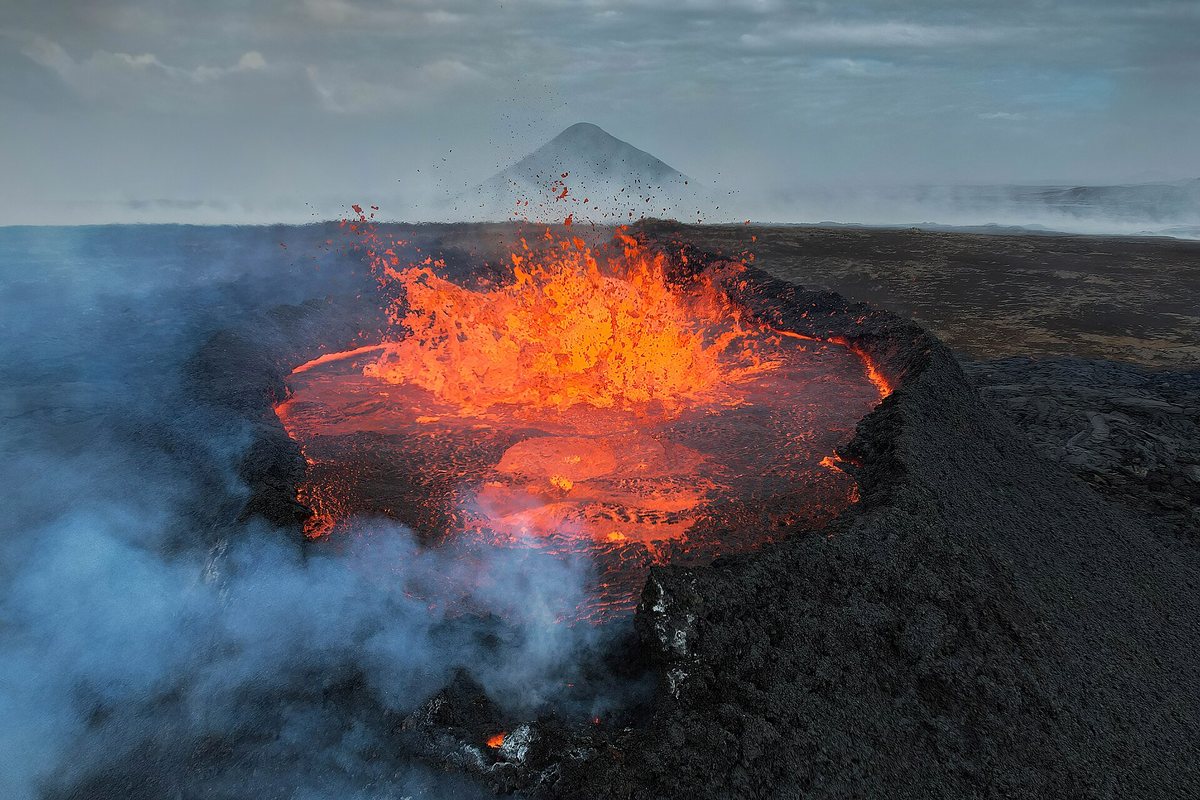
Deep underground, some rock melts and becomes magma. Magma is lighter than the solid rock around it, so it rises. As it gets closer to the surface and the pressure on it drops, gas dissolved in the magma forms bubbles that expand. That gas pushes the magma out onto the surface, and that is an eruption.
Magma rises because it is lighter
A volcano begins with magma, which forms when some of the rock deep underground melts. Magma is less dense than the solid rock around it (the same amount weighs less), so it floats upward and collects in places called magma chambers. When magma comes out onto the surface through cracks or vents, it is called lava.
Gas bubbles push it out
Magma has gas dissolved in it. Deep underground, it is squeezed so hard that the gas cannot form bubbles. But as the magma rises and the pressure drops, the gas forms bubbles that grow bigger and bigger and push the magma out. The U.S. Geological Survey (USGS) compares this to the fizz that rushes out when you open a bottle of soda.
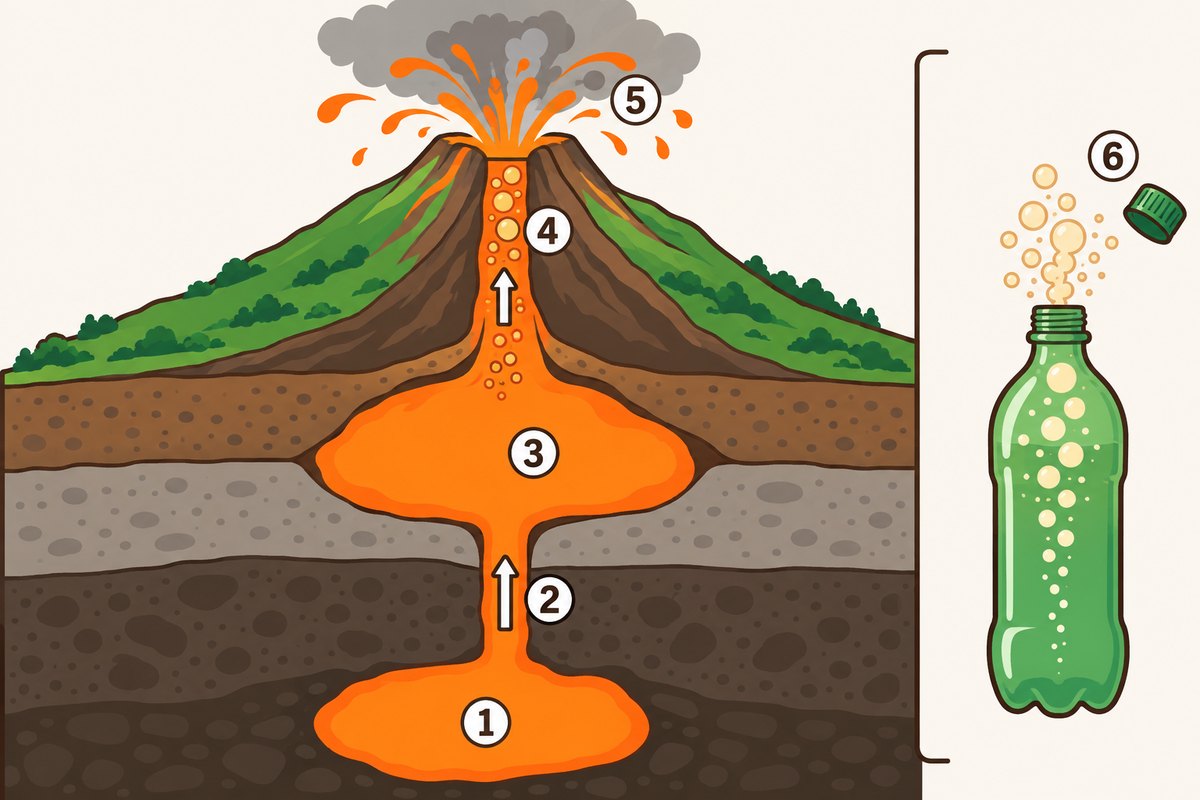
- 1Magma formed deep underground
- 2Magma rising because it is lighter than the rock around it
- 3The magma chamber
- 4Gas bubbles swelling as the pressure holding them drops
- 5Magma pushed out of the crater (an eruption)
- 6Like the bubbles in a fizzy drink when you open the cap

Gentle eruptions and violent ones
How violent an eruption is depends on how sticky the magma is. Runny magma lets gas escape easily, so it tends to make gentle eruptions where lava flows out, like at the volcanoes of Hawaii. Thick, sticky magma traps the gas, so pressure builds up, and it can cause explosive eruptions like the one at Mount St. Helens in the United States. USGS scientists explain that not only the amount of gas but also how fast it escapes matters. It is like the difference between opening a can after shaking it gently or after shaking it hard.
Japan has 111 active volcanoes
The Japan Meteorological Agency calls a volcano "active" if it has erupted within roughly the past ten thousand years or still gives off lively bursts of gas today, and says Japan has 111 active volcanoes. Research to find out ahead of time how violent an eruption will be is still going on.
Want to know more?
- Shield volcanoes, built from runny lava, have slopes gentler than 10 degrees. Mauna Kea and Mauna Loa in Hawaii rise more than 9 km above the sea floor.
- In the 1815 eruption of Mount Tambora in Indonesia, the peak, estimated at about 4000 m high, was blown away, leaving a hollow (caldera) 6 km across and 1.1 km deep.
- In violent eruptions, pieces ranging from ash to large rocks are thrown out, and hot volcanic material can mix with water to form mudflows called lahars.
Quick quiz: test yourself
Remember what you just read? Give it a try!Why does magma rise from deep underground?
Show the answer
- It is lighter than the rock around it
- Because the Earth spins
- Rainwater pushes it up
It is lighter than the rock around it Melted magma is less dense (lighter) than the solid rock around it, so it floats upward.
Melted magma is less dense (lighter) than the solid rock around it, so it floats upward.
Next quiz ›Sources
- How do volcanoes erupt?USGS(アメリカ地質調査所)
- Volcano Watch — Volcano: Will it flow or blow?USGS ハワイ火山観測所
- How volcanoes formBritish Geological Survey(英国地質調査所)
- 活火山とは気象庁 (in Japanese)
This article was written after checking the sources above as of 2026-10-03. Explanations may change as research progresses. Photo credits are shown below each photo.
Next fun fact ▶
 NatureHow does rain form?What do you think a raindrop looked like before it fell from the sky?

40 surprising animal facts with big photos and short, easy text. A fun-facts book for kids and grown-ups to read together.
See it on Amazon