Why does lightning flash in a zigzag?

 The answer lies in how the electric path moves forward.
Lightning zigzags because the electric path coming down from a thundercloud (the stepped leader) doesn't head straight for the ground. Instead, it moves forward in short steps of about 50 meters, changing direction each time. It also branches as it goes, so it ends up jagged with many branches.
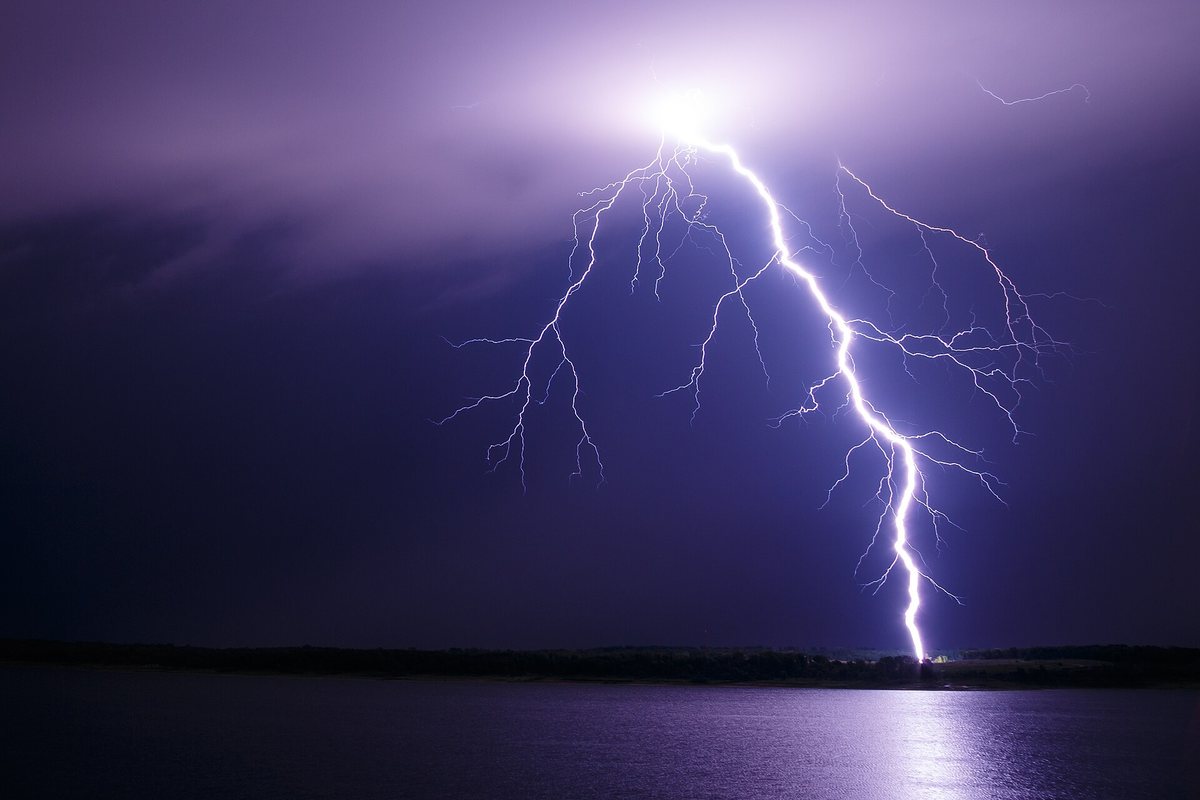
Lightning is a giant spark in the sky
According to a laboratory of the U.S. National Oceanic and Atmospheric Administration (NOAA), lightning is a giant electric spark that happens inside clouds or between clouds and the ground. Positive and negative electric charges build up in a thundercloud, and when the air, which normally doesn't carry electricity well, can no longer hold back, electricity rushes through all at once.
A path that moves about 50 meters at a time
In lightning that strikes the ground, a faint electric path that is hard to see first reaches down from the bottom of the cloud. This is called the stepped leader. According to the U.S. National Weather Service, its tip does not know what the ground looks like. It moves about 50 meters at a time, sensing only the electrical conditions within about 50 meters of its tip.
It isn't taking a shortcut
With each step, the next direction depends on the state of the air right there, so the path becomes a winding zigzag. It is not choosing the shortcut where electricity flows most easily. NOAA explains that it repeats moving one step and then pausing for about 50 microseconds (50 millionths of a second), splitting into many branches along the way.
The flash is a "return trip" from the ground
When the path gets close to the ground, an opposite electric path reaches up from the tips of tall things such as trees and buildings. The moment the two connect, a huge current flows and creates a bright flash. This flash actually travels from the ground up to the cloud, but it is so fast that to our eyes it looks like it is falling from above. The glowing channel follows the zigzag path, so lightning looks zigzagged.
Want to know more?
- Lightning that flashes only inside clouds is said to be about 5–10 times more common than lightning that strikes the ground.
- Lightning seems to flicker because electric current flows through the same path several times.
- It takes about 1/20 of a second for the stepped leader to reach from the cloud to the ground.

Quick quiz: test yourself
Why does lightning flash in a zigzag?
Show the answer
- It picks the shortest path
- The wind bends it
- It moves in short steps, turning often
It moves in short steps, turning often Lightning's path moves forward about 50 meters at a time, changing direction each step depending on the air there. That makes it zigzag.
Lightning's path moves forward about 50 meters at a time, changing direction each step depending on the air there. That makes it zigzag.
Next quiz ›Sources
- Severe Weather 101: Lightning BasicsNOAA National Severe Storms Laboratory
- Severe Weather 101: Lightning TypesNOAA National Severe Storms Laboratory
- Understanding Lightning: Initiation of a Stepped LeaderNational Weather Service(NOAA)
- JetStream Max: The Lightning Process: Keeping in StepNOAA
This article was written after checking the sources above as of 2026-10-03. Explanations may change as research progresses. Photo credits are shown below each photo.