How is miso made from soybeans?

 First, let me give you the answer in 30 seconds.
Miso is made by mixing steamed or boiled soybeans with koji and salt, then letting the mixture ferment and age. Enzymes made by koji mold break down the starch in rice and the protein in soybeans, creating the building blocks of sweetness and umami (savory taste). Yeast and lactic acid bacteria then add miso's typical aroma and flavor.
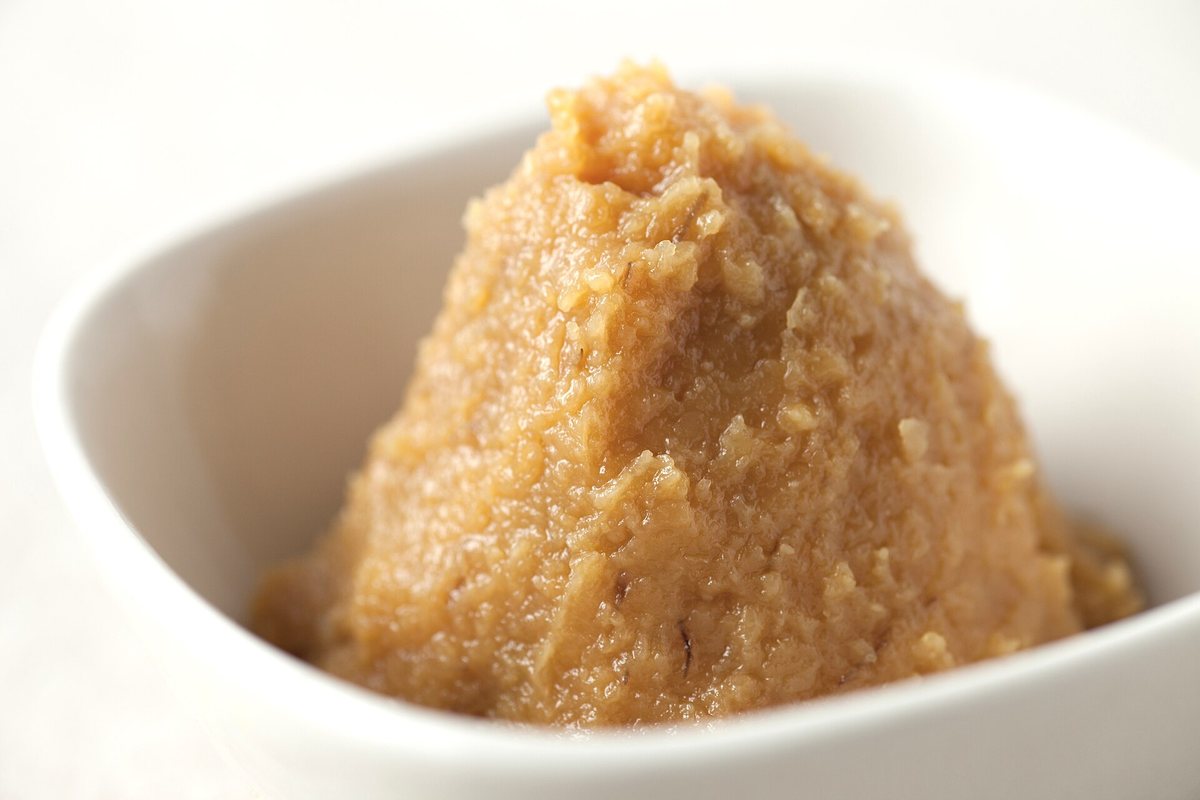
Ingredients: soybeans, salt, and koji
Miso is made from soybeans, salt, and koji (grains or beans grown with a special mold). Depending on what the koji is made from, miso is divided into 4 types: rice miso, barley miso, soybean miso, and blended miso that combines them. Every kind of miso always contains soybeans and salt. Of the miso made in Japan in 2020, 85% was rice miso.
First, make the koji
For rice miso, the first step is to steam rice, add koji mold, and let it grow to make rice koji. This step is called seikiku (koji making) and takes about 42–48 hours. Under Japan's official standard for miso (JAS), the koji mold is limited to a species called Aspergillus oryzae.

Mix and set it to ferment
Next, steamed or boiled soybeans are mixed with the rice koji and salt. This step is called shikomi, and it is usually done at about 25–30℃. Yeast and lactic acid bacteria are added at this stage. Miso contains about 12% salt, so the yeast and lactic acid bacteria used are ones that can stand a lot of salt.
What happens during aging
While the mixture ages, the koji enzymes break down the starch in the rice into sugar and the protein in the soybeans into amino acids, creating the building blocks of sweetness and umami. The lactic acid bacteria make lactic acid, which makes it easier for yeast to grow, and the yeast makes the source of miso's aroma. Aging takes about 1 month for short ones and years for long ones.
Want to know more?
- Even with the same ratio of ingredients, miso aged for a short time is light in color, and the longer it ages, the deeper its reddish color becomes. Substances formed when sugars react with amino acids give miso its color.
- Sweet miso, such as white miso, is kept at about 50℃ and aged in just a few days by the koji enzymes alone. During this time, yeast and lactic acid bacteria do little fermenting.
- Digging out the miso partway through aging and moving it to another tank is called tenchi-gaeshi ("turning heaven and earth"). It is done to make fermentation even and to help the yeast multiply.

Quick quiz: test yourself
What is mixed with soybeans to make miso?
Show the answer
- Koji and salt
- Vinegar and sugar
- Nigari (tofu coagulant) and water
Koji and salt Steamed or boiled soybeans are mixed with koji and salt, then left to ferment and age. Enzymes from koji create the building blocks of sweetness and umami.
Steamed or boiled soybeans are mixed with koji and salt, then left to ferment and age. Enzymes from koji create the building blocks of sweetness and umami.
Next quiz ›Sources
- 発酵調味料“味噌”を知る(生物工学 第97巻第4号, 2019)日本生物工学会 (in Japanese)
- みその日本農林規格の制定について(2022年2月7日)農林水産省 新事業・食品産業部 (in Japanese)
This article was written after checking the sources above as of 2026-10-03. Explanations may change as research progresses. Photo credits are shown below each photo.