Why do I get sleepy after eating?

 One key is the "stay awake" signal inside the brain.
How after-meal sleepiness works is still not fully understood. A study in the UK found that glucose, the sugar in food, can stop the brain cells that send "stay awake" signals (the cells that make orexin) from working, which may help explain why we feel sleepy after eating.

Little evidence for the food coma, until recently
Many people have felt drowsy and foggy after a big meal. But according to the Scripps Research Institute in the United States, for a long time there was little scientific evidence that this "food coma" is a real physical effect. Studies on people have also given mixed results: some found people got sleepy after eating, some found the sleepiness came a little later, and some found no change.
Sugar quiets the "stay awake" signal
In 2006, a research team at the University of Manchester in the UK looked at brain cells that make a substance called orexin, which is important for keeping us awake. They found that glucose, the sugar in food, stops these cells from working through a "pore" on the cell's surface. Because this system can sense even small changes like those between meals, the researchers say it may help explain after-meal sleepiness.
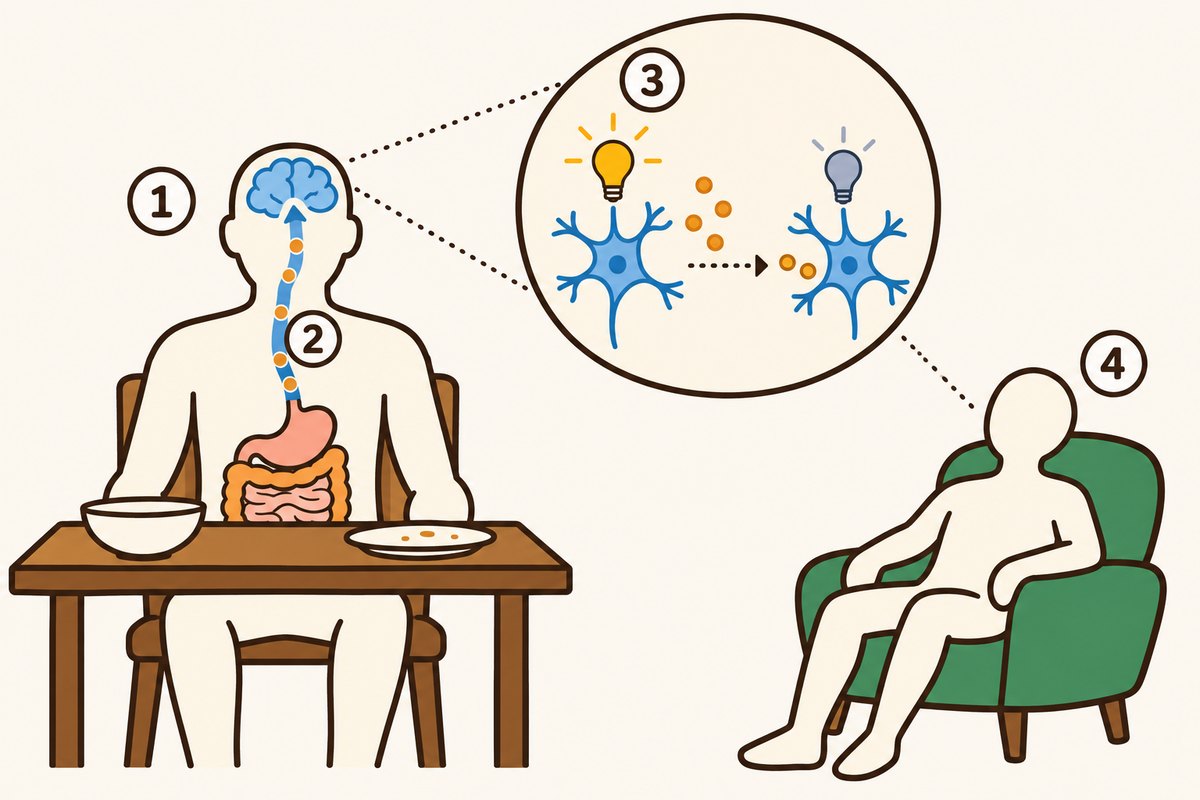
- 1A person who has just finished eating
- 2Glucose reaching the brain
- 3The cells that keep us awake becoming less active (a theory)
- 4A person relaxing after the meal
Fruit flies nap after meals too
In 2016, a team including the Scripps Research Institute recorded both the eating and the sleep of fruit flies. After a meal, the flies slept more for about 20 to 40 minutes, and flies that ate more slept more. What increased sleep was protein, salt and the amount eaten, while sugar had no effect. However, flies and humans work differently, so the results may not apply directly to people.

Why we get sleepy is still a mystery
What good after-meal sleep does for animals is also still unknown. Researchers have suggested ideas such as helping digestion or helping animals remember where food can be found. How sleepy people get also differs from person to person. If strong sleepiness keeps bothering you, talk to a doctor.
Want to know more?
- The cells that make orexin are involved not only in how awake we are, but also in looking for food and in releasing hormones.
- The fly study found several brain circuits that control after-meal sleep. Some respond to protein, and others work along with the body clock.
- The researchers also think after-meal sleep may help the body absorb protein and salt well, but this idea is based on data not yet published.
Quick quiz: test yourself
Remember what you just read? Give it a try!In a UK study, which brain cells did glucose from food stop from working?
Show the answer
- Cells that make bone
- Cells that make orexin
- Cells that sense smells
Cells that make orexin Glucose stopped the cells that make orexin, a substance important for staying awake, which may help explain sleepiness after eating.
Glucose stopped the cells that make orexin, a substance important for staying awake, which may help explain sleepiness after eating.
Next quiz ›Sources
- Why We Could All Do With A SiestaUniversity of Manchester(ScienceDaily 掲載の大学発表)
- Scientists Find Surprising Answers to 'Food Coma' ConundrumThe Scripps Research Institute(スクリプス研究所)
- Postprandial sleep mechanics in DrosophilaeLife(査読論文)
This article was written after checking the sources above as of 2026-10-03. Explanations may change as research progresses. Photo credits are shown below each photo.
Next fun fact ▶
 Human BodyWhy do we get motion sickness?Riding in a car or on a boat, you slowly start to feel unwell... What is happening inside your body?

40 surprising animal facts with big photos and short, easy text. A fun-facts book for kids and grown-ups to read together.
See it on Amazon