How do smartwatches measure your heart rate?

 Let's start with the little light that glows on the back of the watch.
Most smartwatches shine light into your wrist and measure your heartbeat from changes in how much light comes back. Blood absorbs green light, so when your heart beats and more blood flows through your wrist, more light is absorbed. The watch checks these light changes hundreds of times per second and calculates your heart rate.
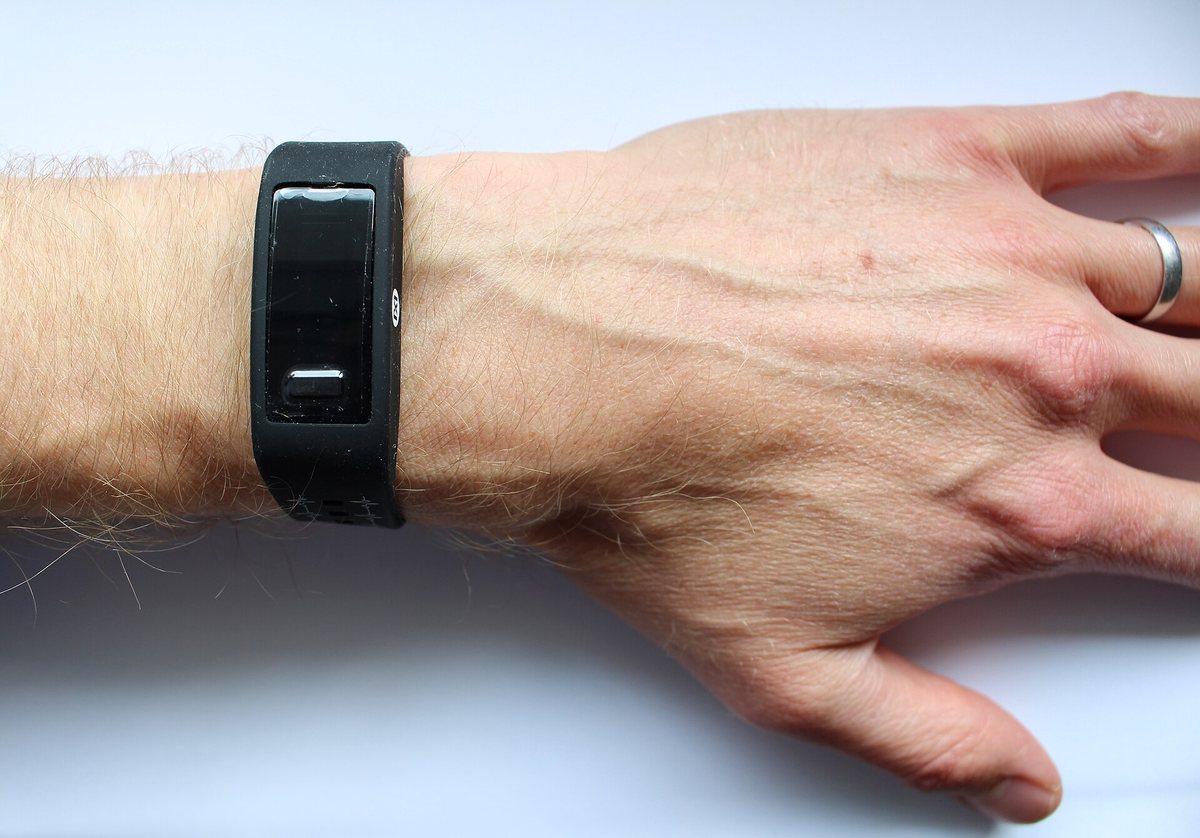
Light reveals changes in blood
Most smartwatches use light to measure your heartbeat. This method is called photoplethysmography (PPG), and it uses light to detect changes in the amount of blood under the skin. According to a review paper, a PPG device contains a part that gives off light and a sensor that measures light. Devices used on a fingertip or earlobe send light through to the other side of the body, but wrist devices have the light and the sensor side by side and measure the light that bounces back.
Blood absorbs green light
According to Apple, blood looks red because it reflects red light and absorbs green light. Apple Watch shines green LED light into your wrist and catches the light that comes back with light-sensitive parts called photodiodes. When your heart beats, more blood flows through your wrist and more green light is absorbed. Between beats, less light is absorbed.
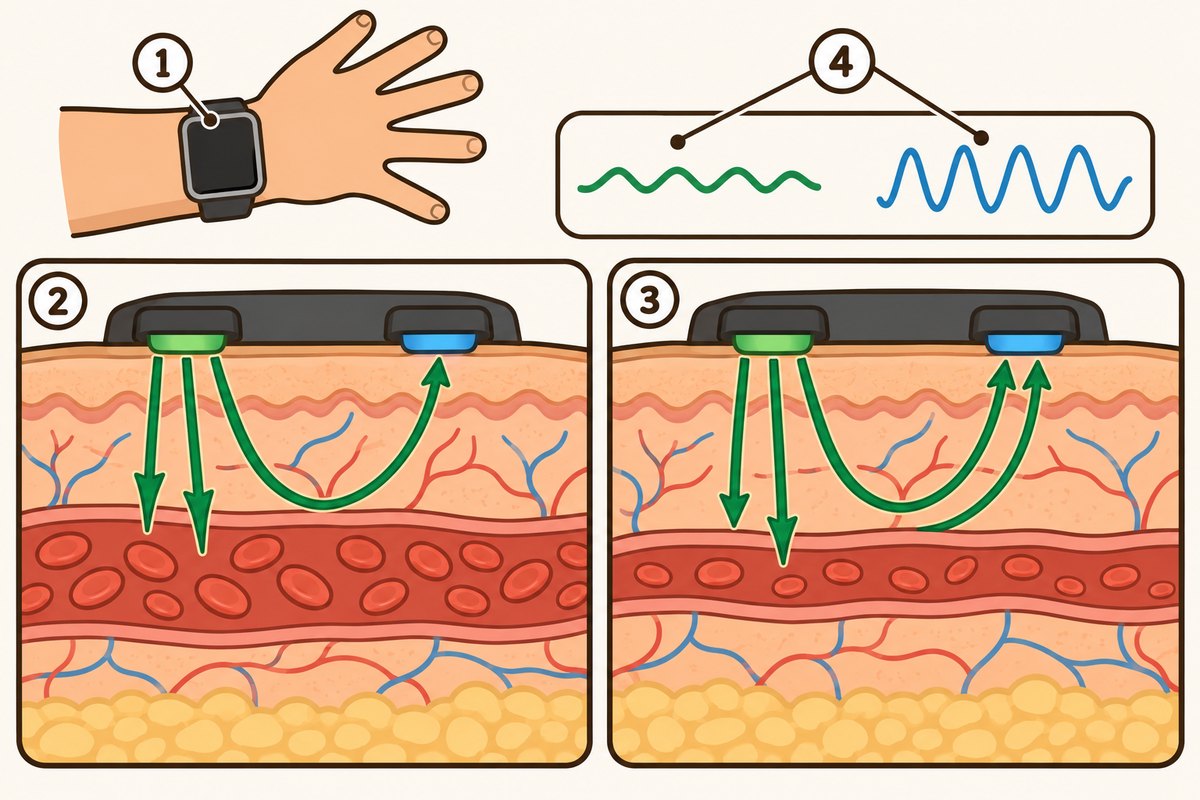
- 1A smartwatch worn on the wrist
- 2During a beat: more blood, so more green light is absorbed
- 3Between beats: less blood, so more light comes back
- 4The changes in returning light picked up by the sensor

Flashing hundreds of times per second
Apple Watch flashes its LEDs hundreds of times per second and calculates your heart rate from these changes in light. It can measure from 30 to 210 beats per minute. When the signal is weak, it makes up for it by making the LEDs brighter and measuring more often. Depending on the model, and on whether you are exercising or sleeping, it may use infrared light instead of green.
Movement makes measuring harder
Research papers point out that wrist light sensors are easily disturbed by hand movement. A study that tested several devices found that, on average, errors during exercise were 30% higher than at rest. Apple also says a good fit on the wrist is important, and that the watch may not get a reliable reading every time for everyone.
Want to know more?
- According to a review paper, the light signal has a part that changes with each heartbeat, plus a part that changes slowly with things like breathing and body temperature control.
- In a study comparing several devices, errors at rest were smaller for consumer devices than for research devices.
- The same study found no statistically significant difference in accuracy across skin tones.
Quick quiz: test yourself
Remember what you just read? Give it a try!What do smartwatches use to measure your heart rate?
Show the answer
- Sounds heard at the wrist
- The skin temperature of the wrist
- Changes in light bouncing back
Changes in light bouncing back The watch shines light into your wrist and calculates your heart rate from changes in how much light comes back without being absorbed by blood.
The watch shines light into your wrist and calculates your heart rate from changes in how much light comes back without being absorbed by blood.
Next quiz ›Sources
- Monitor your heart rate with Apple WatchApple Support(アップル)
- A review on wearable photoplethysmography sensors and their potential future applications in health careInternational Journal of Biosensors & Bioelectronics(PMC)
- Investigating sources of inaccuracy in wearable optical heart rate sensorsnpj Digital Medicine(PMC)
This article was written after checking the sources above as of 2026-10-03. Explanations may change as research progresses. Photo credits are shown below each photo.
Next fun fact ▶
 TechnologyWhere is the data you save to the cloud?"Save to the cloud" sounds like something up in the sky. So where is the data, really?

40 surprising animal facts with big photos and short, easy text. A fun-facts book for kids and grown-ups to read together.
See it on Amazon