When and where did origami begin?

 In fact, no one knows for certain.
No one knows exactly when origami began. In Japan, one possible origin is "origata," a way of folding paper to wrap gifts that developed as samurai etiquette in the Muromachi period, and origami spread as a pastime in the Edo period. Europe also had its own separate tradition of paper folding.
No clear starting point
Makoto Yamaguchi, an origami artist and secretary general of the Japan Origami Academic Society, explains that it is not clear when origami began in Japan. One clue is "origata," which developed as samurai etiquette in the Muromachi period. It was a way of folding paper to wrap gifts and letters, and the tradition was passed down into the Edo period.
A pastime in the Edo period
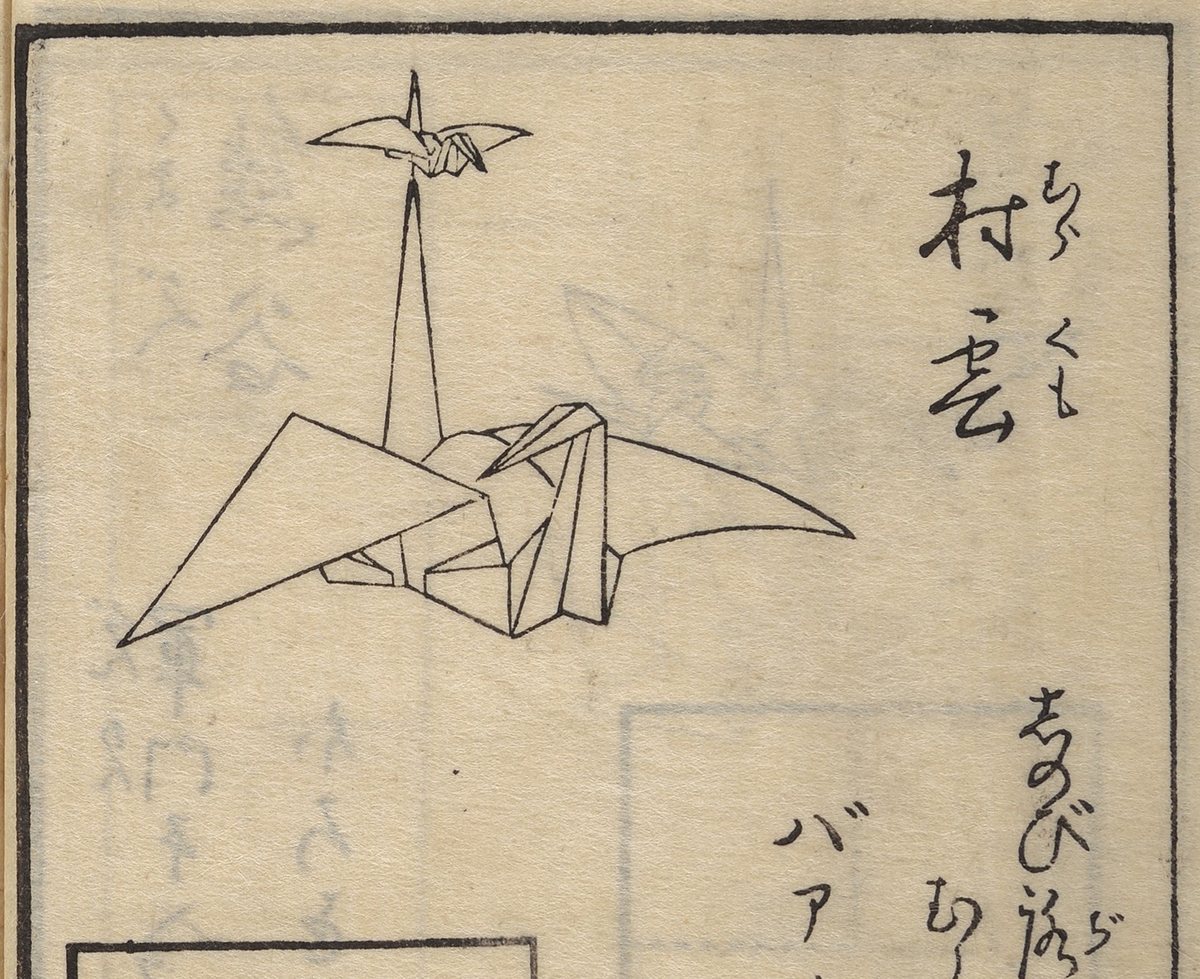
When paper came to be made in large amounts in the Edo period, origami as a pastime spread to ordinary people. Books from the early 18th century showing ukiyo-e prints and kimono patterns already include folded paper cranes. In 1797, Hiden Senbazuru Orikata (Secret Folding of a Thousand Cranes), said to be the world's oldest book on recreational origami, was published in Kyoto.
Many cranes from one sheet
The book shows "renzuru," in which cuts are made in one sheet of paper and many cranes are folded joined together. Later research found that they were designed by Rokoan Gido (1762-1834), a monk at Chōenji Temple in what is now Kuwana, Mie Prefecture. In 1976, the 49 kinds of linked cranes in the book were named an intangible cultural property of the city as "Kuwana no Senbazuru."

Meeting European paper folding
In Europe, too, paper folding was practiced, though its origin is unclear, and Spain has the "pajarita," a little bird. The German educator Friedrich Froebel, known for founding the first kindergarten, brought European paper folding into early childhood education. This reached Japan in the Meiji era, and Japanese and European paper folding came to be enjoyed at school and at home.
Want to know more?
- Origami spread around the world as an art after World War II, when the origami artist Akira Yoshizawa held exhibitions and seminars in many countries.
- The American Lillian Oppenheimer proposed using the Japanese word "origami" for paper folding, and it became a word understood around the world.
- Some of Kuwana's linked cranes connect as many as 97 cranes from a single sheet of paper.
Quick quiz: test yourself
Remember what you just read? Give it a try!What was the way of folding paper to wrap gifts that developed as samurai etiquette in the Muromachi period?
Show the answer
- Origata
- Linked kites
- Furoshiki
Origata Origata, a way of folding paper to wrap gifts and letters, is thought to be one of the origins of Japanese origami.
Origata, a way of folding paper to wrap gifts and letters, is thought to be one of the origins of Japanese origami.
Next quiz ›Sources
- 折り紙の世界(Highlighting Japan 2021年12月号)政府広報オンライン(内閣府) (in Japanese)
- 一枚の紙から折る「連鶴」(Highlighting Japan 2021年12月号)政府広報オンライン(内閣府) (in Japanese)
- 秘伝千羽鶴折形国立国会図書館(NDLサーチ) (in Japanese)
This article was written after checking the sources above as of 2026-10-03. Explanations may change as research progresses. Photo credits are shown below each photo.
Next fun fact ▶
 CultureWhere did chopsticks come from?We use them at every meal. But where did chopsticks come from?

40 surprising animal facts with big photos and short, easy text. A fun-facts book for kids and grown-ups to read together.
See it on Amazon