Why does the Moon seem to follow you when you walk?

 The clue is the very long distance to the Moon.
The Moon seems to follow you because it is very far away. As you walk or ride along, nearby houses and trees slide past behind you, but the faraway Moon hardly changes position at all. Since only the scenery around you moves, it feels as if the Moon is traveling along with you.
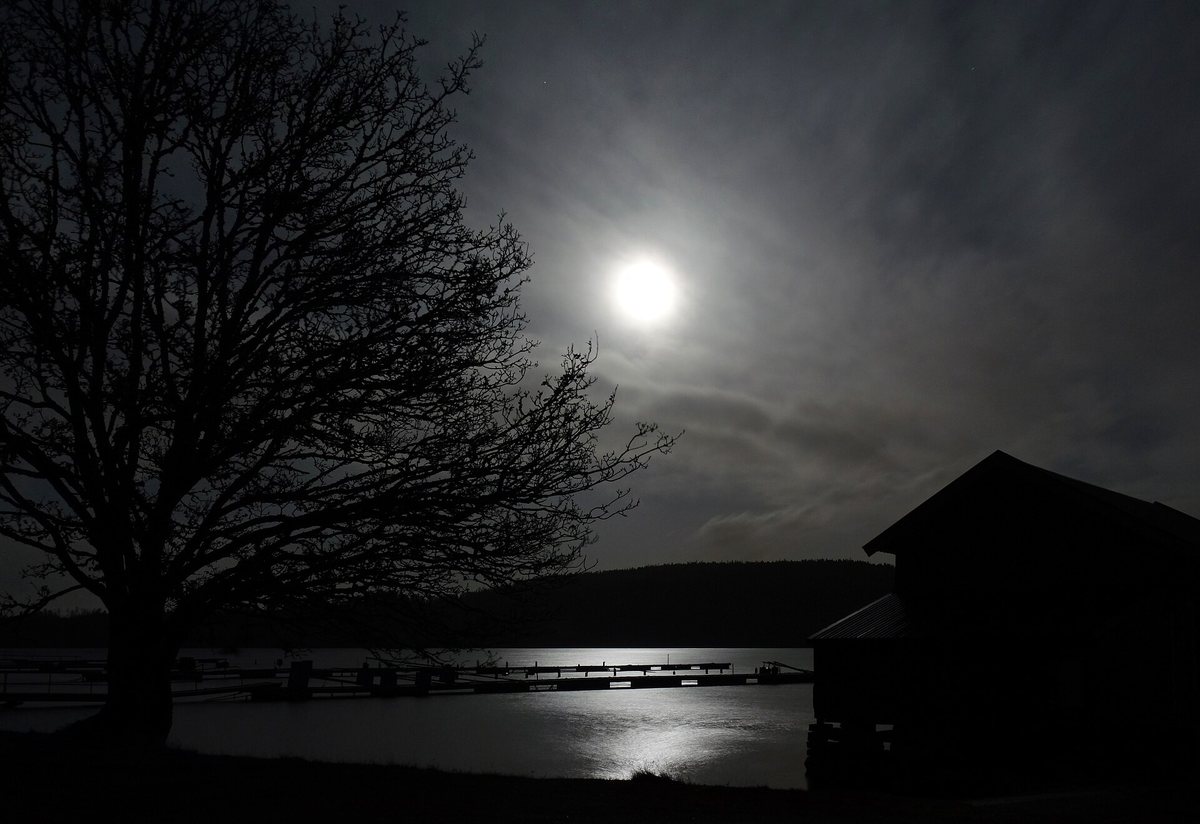
Because the Moon is very far away
According to an astronomy explainer from Caltech in the US, the Moon seems to follow you because it is so far away. When you walk or drive, nearby houses and trees keep passing between you and the Moon. But the Moon is so distant that it hardly seems to move at all compared to you. That is why it feels as if the Moon is following you.
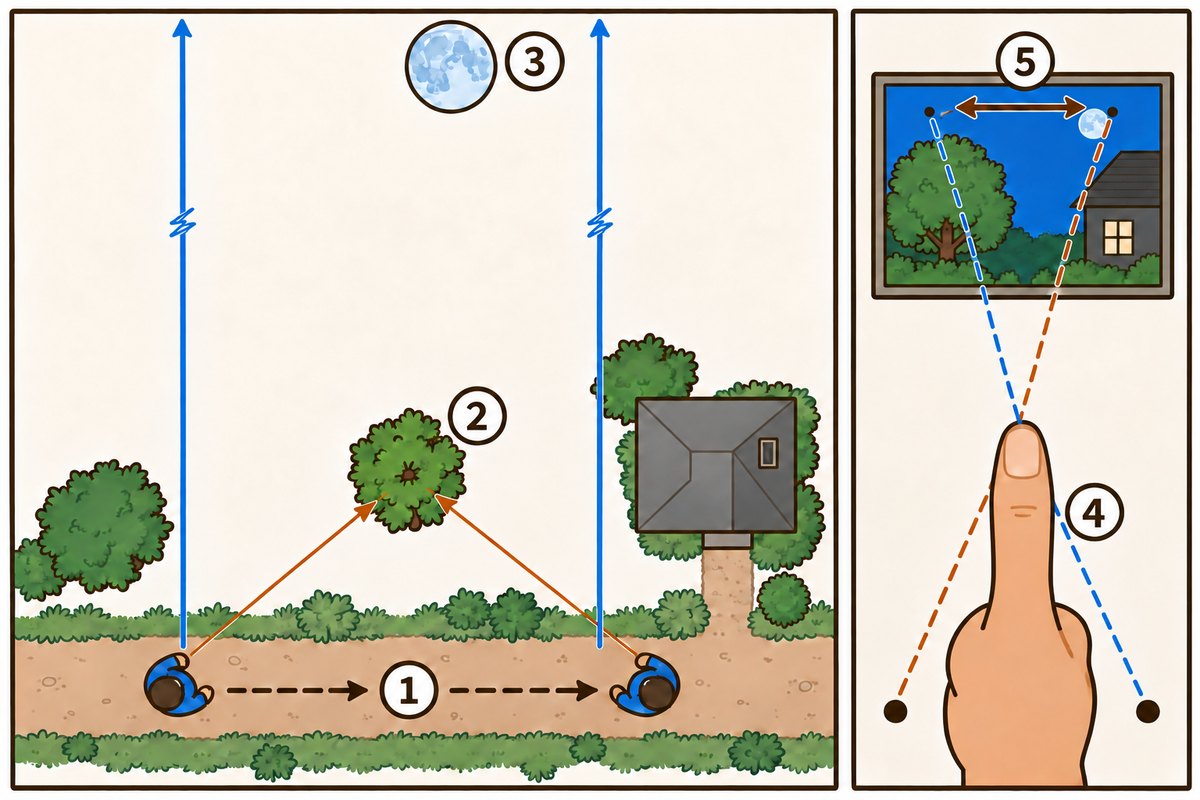
- 1Two viewing spots after walking a short way
- 2The direction to a nearby tree changes a lot
- 3The lines of sight to the faraway Moon stay almost parallel
- 4A thumb compared with one eye at a time
- 5Its position seeming to shift against the background
Try parallax with your thumb
When your viewpoint changes and a nearby object seems to shift against faraway things, this is called "parallax." NASA's website for kids suggests an experiment: hold out your thumb at arm's length and look at it with one eye at a time. Your thumb seems to jump sideways against the window or tree behind it. Bring your thumb closer to your face and try again, and you will notice the shift is different.
Based on an experiment from NASA's StarChild website for kids.

About 30 Earths away
So how far away is the Moon? According to NASA, it is on average about 384,400 km from Earth, so far that about 30 Earths could fit in between. The distance you travel on foot or by car is tiny in comparison, so the direction in which you see the Moon barely changes. Only the nearby scenery sweeps past, and that creates the curious feeling that the Moon is following you (why the Moon can be seen in the daytime is explained in another article).
Measuring star distances with parallax
Parallax is useful in astronomy, too. Because Earth travels around the Sun, we see the stars from slightly different places at different times of year. Nearby stars seem to shift a tiny bit against more distant stars, and from the angle of that shift, astronomers can work out how far away they are. However, for stars more than about 100 light-years away, the shift is too small to measure.
Want to know more?
- Measuring star distances by parallax relies only on geometry, using the size of Earth's path around the Sun.
- The Moon is slowly moving away from Earth, getting about an inch farther away each year.
- The Moon's radius is about 1,740 km, which makes it less than a third of the width of Earth.
Quick quiz: test yourself
Remember what you just read? Give it a try!Why does the Moon seem to follow you when you walk?
Show the answer
- Because the Moon is very far away
- Because the Moon moves along with people
- Because the Moon makes its own light
Because the Moon is very far away The Moon is on average about 384,400 km away, so its position hardly changes as you walk. Only the nearby scenery slides past, so it seems to follow you.
The Moon is on average about 384,400 km away, so its position hardly changes as you walk. Only the nearby scenery slides past, so it seems to follow you.
Next quiz ›Sources
- Why does the Moon follow me when I move?Cool Cosmos(カリフォルニア工科大学 IPAC)
- ParallaxNASA StarChild(NASAゴダード宇宙飛行センター)
- Moon FactsNASA Science
This article was written after checking the sources above as of 2026-10-03. Explanations may change as research progresses. Photo credits are shown below each photo.
Next fun fact ▶
 SpaceWhy Doesn't the Moon Fall to Earth?The Moon stays so close to Earth—so why doesn't it fall down?

40 surprising animal facts with big photos and short, easy text. A fun-facts book for kids and grown-ups to read together.
See it on Amazon