Why doesn't stainless steel rust?

 The star of the story is a metal mixed inside, called chromium.
Stainless steel resists rust because the chromium mixed into it joins with oxygen in the air and forms an extremely thin film, only 1 to 3 nm (nanometers) thick, that protects the iron inside. Even if the film is scratched, it quickly forms again. Still, stainless steel is not rust-proof; it is a metal that rusts much less easily.
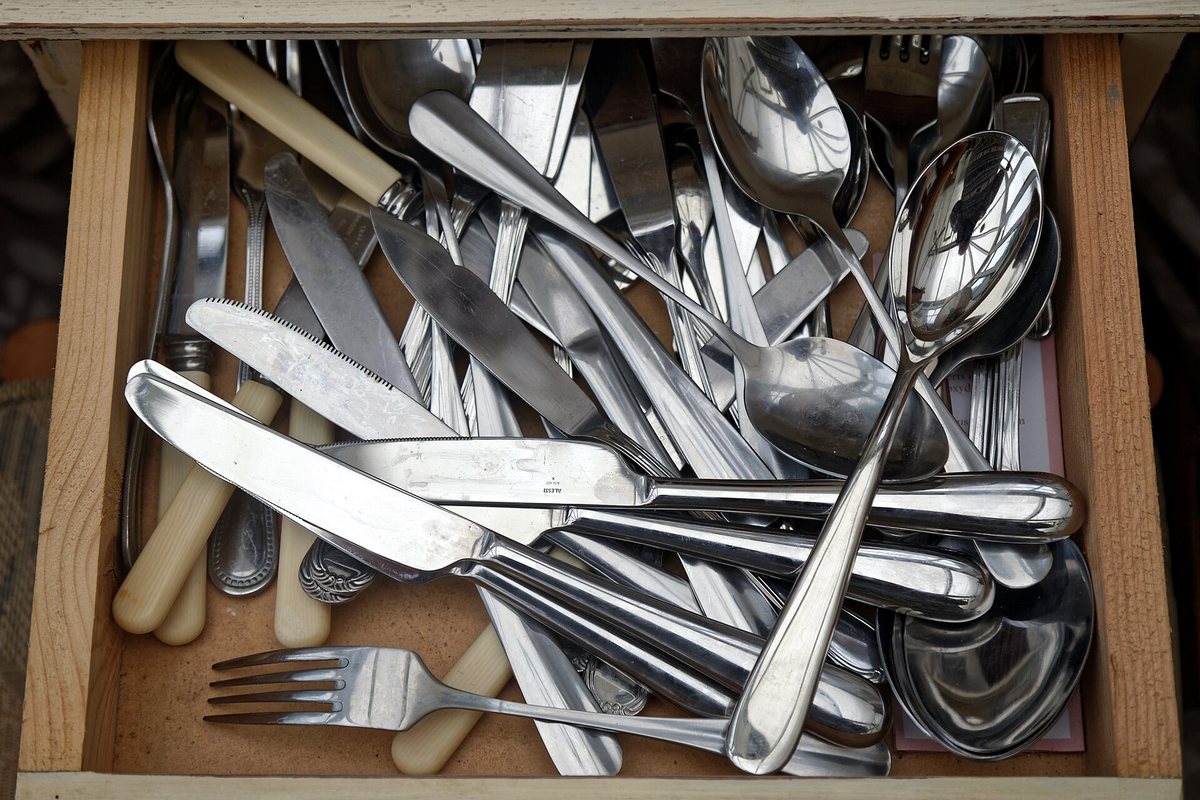
Steel with 10.5% or more chromium
Stainless steel is an alloy made by mixing a metal called chromium into steel, which is mostly iron. According to the Japan Stainless Steel Association, a definition was internationally unified in 1988: an alloy steel with about 10.5% or more chromium and 1.2% or less carbon is called stainless steel. The name comes from English, and the association explains that it means a steel that does not rust, or rusts only with difficulty.
An invisible film made by chromium
The secret is a film on the surface. The chromium in stainless steel joins with oxygen in the air and forms an extremely thin film (a passive film) on the surface, only 1 to 3 nm thick (1 nm is one millionth of 1 mm). This film holds back rust. The Science Museum in the UK describes the film as invisible.
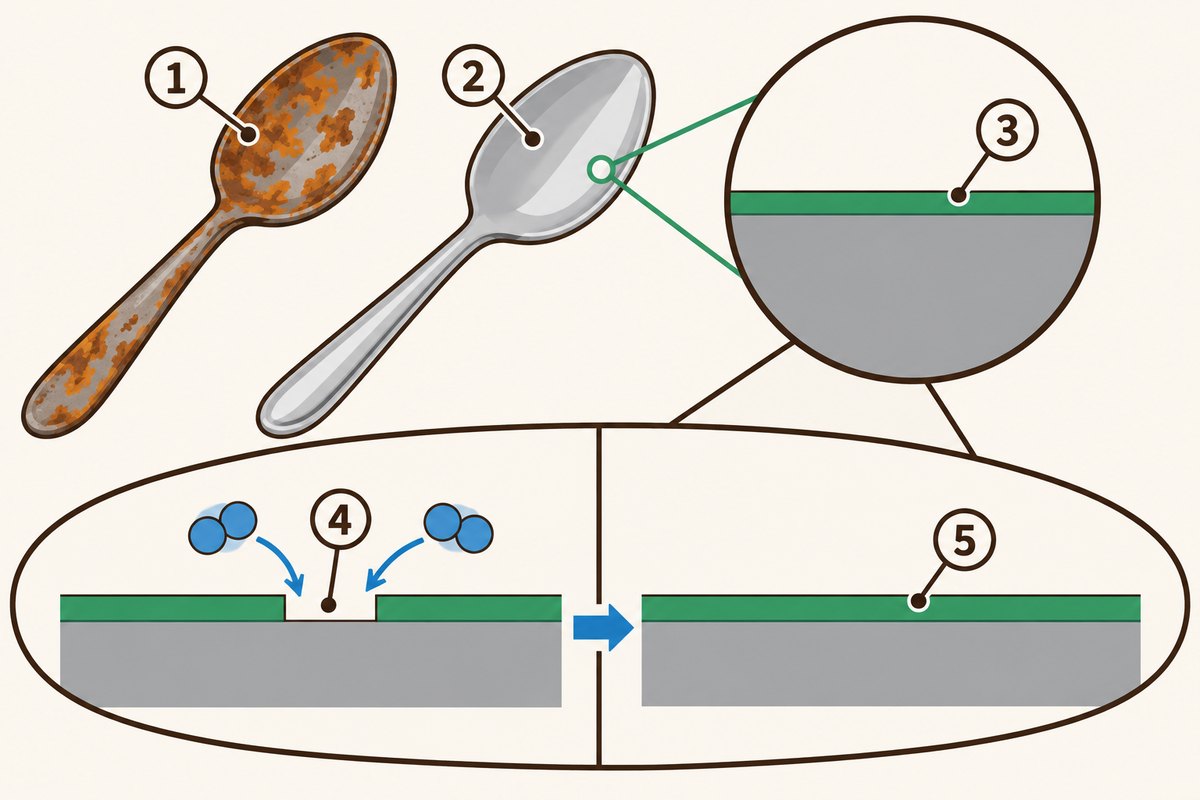
- 1Ordinary iron with brown rust on its surface
- 2Stainless steel protected by a film on its surface
- 3The thin protective film made by chromium and oxygen
- 4The film gets scratched and oxygen from the air reaches the exposed spot
- 5The protective film has formed again
Scratched? The film forms again
A scratch is not the end of the film. According to the Japan Stainless Steel Association, under ordinary conditions the film can repair itself: even if it is rubbed away, it forms again right away. The European Space Agency (ESA) also explains that instead of the rust (iron oxide) that forms on ordinary steel, a self-repairing chromium film forms.

Not rust-proof, just rust-resistant
Even so, stainless steel is not completely rust-proof. An explanation from NASA's Kennedy Space Center says that metals like stainless steel hold up well for a long time, but when they do corrode, it happens in small holes (pitting). Pitting is especially likely where there are chloride ions (found in things like table salt). Stainless steel with an added metal called molybdenum (such as type 316) is made to reduce pitting.
Based on the Japan Stainless Steel Association and NASA's Kennedy Space Center.
Want to know more?
- "18-8 stainless" (SUS304), often used for kitchenware, is a typical type containing 18% chromium and 8% nickel.
- In 1913, Harry Brearley in England made a steel that stood up to lemon juice and vinegar, and called it "rustless steel." Others had experimented with adding chromium to steel before him, though.
- NASA used stainless steel in all 13 Saturn V rockets launched from 1967 to 1973.
Quick quiz: test yourself
Remember what you just read? Give it a try!Why does stainless steel resist rust?
Show the answer
- It contains no iron
- Its surface is plated
- A thin chromium film protects it
A thin chromium film protects it The chromium mixed into it joins with oxygen in the air and forms an extremely thin film on the surface that protects the iron inside.
The chromium mixed into it joins with oxygen in the air and forms an extremely thin film on the surface that protects the iron inside.
Next quiz ›Sources
- ステンレスの概説ステンレス協会 (in Japanese)
- 100 years of stainless steelScience Museum(イギリス科学博物館)
- Metallurgist Harry BrearleyESA(ヨーロッパ宇宙機関)
- Forms of CorrosionNASA ケネディ宇宙センター(Corrosion Technology Laboratory)
This article was written after checking the sources above as of 2026-10-03. Explanations may change as research progresses. Photo credits are shown below each photo.
Next fun fact ▶
 FoodWhy does egg white turn white when cooked?Crack an egg into a frying pan, and the clear egg white quickly turns white. What is happening?

40 surprising animal facts with big photos and short, easy text. A fun-facts book for kids and grown-ups to read together.
See it on Amazon