Why are tears salty?

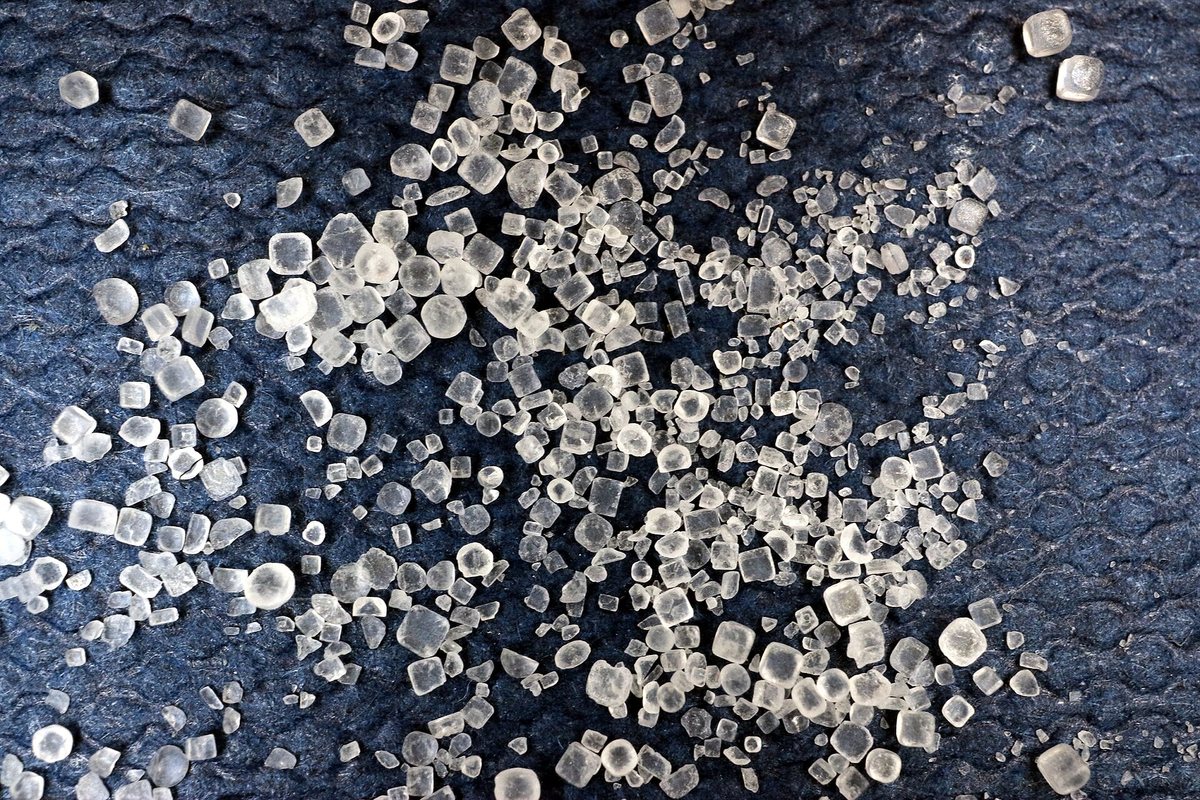
 The salty taste comes from electrolytes, salt-like minerals dissolved in your tears.
Tears are salty because they contain electrolytes, salt-like minerals dissolved in water, such as sodium and potassium. Tears are mostly water, but besides salt they also contain oils, mucus and proteins that fight germs, and they do the important job of keeping your eyes moist and protected.
Electrolytes make tears salty
Tears are not just water. According to Cleveland Clinic, a US hospital, tears are mostly water, but they contain electrolytes, salt-like minerals dissolved in water, such as sodium, potassium, calcium and magnesium, and these make them taste salty. Each tear is said to contain about 0.3 milligrams of salt. The American Academy of Ophthalmology also explains that tears are built a lot like saliva and contain enzymes, fats and more, so they are not just salt water.
Tears have 3 layers
The tears covering the surface of your eye form a "tear film" with 3 layers. The innermost mucus layer holds the whole tear onto the eye. The watery middle layer is the thickest; it keeps the eye moist, keeps germs away and protects the cornea, the clear front surface of the eye. The outer oily layer keeps the surface of the tear smooth so you can see clearly, and slows the tears from drying out.
Based on the American Academy of Ophthalmology and Cleveland Clinic.

3 types of tears
There are 3 main types of tears. Basal tears are in your eyes all the time to keep them moist and to nourish and protect the cornea. Reflex tears wash away dust and other things that irritate your eyes. Emotional tears come when you feel joy, sadness, fear and other strong feelings. Reflex tears may contain more antibodies that help fight germs. Some scientists have suggested that emotional tears contain hormones and proteins that other tears do not, but this is still just an idea.
Where do tears go?
Tears are mainly made by the lacrimal (tear) gland, near the upper outer corner of each eye. When you blink, tears spread over the eye, then enter tiny holes (puncta) on the inner side of the upper and lower eyelids and flow through small canals to the back of the nose. There, they dry up or are absorbed by the body. In this way, tears are always being replaced as they protect your eyes.
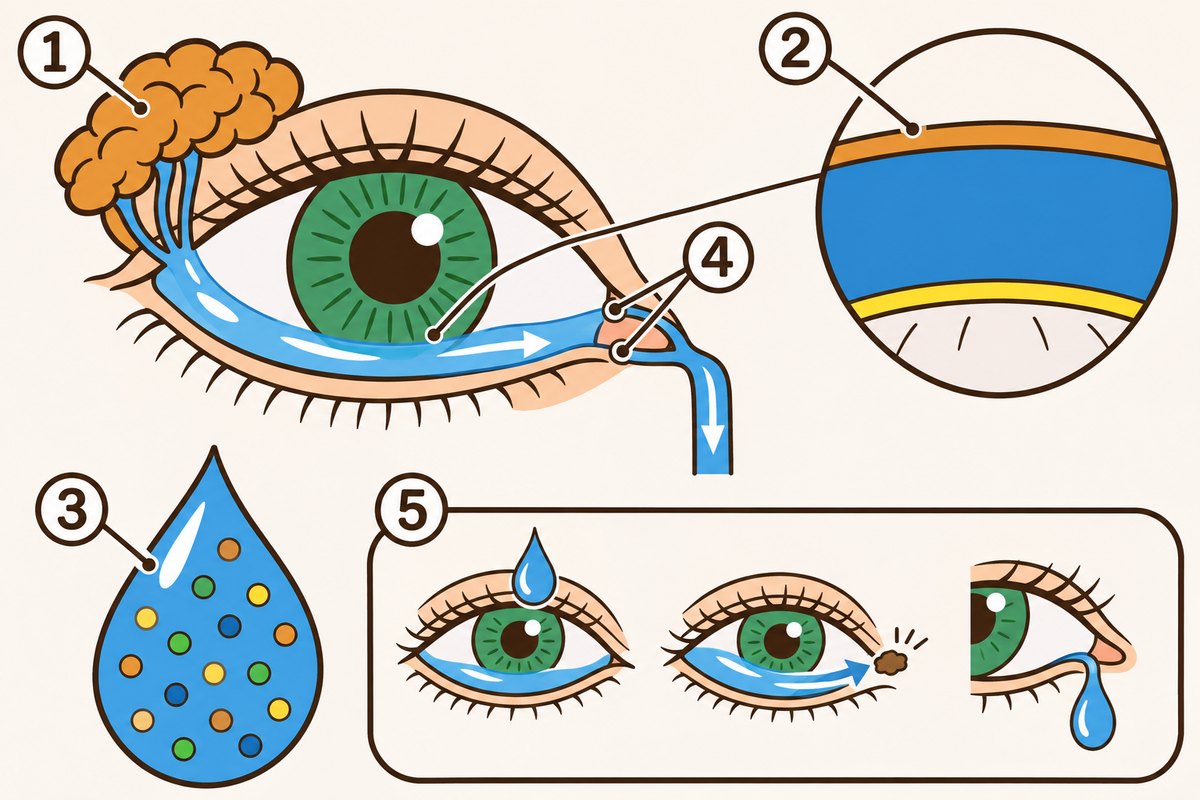
- 1The tear gland that makes tears
- 2The three layers of tears (oil, water, mucus)
- 3Salt and other particles dissolved in tears
- 4Tears drain through small openings at the inner corner (puncta) toward the back of the nose
- 5Moistening tears, tears that wash away dirt, emotional tears
Want to know more?
- Your eyes make fewer basal tears, the ones that are always there, as you get older.
- Tears are made not only by the tear gland but also by meibomian glands in the eyelids and by goblet cells on the surface of the eye.
- Tears contain enzymes and proteins that fight germs, and they are said to help healing as well.
Quick quiz: test yourself
Remember what you just read? Give it a try!What makes tears taste salty?
Show the answer
- Sugar
- Electrolytes (such as sodium)
- Bubbles of gas
Electrolytes (such as sodium) Tears contain electrolytes, salt-like minerals such as sodium, potassium, calcium and magnesium, and these give them their salty taste.
Tears contain electrolytes, salt-like minerals such as sodium, potassium, calcium and magnesium, and these give them their salty taste.
Next quiz ›Sources
- TearsCleveland Clinic(クリーブランド・クリニック)
- Facts About TearsAmerican Academy of Ophthalmology(アメリカ眼科学会)
This article was written after checking the sources above as of 2026-10-03. Explanations may change as research progresses. Photo credits are shown below each photo.
Next fun fact ▶
 FoodWhy do onions make you cry when you cut them?When you chop an onion, tears fall even though you aren't sad at all. That is the onion's doing.

40 surprising animal facts with big photos and short, easy text. A fun-facts book for kids and grown-ups to read together.
See it on Amazon