Does each part of the tongue taste something different?

 That tongue map actually grew out of a misread graph.
No, that's a myth. Sweet, salty, sour, bitter and umami, the 5 basic tastes, can be sensed anywhere on the tongue that can taste. The "tongue map," with a separate zone for each taste, came from a graph of a 1901 study that was later misread.
It began with a small finding in 1901
In 1901, a researcher named Hänig tested how weak a taste could be and still be noticed at different spots around the edge of the tongue, using 4 tastes. What he found was that sensitivity differed a little from place to place. In 1942, the psychologist Boring redrew these results as a graph in a book.
A misread graph became a "map"
According to a review published in 2022 (a paper that sums up many studies), that graph gave no way to tell how big the differences really were. So other people took it to mean that at the spot with the lowest value, you could hardly taste that flavor at all. This is thought to be how the "tongue map," with a separate area for each taste, was born and then appeared in many textbooks over the following years.

All 5 tastes, anywhere on the tongue
In 1974, a researcher named Collings carefully re-tested how tastes are sensed at many spots on the tongue. There were differences between places, but they were much smaller than the tongue map suggested. IQWiG, a German health information institute, also explains that sweet, sour, salty, bitter and umami can be sensed by all parts of the tongue.
Small differences do exist
Still, there are small differences between places. According to IQWiG, the sides of the tongue are more sensitive overall than the middle, and the back of the tongue is very sensitive to bitterness. Taste-sensing cells are not only on the tongue, either: they are also found on the soft back part of the roof of the mouth (the soft palate) and at the back of the throat. The tongue map was not complete nonsense; it was a small difference drawn far too big.
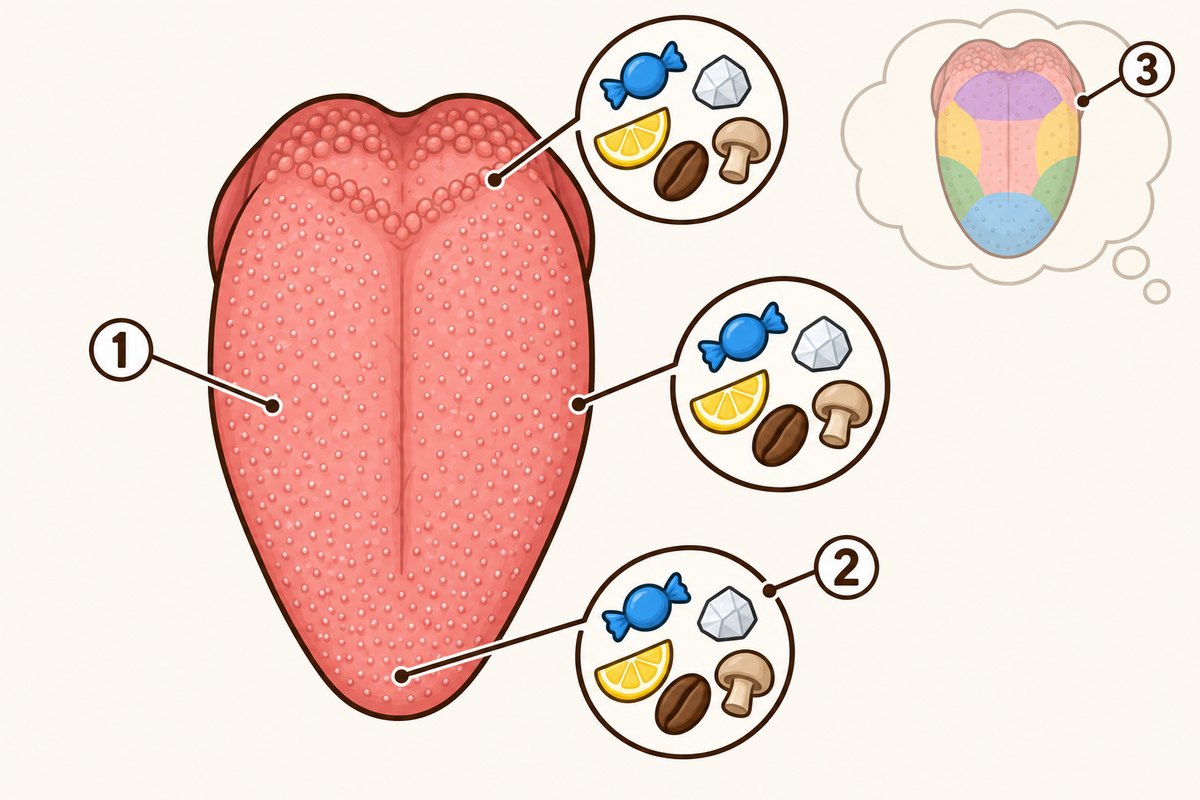
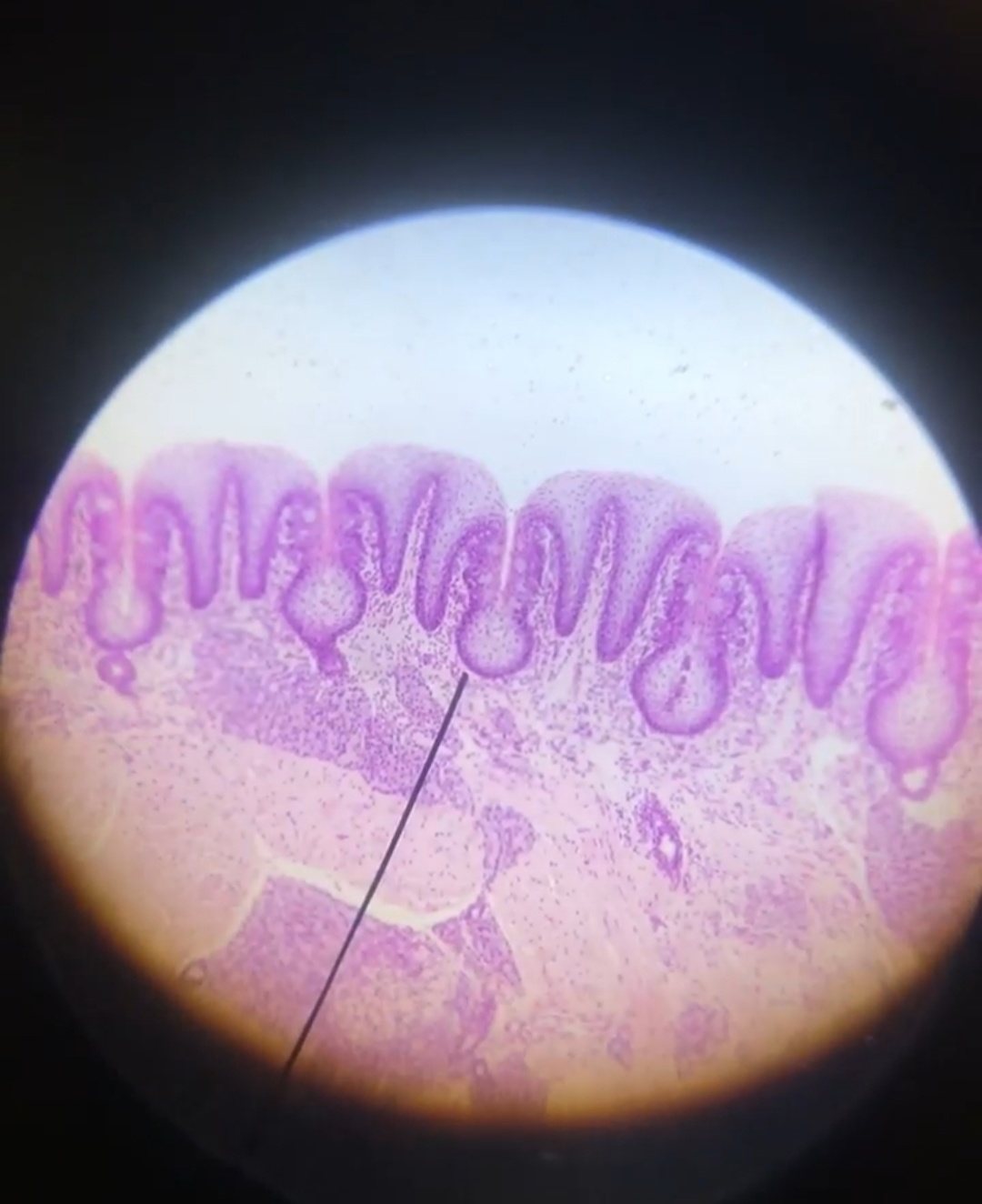
- 1Bumps showing the parts of the tongue that sense taste
- 2Marks for the five tastes: sweet, salty, sour, bitter and umami
- 3The old tongue map that split the tongue into areas by taste
Want to know more?
- An adult's tongue has 2000 to 4000 taste buds, and each taste bud has 10 to 50 sensory cells.
- About 200 to 400 mushroom-shaped bumps called fungiform papillae are scattered across the whole surface of the tongue.
- The lips, the underside of the tongue, the hard roof of the mouth and the insides of the cheeks are said not to sense taste.
Quick quiz: test yourself
Remember what you just read? Give it a try!Where on the tongue can you taste sweetness?
Show the answer
- Only at the tip
- Only at the back
- Anywhere it can taste
Anywhere it can taste All 5 tastes can be sensed anywhere on the tongue that can taste. The differences between places are small.
All 5 tastes can be sensed anywhere on the tongue that can taste. The differences between places are small.
Next quiz ›Sources
- How does our sense of taste work?InformedHealth.org(ドイツ医療の質・効率研究所 IQWiG)
- The tongue map and the spatial modulation of taste perceptionCurrent Research in Food Science(PMC 掲載の査読論文、2022年)
This article was written after checking the sources above as of 2026-10-03. Explanations may change as research progresses. Photo credits are shown below each photo.
Next fun fact ▶
 Human BodyDo we really use only 10% of our brains?When you hear that we use only 10% of our brains, you may wonder about the rest.

40 surprising animal facts with big photos and short, easy text. A fun-facts book for kids and grown-ups to read together.
See it on Amazon