Why does your recorded voice sound different?

 The voice you usually hear includes sound that travels through the bones of your head.
When you talk, you hear your voice in two ways: the sound that leaves your mouth and travels through the air, and the sound that travels through the bones of your head to your inner ear. A microphone sits outside your head, so it only records the sound through air. Without the part that comes through bone, your voice sounds different.
2 ways sound reaches the ear
Sound is a vibration in air and other materials. Usually, sound enters the ear canal, makes the eardrum vibrate, passes through 3 tiny bones in the middle ear (the ossicles), and reaches the cochlea, the deepest part of the ear. This is called air conduction. There is also another route: the bones of the head vibrate and carry sound to the cochlea. This is called bone conduction. So there are 2 ways for sound to reach the inner ear.
You hear yourself both ways
When you talk, vibrations from your vocal cords, mouth and teeth travel not only through the air but also through the bones of your skull to both cochleae. Researchers at Chalmers University of Technology in Sweden explain that the voice you hear while talking includes both an air conduction part and a bone conduction part.
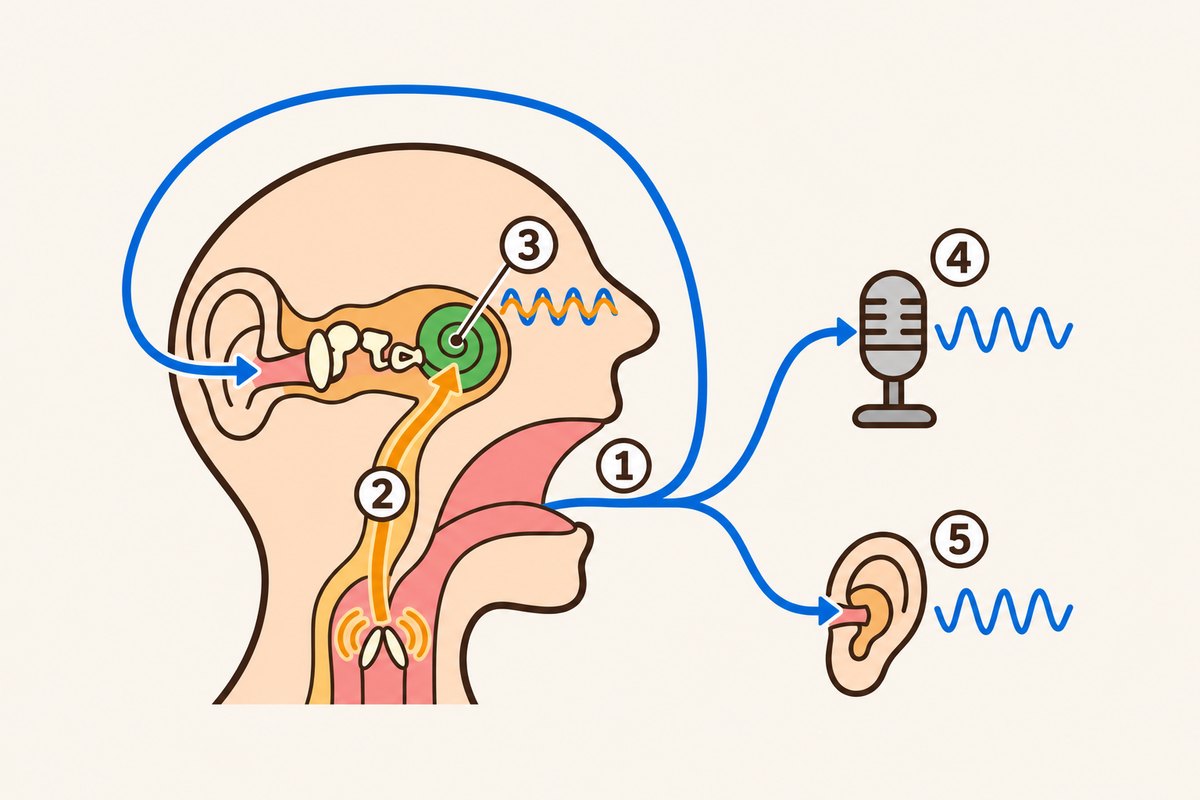
- 1Voice that reaches the ear through the air
- 2Voice that reaches the inner ear (cochlea) through the skull bones
- 3The voice you hear: both combined
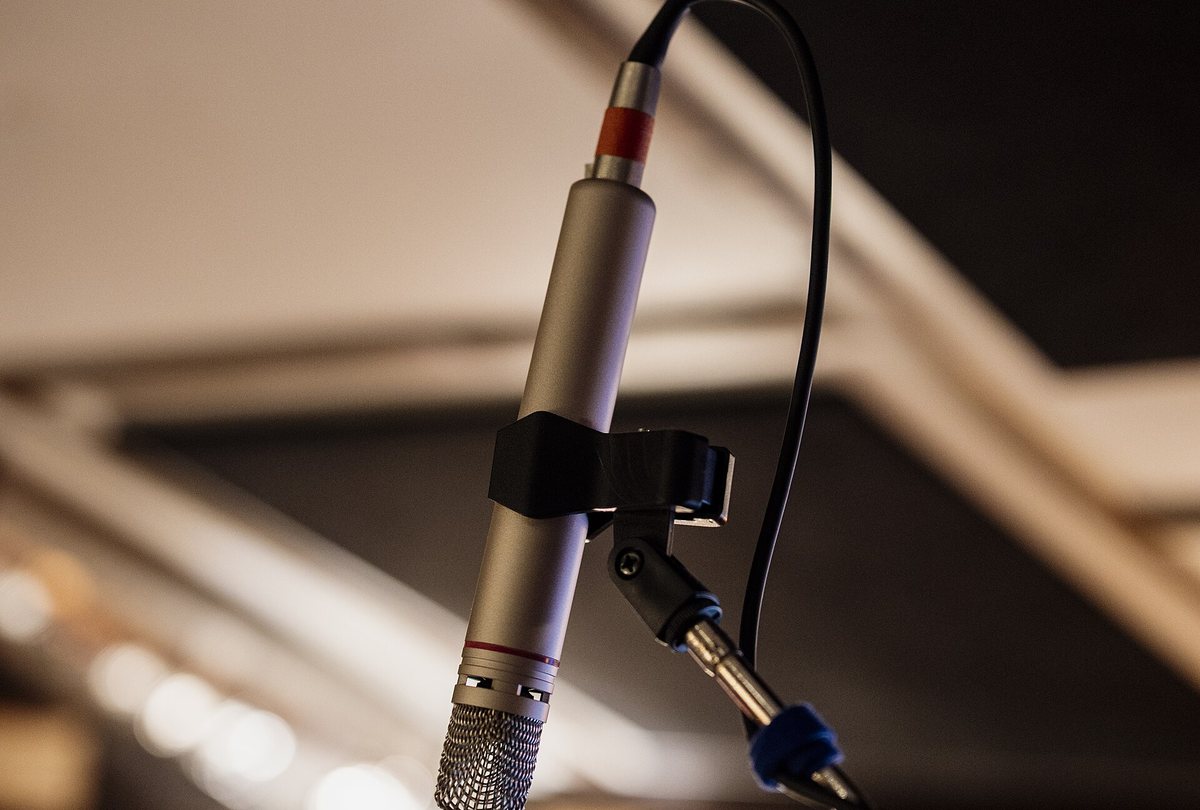
- 4A microphone records only the air-borne voice
- 5Other people also hear the air-borne voice
Recordings catch only the sound through air
When you make a recording, the microphone is outside your head, so it only records the voice that travels through air. Because the bone conduction part is missing, the recording sounds different from the voice you usually hear. Microphones and speakers also change the sound of a voice a little. Other people normally hear your voice through the air, so the recording is closer to the voice they hear.

Bone boosts the low sounds
A physicist who studies hearing at Michigan State University in the US explains that sound through the bones of the head tends to boost the low sounds in your voice, and only the speaker hears that extra part. That is why some people feel their recorded voice sounds higher than they expected. However, research has also shown that how strong the bone-conducted sound is depends on the pitch of the sound.
Want to know more?
- If you record only the sound that travels through bone, the voice sounds a bit deeper and less clear, because the sound through air is missing.
- A Swedish study reported that for many speech sounds, the part through bone was stronger at around 1000 to 2000 hertz (1000 to 2000 vibrations per second).
- People who often hear recordings of their own voice can gradually get used to the difference.
Quick quiz: test yourself
Remember what you just read? Give it a try!Which part of your voice is missing from a recording?
Show the answer
- The sound through air
- The sound through the bones of your head
- Nothing, both are recorded
The sound through the bones of your head The microphone is outside your head, so it records only the voice that travels through air. The part through the bones of your head is missing, so it sounds different.
The microphone is outside your head, so it records only the voice that travels through air. The part through the bones of your head is missing, so it sounds different.
Next quiz ›Sources
- How Air and Bones Can Help You to HearFrontiers for Young Minds(チャルマース工科大学の研究者による査読付き記事)
- Why do our recorded voices sound strange to us?WHYY(アメリカの公共放送)The Pulse
- Hearing one's own voice during phoneme vocalization—Transmission by air and bone conductionChalmers University of Technology(論文:Journal of the Acoustical Society of America、2010年)
This article was written after checking the sources above as of 2026-10-03. Explanations may change as research progresses. Photo credits are shown below each photo.
Next fun fact ▶
 Human BodyDoes each part of the tongue taste something different?Many of us learned that the tip of the tongue tastes sweet and the back tastes bitter. Do you remember that?

40 surprising animal facts with big photos and short, easy text. A fun-facts book for kids and grown-ups to read together.
See it on Amazon