Why is Mars red?

 The answer is something you can find close to home, too.
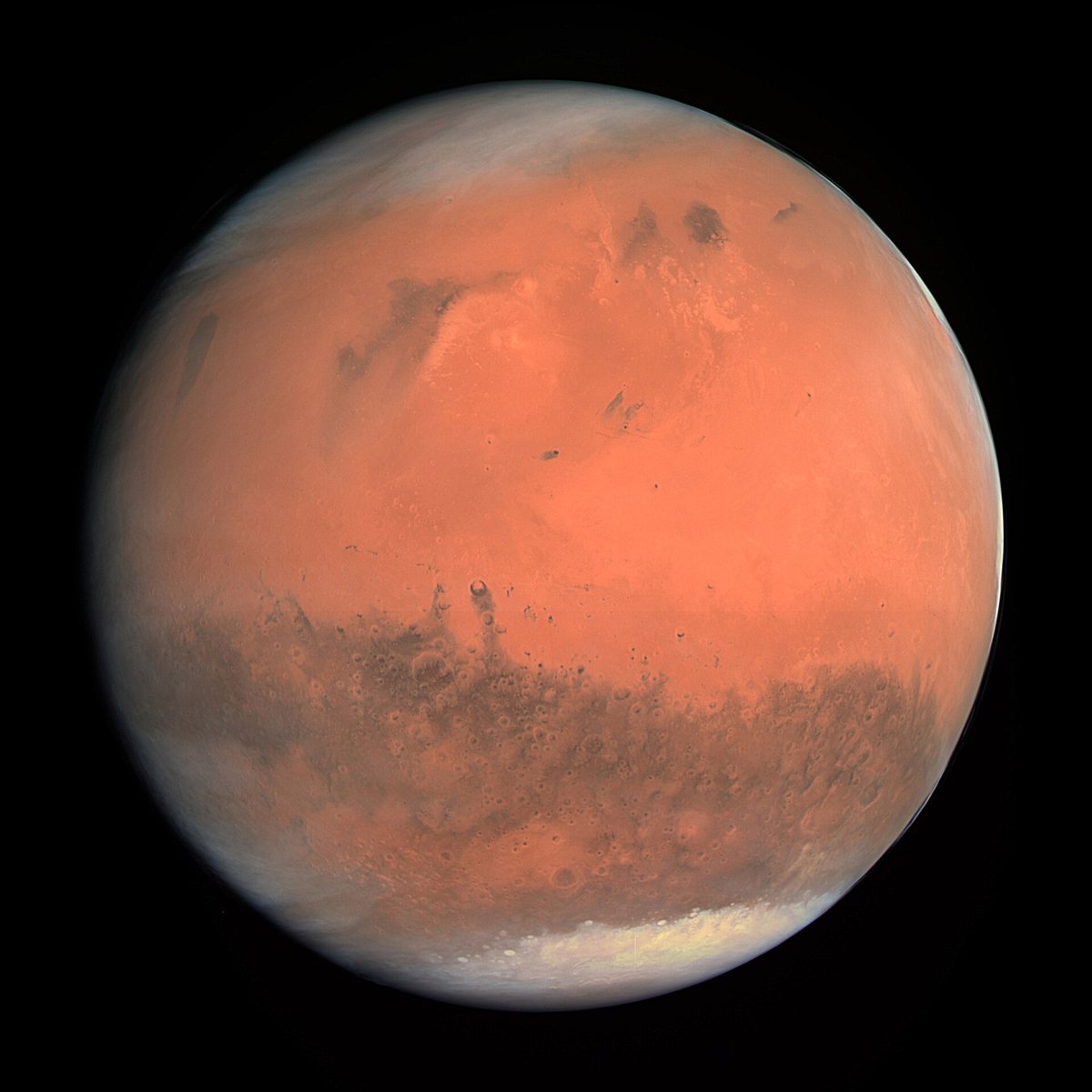
Mars looks red because iron minerals in its soil have rusted (oxidized) and turned reddish. Wind lifts this fine dust into the atmosphere, so from far away the whole planet looks red. A 2025 study suggests this rust may be linked to water in Mars' past.
The red color is rust
According to NASA, iron minerals in the Martian soil oxidize, or rust, and that makes the ground look reddish. It is a lot like what happens when an iron nail is left outside and turns reddish-brown with rust. Mars has a radius of 3390 km, about half the size of Earth.
Dust turns even the sky red
The fine, rusty dust gets blown up into the atmosphere by the wind. That is why Mars looks mostly red from far away. NASA explains that if you stood on Mars, the sky would not be the familiar blue, but hazy and reddish because of the dust floating in it.
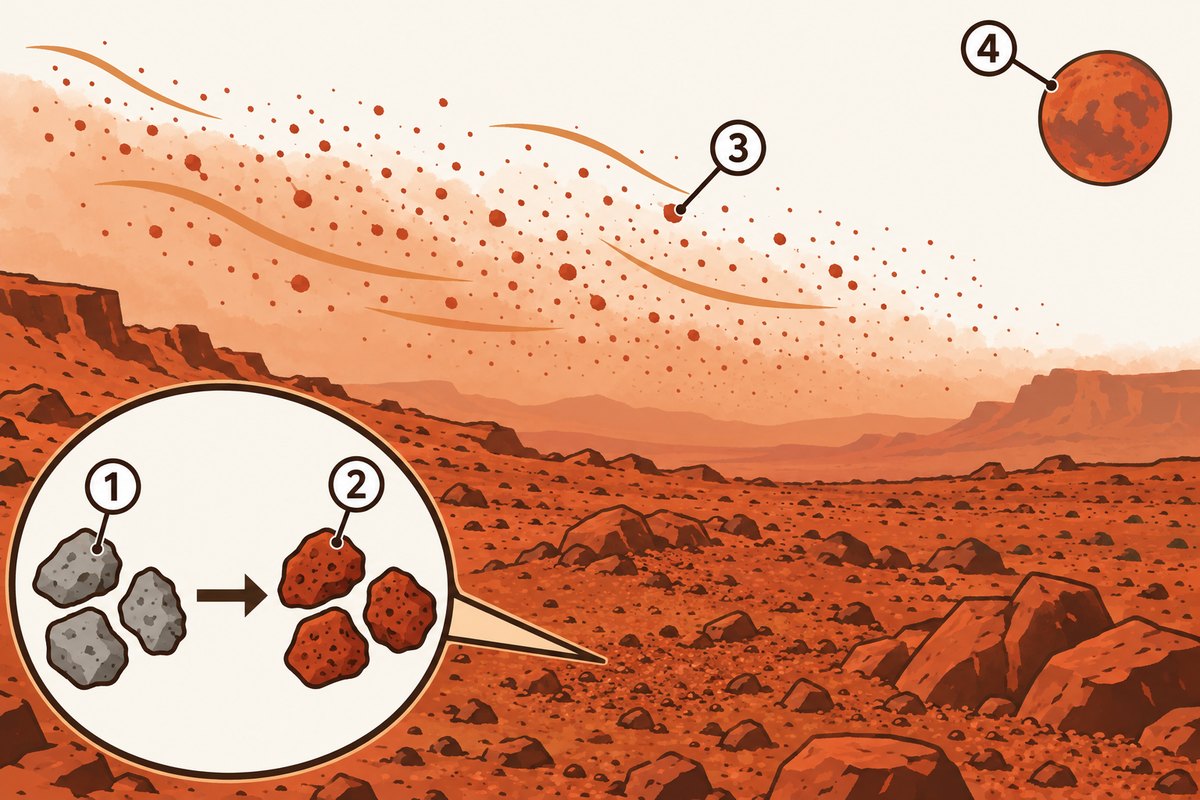
- 1Iron-bearing minerals before rusting
- 2Minerals rusted to a reddish brown
- 3Red dust lifted by the wind
- 4Mars looking red from far away

A new idea about the kind of rust
For a long time, scientists thought Mars' red color came from hematite, an iron oxide that contains no water. But a study published in 2025 in the journal Nature Communications found that the most common iron oxide in Martian dust is ferrihydrite, a mineral that does contain water. The team compared observations from NASA and European Space Agency (ESA) spacecraft and rovers with dust they made in the lab.
A trace of a watery past?
On Earth, ferrihydrite forms when iron oxidizes quickly in cold water. The team thinks Mars' rust formed during an ancient cold, wet period, before the planet turned into the dry desert it is today. This is not yet a confirmed answer, though. If soil from Mars is brought to Earth in the future, it could be studied in detail.
Want to know more?
- Sunsets on Mars look bluish. NASA's Curiosity rover photographed one on April 15, 2015. The very fine dust lets blue light pass more easily in the direction of the Sun.
- Mars takes 24.6 hours to spin once, very close to Earth's 23.9 hours.
- Mars has two small moons, Phobos and Deimos.
Quick quiz: test yourself
Remember what you just read? Give it a try!What makes the ground on Mars look red?
Show the answer
- Red grass
- Rusted iron
- Red ice
Rusted iron Iron minerals in the Martian soil rust (oxidize) and turn reddish, and the dust is blown into the sky, so the whole planet looks red.
Iron minerals in the Martian soil rust (oxidize) and turn reddish, and the dust is blown into the sky, so the whole planet looks red.
Next quiz ›Sources
- Mars: FactsNASA Science
- Detection of ferrihydrite in Martian red dust records ancient cold and wet conditions on MarsNature Communications(PMC 掲載の査読論文)
- NASA's Curiosity Rover Views Serene Sundown on MarsNASA Jet Propulsion Laboratory
This article was written after checking the sources above as of 2026-10-03. Explanations may change as research progresses. Photo credits are shown below each photo.
Next fun fact ▶
 SpaceWhy is Venus the hottest planet if it isn't closest to the Sun?Mercury is closest to the Sun, yet Venus is the hottest planet. How curious!

40 surprising animal facts with big photos and short, easy text. A fun-facts book for kids and grown-ups to read together.
See it on Amazon