Why does Wi-Fi get weaker through walls?

 The key is what happens when radio waves pass through a wall.
Because Wi-Fi radio waves lose part of their power inside the wall material as they pass through. In tests by the US National Institute of Standards and Technology (NIST), wood and glass let radio waves through easily, while concrete weakened them the most. Higher-frequency waves also tend to weaken more.
Wi-Fi travels on invisible radio waves
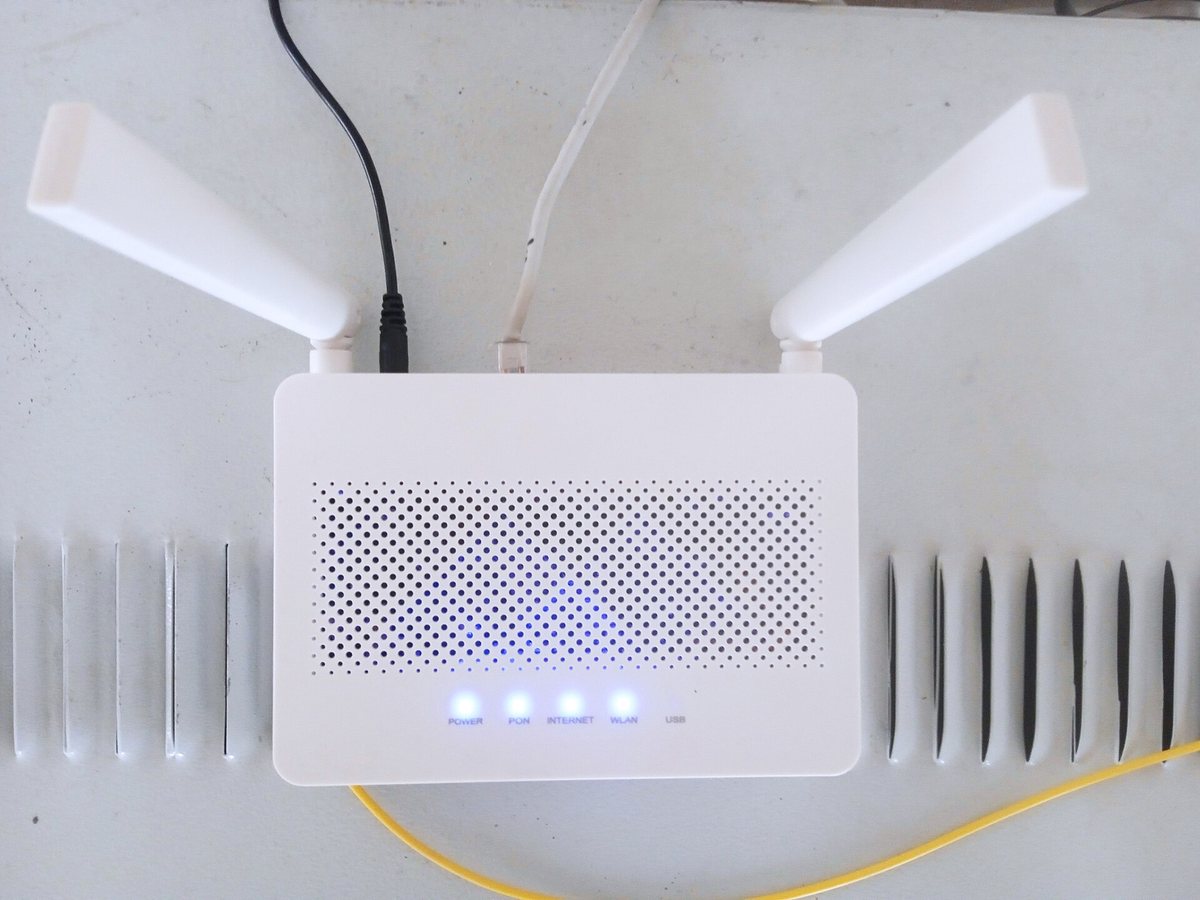
Wi-Fi sends data between a router (the device that sends out the signal) and your phone or computer using invisible radio waves. The waves used are in bands such as 2.4 GHz (gigahertz) and 5 GHz. According to a report from the US National Institute of Standards and Technology (NIST), these waves are much longer than visible light, so they can pass through many building materials to some degree.
Each wall takes away a little power
But as they pass through, part of their power is lost inside the material. In tests NIST reported in 1997, a 13 mm sheet of drywall took away about 6% of the power, 13 mm plywood about 10%, and 19 mm glass about 30%. Concrete weakened the waves the most. NIST explains that in materials that do not conduct electricity, the denser and heavier the material, the more the signal weakens per unit of thickness.
From a 1997 report by NIST (US National Institute of Standards and Technology).
Metal and concrete block the most
Apple's support page sorts materials by how much they can interfere with wireless signals. Wood and glass are low, water and brick are medium, concrete is high, and metal is very high. For example, it says a concrete floor reinforced with metal between the router and your device can weaken Wi-Fi.
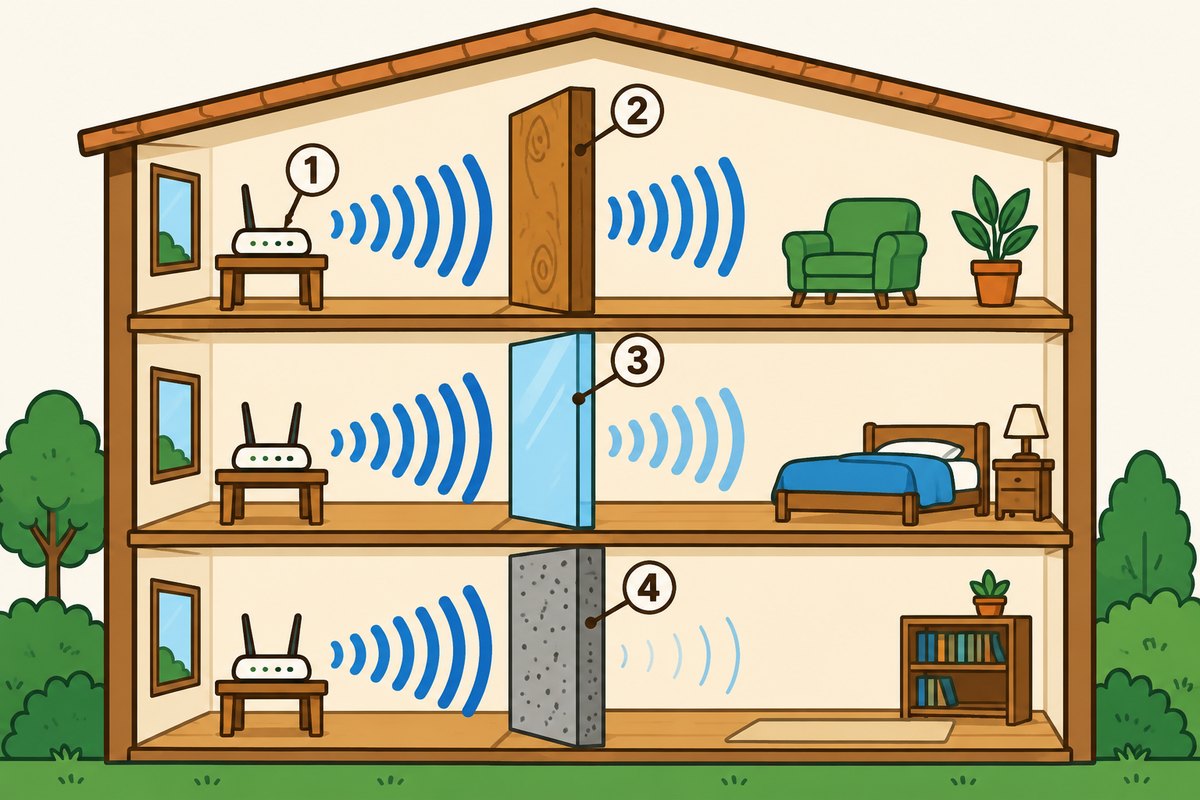
- 1The router sending out radio waves
- 2Passing through wood
- 3Passing through glass
- 4Passing through concrete

5 GHz is a bit weaker against obstacles
NIST's tests also showed that higher-frequency waves (frequency is how many times a wave repeats each second) tend to weaken more inside materials. Belgium's telecom regulator (BIPT) also explains that 5 GHz is faster and more stable, but a bit more sensitive to obstacles than 2.4 GHz.
What to try when the signal is weak
When Wi-Fi is hard to connect, Apple suggests moving your device closer to the router, removing obstacles in between (especially metal), and keeping away from things that can interfere, such as microwave ovens.
Want to know more?
- In NIST's tests, signals could still be received through a concrete slab 305 mm thick.
- Wi-Fi and Bluetooth both use 2.4 GHz radio waves (from Apple's support page).
- In NIST's tests, making the gravel in concrete 2 times bigger made no noticeable difference to how well the waves passed through.
Quick quiz: test yourself
Remember what you just read? Give it a try!Which of these blocks Wi-Fi signals the most?
Show the answer
- Wood
- Glass
- Metal
Metal According to Apple, wood and glass have low potential to interfere with wireless signals, while metal is rated very high.
According to Apple, wood and glass have low potential to interfere with wireless signals, while metal is rated very high.
Next quiz ›Sources
- Electromagnetic Signal Attenuation in Construction Materials (NISTIR 6055)NIST(アメリカ国立標準技術研究所)
- Resolve Wi-Fi and Bluetooth issues caused by wireless interferenceApple サポート
- What are Wi-Fi 6 and Wi-Fi 6E?BIPT(ベルギー郵便・通信庁)
This article was written after checking the sources above as of 2026-10-03. Explanations may change as research progresses. Photo credits are shown below each photo.
Next fun fact ▶
 TechnologyWhy do AI-made pictures get hands and fingers wrong?A beautiful AI picture, but look closely and the fingers are a mystery. Why are hands so tricky?

40 surprising animal facts with big photos and short, easy text. A fun-facts book for kids and grown-ups to read together.
See it on Amazon