Why can we see our breath on cold days?

 The answer is tiny water droplets. Let me show you how they form.
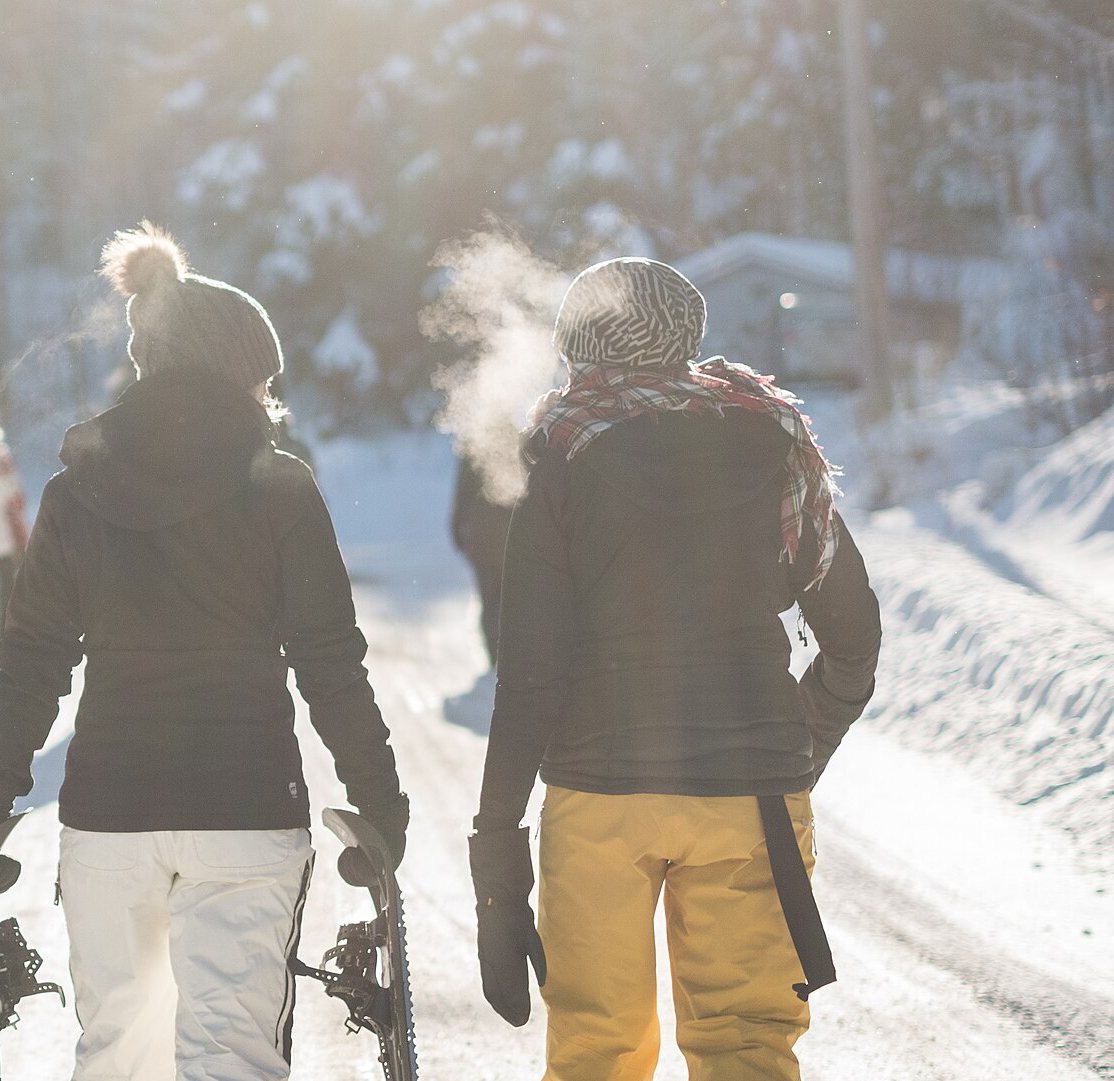
We can see our breath on cold days because the invisible water vapor in it is suddenly chilled by the cold air and turns into tiny water droplets. Lots of these droplets gathered together look white. It is the same reason clouds in the sky and steam look white.
White breath starts as water vapor
White breath starts with the water vapor in your breath. According to Gakken Kids Net, a Japanese science site for children, people let out about 400 mL of water a day as water vapor in the air they breathe out. Water vapor is a gas, so we usually cannot see it.
Cold air turns it into droplets
The air you breathe out is close to body temperature, about 35 to 37°C. In winter, it is not unusual for the air to be 10°C or less, so your breath is suddenly cooled by the air around it as soon as it leaves your mouth. The colder the air, the less water vapor it can hold. The water vapor that the cooled breath can no longer hold turns into tiny water droplets. This is called condensation.
Tiny specks at the center
For water vapor to become droplets, it needs something to cling to. That something is the tiny specks floating in the air, called "aerosols." Dust from the ground, salt crystals from the sea, pollen, and exhaust from cars and factories act as the centers, and water vapor gathers around them to form droplets. When many of these droplets gather, they look white.
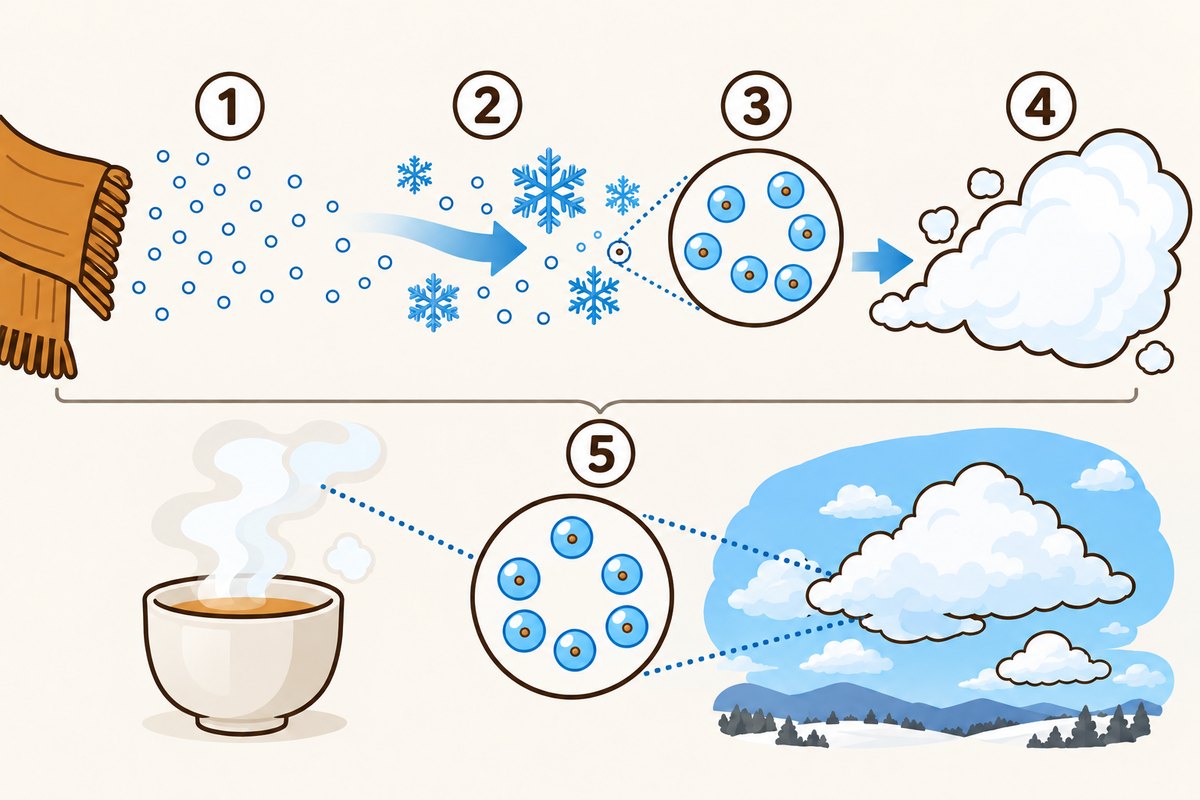
- 1Invisible water vapor in warm breath
- 2Cooled by the cold air
- 3Water droplets formed around dust specks
- 4Breath that looks white as a cluster of droplets
- 5Steam and clouds work the same way
White breath is a little cloud
The Sendai Regional Headquarters of the Japan Meteorological Agency explains that clouds are made of tiny bits of water or ice floating in the sky, and that clouds look white for the same reason that steam, and the breath we breathe out on cold winter days, look white. You could say white breath is a little cloud that forms in front of your mouth.

In Antarctica, breath seldom turns white
There is a place where breath rarely turns white, even though it is very cold. According to Japan's National Institute of Polar Research, the air around Syowa Station in Antarctica has only about 1/100 to 1/1000 as many aerosols as the air in Japanese cities. With so few centers for droplets, steam is hard to see there, and breath seldom turns white on cold days.
Want to know more?
- The air in Japanese cities is said to carry tens of thousands or more aerosol specks in every cubic centimeter.
- Clouds in the sky form when air rises, expands, and cools, so that its water vapor turns into bits of water or ice.
- At Syowa Station in Antarctica, scientists study the specks in air untouched by human activity, in an observation room about 300 m upwind of the main station.

Quick quiz: test yourself
Remember what you just read? Give it a try!What is the white breath you see on cold days?
Show the answer
- Carbon dioxide in your breath
- Lots of tiny water droplets
- A lump of chilled air
Lots of tiny water droplets The invisible water vapor in your breath is chilled by the cold air and turns into tiny water droplets. Many of them together look white.
The invisible water vapor in your breath is chilled by the cold air and turns into tiny water droplets. Many of them together look white.
Next quiz ›Sources
- なぜ、寒い日は息が白くなるの?学研キッズネット(科学なぜなぜ110番) (in Japanese)
- 大気エアロゾル観測(昭和基地NOW!! 2006年5月7日)国立極地研究所 (in Japanese)
- 雲ができる仕組み仙台管区気象台 (in Japanese)
This article was written after checking the sources above as of 2026-10-03. Explanations may change as research progresses. Photo credits are shown below each photo.
Next fun fact ▶
 NatureDoes the wind at the beach change direction from day to night?The wind you feel at the beach may blow from a different direction by day and by night. Shall we find out?

40 surprising animal facts with big photos and short, easy text. A fun-facts book for kids and grown-ups to read together.
See it on Amazon