What are cat whiskers for?

 Whiskers are sensors for feeling what is around the cat.
Cat whiskers are sensors for feeling what is around them. The hairs themselves have no nerves, but many nerves gather at their roots and pick up touch, airflow and vibration. Whiskers help cats check whether they can fit through tight spaces and find their way in the dark without bumping into things, and they can also show how a cat feels.
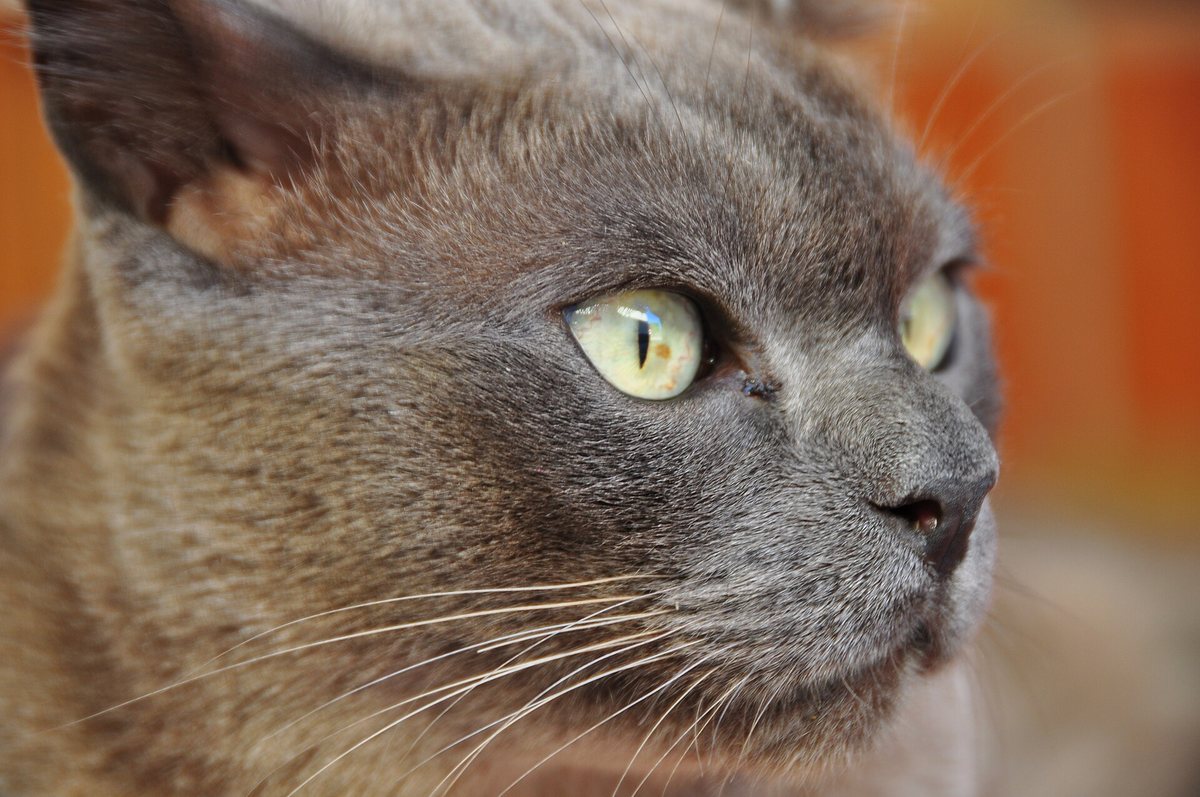
Special hairs that sense at the root
Cat whiskers are special hairs made of keratin, the same protein that forms the outside of animal horns. The hairs themselves have no nerves, but the roots buried in the skin are packed with nerve endings and have a rich blood supply. So when the tip of a whisker touches something or moves in the wind, the movement is passed on to the nerves at the root. Their scientific name is "vibrissae," from a Latin word meaning "to vibrate."
Not only on the cheeks
According to a veterinarian at the University of Melbourne, cats usually have about 12 whiskers on each cheek, arranged in 4 rows. They also have whiskers above the eyes (where we have eyebrows), under the chin, and on the back of the wrists of their front legs. The wrist whiskers make up for eyes that don't see well up close, helping cats tell where caught prey is in their paws.

Stars in tight and dark places
Cats use their whiskers to check whether their body will fit into a box or a gap, and to find their way in the dark. Whiskers also sense airflow, so even in a dark room, a cat can tell when a wall or object is close. In a cat of normal build, the whiskers spread about as wide as the space its body can squeeze through, but in a very fat cat this guide becomes less useful.
Whiskers show feelings too
Whiskers also show feelings. Relaxed, droopy whiskers are a sign of a calm, happy cat. Whiskers pinned back against the face can mean the cat is scared, and whiskers pointing straight forward can mean it is angry. Whiskers fall out and grow back naturally, but if they are cut, a cat can find it harder to judge its surroundings and may feel uneasy until they grow back.
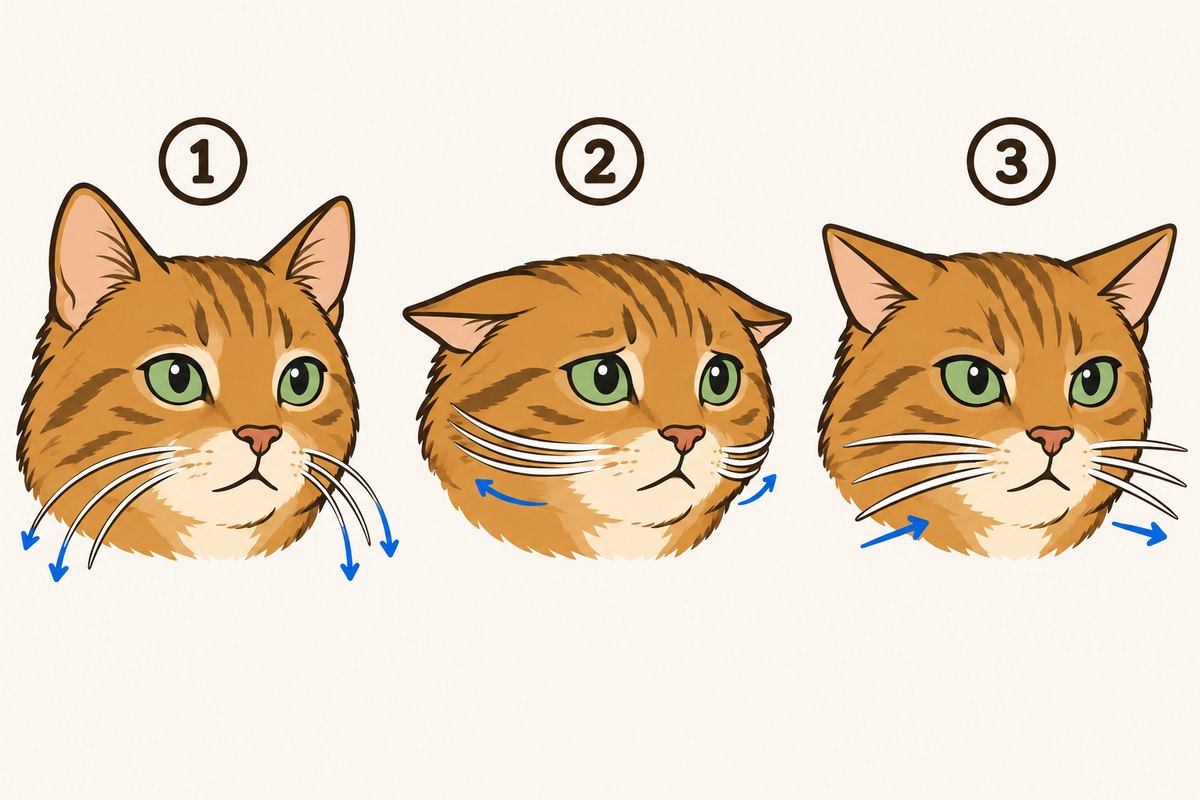
- 1Whiskers hanging loosely (relaxed)
- 2Whiskers pulled back flat against the face (scared)
- 3Whiskers pushed forward (angry or excited)
Want to know more?
- Cutting whiskers doesn't hurt, but they take about 2 months to grow back.
- In a study of 40 cats comparing a dish advertised as "whisker-friendly" with their usual dish, there was no difference in how much they ate or how much food they dropped.
- Whiskers in animals are thought to have many roles, such as finding food, attacking prey, showing feelings to others through facial expression, and sensing the surroundings.
Quick quiz: test yourself
Remember what you just read? Give it a try!Where does a cat sense a whisker touching something?
Show the answer
- At the whisker tip
- In the nerves at the whisker root
- At the tip of the nose
In the nerves at the whisker root The hair itself has no nerves; the nerves gathered at the root, buried in the skin, sense the whisker's movement.
The hair itself has no nerves; the nerves gathered at the root, buried in the skin, sense the whisker's movement.
Next quiz ›Sources
- Why a cat's whiskers are the bee's kneesメルボルン大学(Pursuit)
- The role of vibrissae in behavior: a status reviewVeterinary Research Communications(PubMed 掲載の査読論文)
- Evaluation of whisker stress in catsJournal of Feline Medicine and Surgery(PubMed 掲載の査読論文)
This article was written after checking the sources above as of 2026-10-03. Explanations may change as research progresses. Photo credits are shown below each photo.
Next fun fact ▶
 AnimalsHow many stomachs does a cow have?Have you heard that cows have four stomachs? The truth is a little different.

40 surprising animal facts with big photos and short, easy text. A fun-facts book for kids and grown-ups to read together.
See it on Amazon