What is the white smoke from dry ice really?

 Let me give you the answer in 30 seconds first.
The white mist that comes off dry ice is not carbon dioxide. It is made of very tiny drops of water. Dry ice turns straight from a solid into cold carbon dioxide gas, which chills the air around it. Water vapor in the air then turns into tiny droplets that reflect light, so they look white. Carbon dioxide itself is a colorless gas that you cannot see.
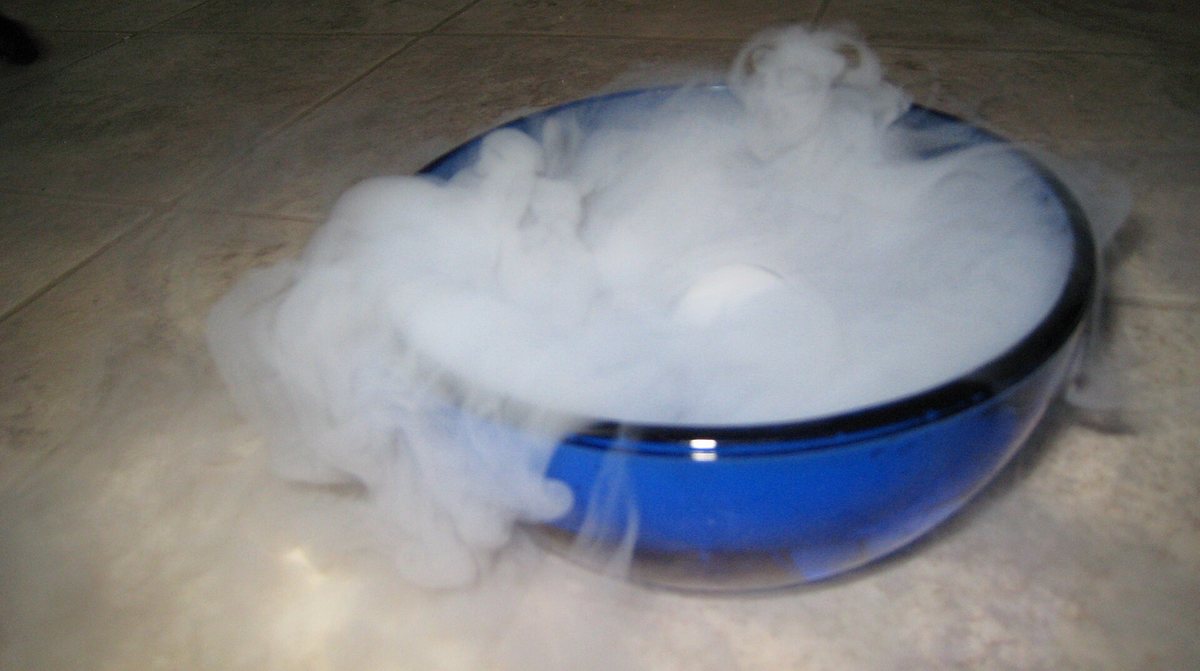
Carbon dioxide is invisible
Dry ice is frozen carbon dioxide, and its temperature is -78.5°C. At ordinary temperatures, it does not melt into a liquid. Instead, it changes straight from a solid into a gas. This is called "sublimation." As materials from the U.S. Centers for Disease Control and Prevention (CDC) note, carbon dioxide gas has no color and no smell, so you cannot see it.

The white part is tiny drops of water
According to an explanation from Rutgers University, the white mist is made of very tiny drops of water that form when water vapor in the air is cooled. The carbon dioxide gas coming off dry ice is very cold, and it chills the air around it. Cold air cannot hold as much water vapor, so the extra vapor turns into droplets that reflect light and look white. It works the same way as clouds and fog.
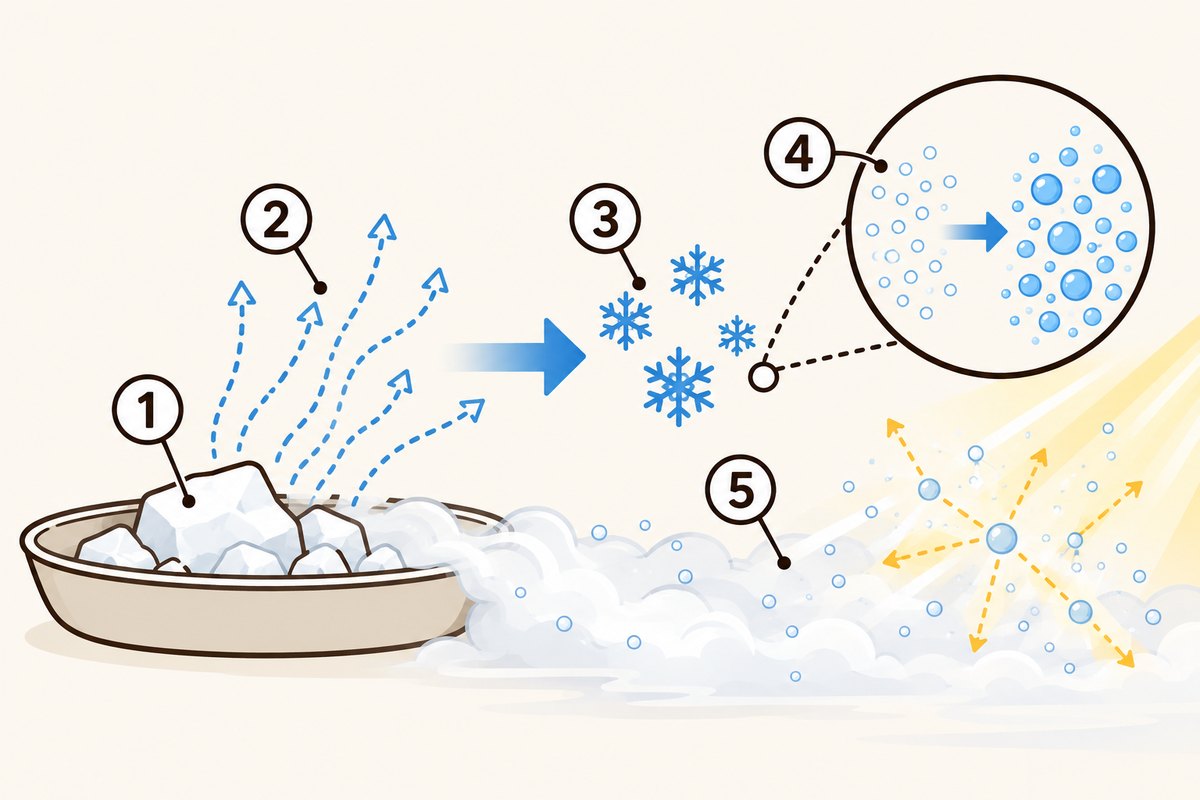
- 1Solid dry ice
- 2An invisible gas that forms directly from the solid
- 3The surrounding air gets cooled
- 4Water droplets formed from water vapor in the air
- 5Mist that looks white as light scatters
Why hot water makes more mist
When dry ice is put into hot water, the mist suddenly grows much thicker. A chemistry education expert explains that in this case, the water in the mist comes from the water in the container, not from the air. Water evaporates into the carbon dioxide bubbles that form around the dry ice and is quickly cooled into droplets, so the bubbles are already cloudy before they reach the surface.
Why the mist flows downward
The white mist does not rise. It spills over the edge of the container and spreads along the floor. That is because the air chilled by the cold carbon dioxide becomes heavier than the air around it and sinks. A safety guide from the University of Washington says never to touch dry ice with bare hands, never to put it in a container with the lid shut tight, and to handle it in a well-ventilated place.
Want to know more?
- When 1 pound (about 450 grams) of dry ice turns into gas, it becomes about 250 liters. That is why a tightly closed container with dry ice inside can burst.
- The fog that creeps along the floor in movies and on stage is often made with dry ice and hot water.
- At ordinary temperatures, dry ice slowly turns into gas and disappears, so when you are done with it, you can simply leave it in a well-ventilated place until it is gone.

Quick quiz: test yourself
Remember what you just read? Give it a try!What is the white smoke from dry ice made of?
Show the answer
- Carbon dioxide gas
- Tiny drops of water
- Dry ice powder
Tiny drops of water The cold carbon dioxide gas chills the air around it, and water vapor turns into tiny drops of water that look white.
The cold carbon dioxide gas chills the air around it, and water vapor turns into tiny drops of water that look white.
Next quiz ›Sources
- Fog Formation Upon Dry Ice / Hot Water ContactRutgers University, Department of Chemistry and Chemical Biology
- The Dry-Ice-in-Water CloudChemical Education Xchange(ChemEd X)
- Work Safely with Dry IceUniversity of Washington Environmental Health & Safety
- NIOSH Pocket Guide to Chemical Hazards: Carbon dioxideCenters for Disease Control and Prevention(NIOSH)
This article was written after checking the sources above as of 2026-10-03. Explanations may change as research progresses. Photo credits are shown below each photo.
Next fun fact ▶
 ScienceWhy do magnets stick to iron?Magnets stick to iron, but not to aluminum cans. Why do you suppose that is?

40 surprising animal facts with big photos and short, easy text. A fun-facts book for kids and grown-ups to read together.
See it on Amazon