How high does a helium balloon go if you let it go?

 The key is the air, which gets thinner the higher you go.
A helium balloon you let go of does not reach space. The higher it rises, the thinner the air and the weaker the push from outside, so the balloon keeps swelling until the rubber stretches too far and it bursts. Even if it drifts sideways instead, the helium slowly leaks out, and sooner or later it falls back to land or sea.
The higher it goes, the bigger it gets
A helium balloon you let go of rises into the sky (why it floats is explained in "Why do helium balloons float?"). The higher it goes, the thinner the air becomes, and the weaker the push of the air on the balloon (air pressure). So the helium inside spreads out, and the balloon swells more and more.
In the end, it bursts or shrinks and falls
Rubber can only stretch so far, so a balloon that keeps rising will eventually burst. An explainer from an Indiana University science program says that if air currents carry a balloon sideways, it can travel a long way, even across an ocean. But no matter how tightly it is tied, a balloon is never perfectly sealed, so the helium slowly leaks out and it comes down sooner or later.
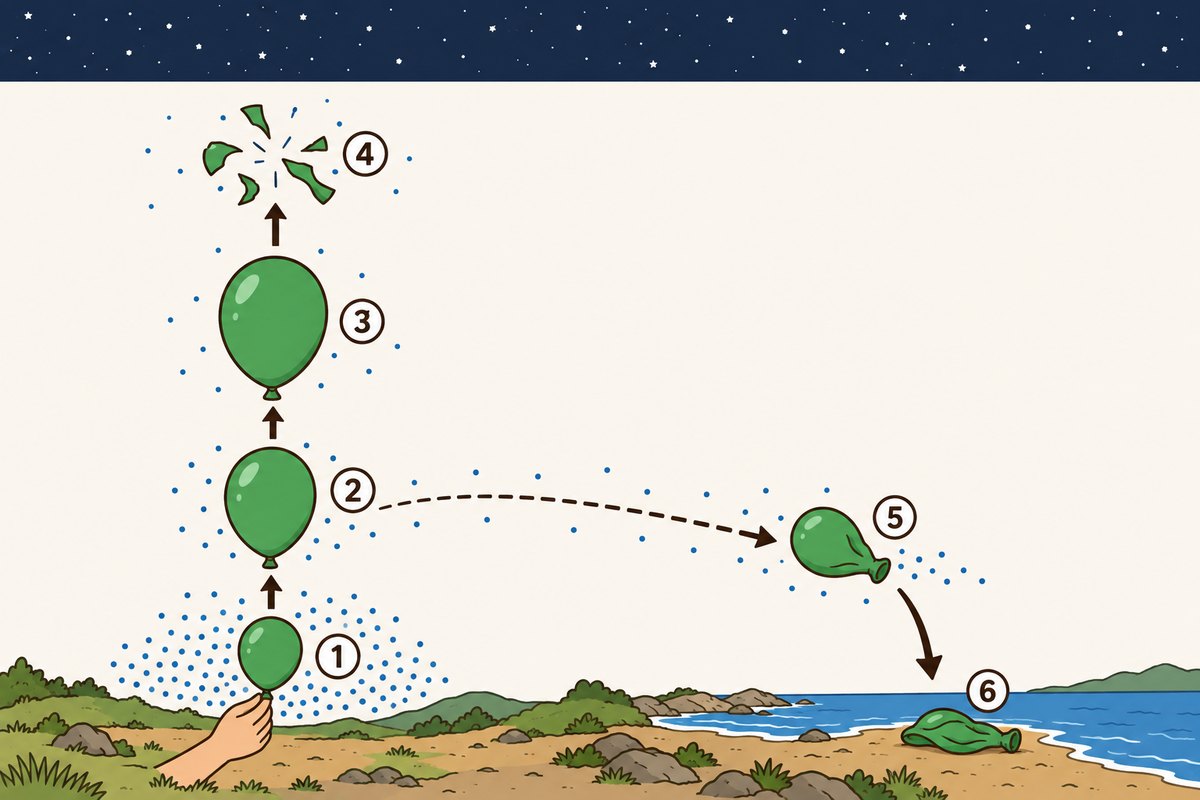
- 1A balloon let go on the ground
- 2The balloon starting to rise
- 3The balloon swelling high up where the air is thin
- 4The balloon bursting before reaching space
- 5Another path: drifting sideways and shrinking as the gas leaks out
- 6Balloons that fell on land or the shore
How high can a balloon go?
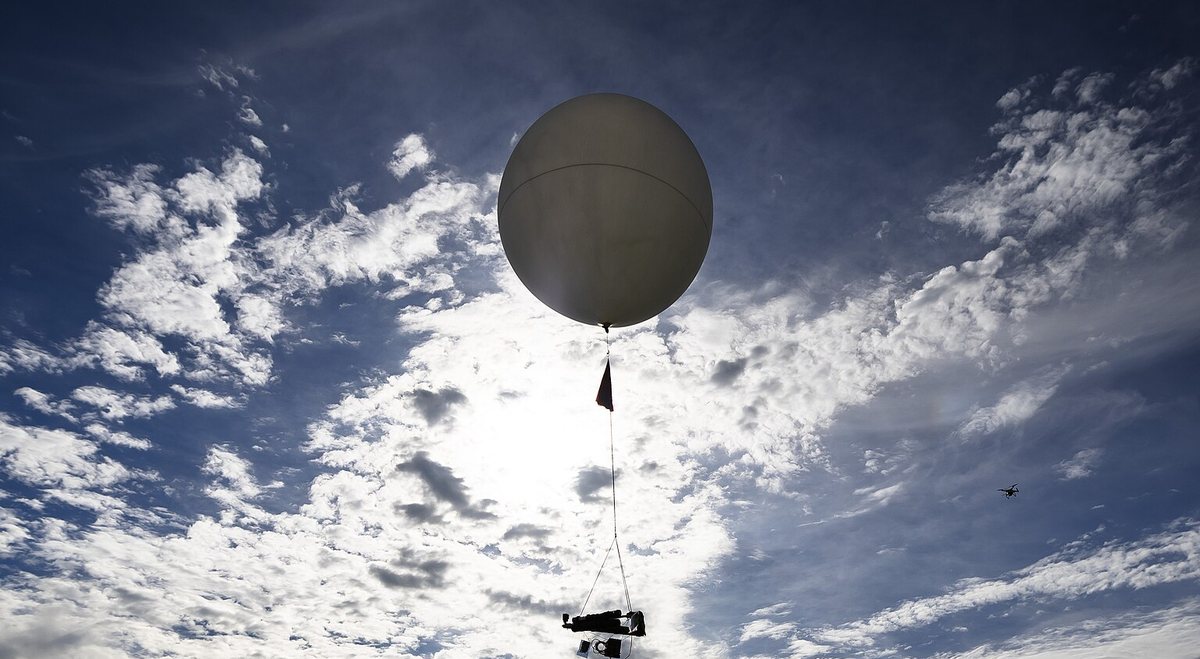
There is no fixed height at which a balloon bursts. It depends on things like the size of the balloon and how much helium is inside. A useful comparison is the weather balloon, which is sent high up to study the sky. According to the US National Weather Service, it rises at about 300 meters per minute and can reach more than 35 km up. High in the sky it swells to the height of a two-story building, and it bursts once it stretches past its limit.

Where fallen balloons end up
Balloons that burst or shrink fall back to land or sea as litter. According to an article from Maryland Sea Grant (a University of Maryland ocean research program), more than 29,800 balloons were found on beaches in the eastern United States during cleanups from 2016 to 2019. Balloons floating on the sea look like jellyfish, and experts warn that animals may eat them by mistake or get tangled in their strings.
Want to know more?
- The instrument hung under a weather balloon faces cold as low as about minus 92°C during its flight, and after the balloon bursts, it floats down on a small parachute.
- When marine debris experts were asked which litter is most dangerous to animals such as seabirds and sea turtles, balloons ranked third, after fishing gear and plastic bags.
- Since October 2021, a Maryland law has banned anyone aged 13 or older from intentionally releasing more than 10 balloons.
Quick quiz: test yourself
Remember what you just read? Give it a try!Why does a released helium balloon swell as it rises?
Show the answer
- The air high up is thin, so the push from outside is weaker
- It is warmer high up, so the rubber gets softer
- The helium inside keeps increasing high up
The air high up is thin, so the push from outside is weaker The higher it goes, the thinner the air and the weaker the push on the balloon from outside (air pressure), so the helium inside spreads out and the balloon swells.
The higher it goes, the thinner the air and the weaker the push on the balloon from outside (air pressure), so the helium inside spreads out and the balloon swells.
Next quiz ›Sources
- High Inflation (A Moment of Science)Indiana Public Media(インディアナ大学)
- Collecting Meteorological Data by Radiosonde or Weather BalloonNational Weather Service(アメリカ国立気象局)Raleigh, NC
- A Ballooning Effort: Maryland bans intentional balloon releases & new campaign offers information about impactsMaryland Sea Grant(メリーランド大学)
This article was written after checking the sources above as of 2026-10-03. Explanations may change as research progresses. Photo credits are shown below each photo.
Next fun fact ▶
 ScienceWhy doesn't stainless steel rust?Iron rusts, yet a stainless steel spoon stays shiny. What makes the difference?
40 surprising animal facts with big photos and short, easy text. A fun-facts book for kids and grown-ups to read together.
See it on Amazon