Why do magnets stick to iron?

 Let me give you the answer in 30 seconds first.
Magnets stick because every electron inside matter acts like a tiny magnet, and in materials like iron those tiny magnets point the same way. Two magnets attract when a north pole meets a south pole and push apart when the same poles meet. When iron comes near a magnet, the tiny magnets inside it line up, so the iron acts like a magnet too and gets pulled in.
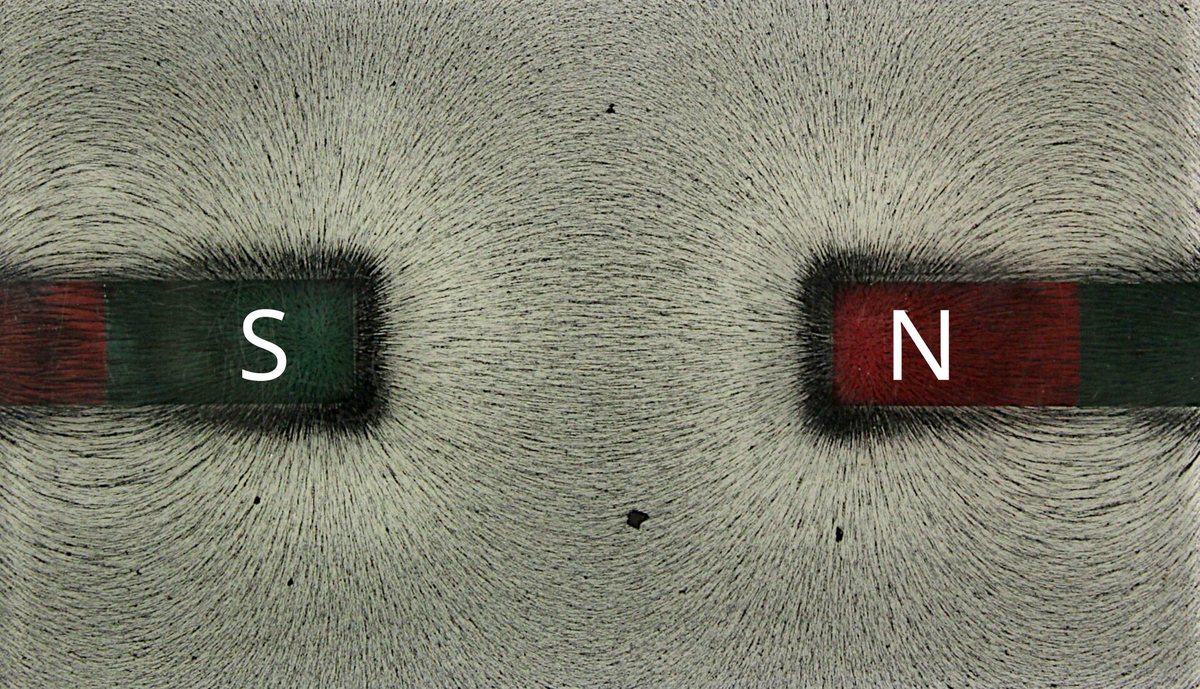
Every electron is a tiny magnet
According to the U.S. National High Magnetic Field Laboratory (National MagLab), every electron that makes up matter is a very tiny magnet with a north pole and a south pole. In most materials, the electrons point in directions that cancel each other out, so the material as a whole is not a magnet. But in "ferromagnetic" materials such as iron and nickel, the electrons line up, and their tiny magnetic forces add together.
The magnetic domains in iron line up
Inside iron, atoms that point the same way gather into small areas called "magnetic domains." In ordinary iron, each domain points in a different direction, so the iron is not a magnet. When a magnet comes close, the domains turn and line up with the magnet's force. The iron itself then takes on the nature of a magnet, and that is why it is pulled toward the magnet.
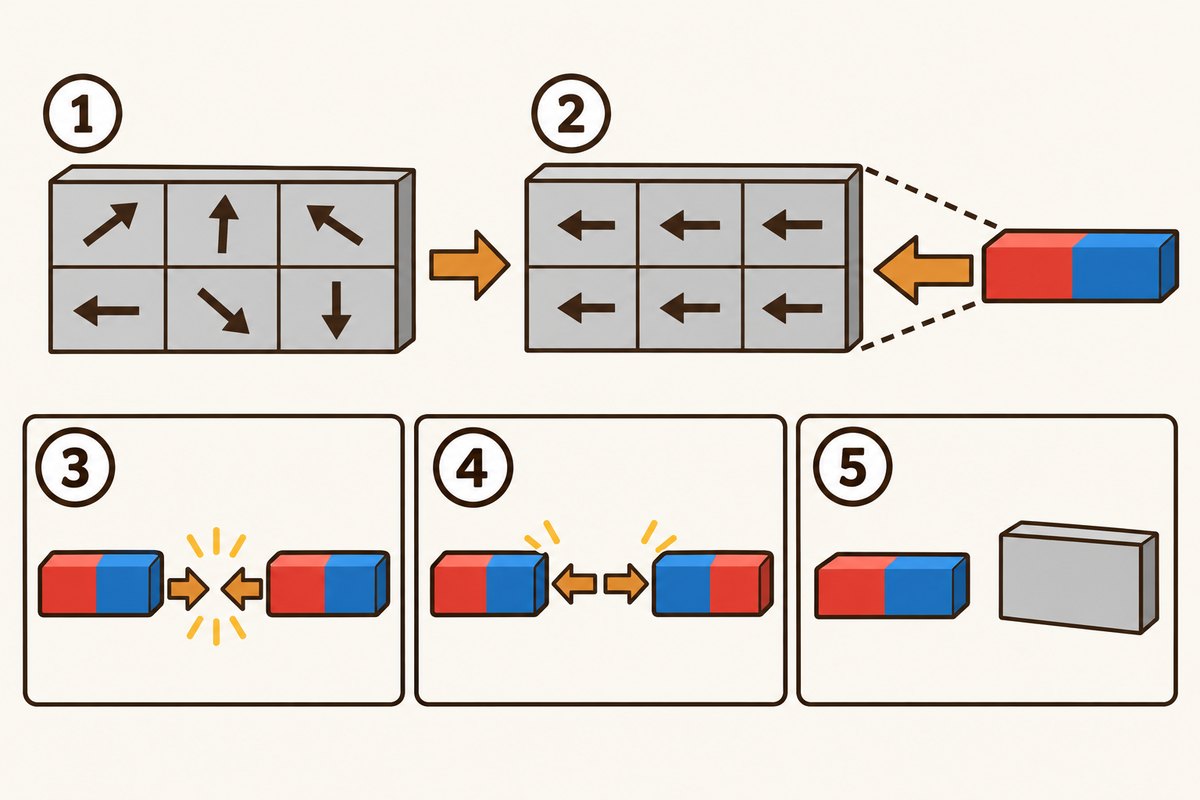
- 1Magnetic domains pointing in random directions in ordinary iron
- 2Domains lining up near a magnet
- 3Opposite poles attract
- 4Like poles repel
- 5Comparison: an aluminum plate that does not react to a magnet
Hearing the domains move
In 1919, the German scientist Heinrich Barkhausen wrapped a wire around an iron core, connected it to a speaker, and brought a magnet close. He heard crackling and clicking sounds. This is taken as evidence that iron does not become magnetized smoothly but in small steps, and it became a clue that magnetic domains really exist.

What sticks and what doesn't
According to teaching materials from Brookhaven National Laboratory in the United States, two magnets attract when a south pole faces a north pole, and push apart when two south poles or two north poles face each other. Also, the metals that stick to magnets are ones that contain iron, nickel or cobalt. The University of Illinois explains that magnets do not stick to aluminum cans because iron and aluminum have different atoms that are arranged differently.
Want to know more?
- Only 4 elements are ferromagnetic at room temperature and can become lasting magnets: iron, nickel, cobalt and gadolinium.
- Ferromagnetic magnets stay magnetized for a long time, and some stay that way for millions of years.
- At high temperatures, the tiny magnets of the atoms tend to point in random directions, so the magnetism becomes hard to notice.

Quick quiz: test yourself
Remember what you just read? Give it a try!Why does a magnet stick to iron?
Show the answer
- The domains in the iron line up
- The magnet warms up the iron
- All metals pull toward magnets
The domains in the iron line up When a magnet comes near, the magnetic domains in the iron line up, so the iron takes on the nature of a magnet and is pulled in.
When a magnet comes near, the magnetic domains in the iron line up, so the iron takes on the nature of a magnet and is pulled in.
Next quiz ›Sources
- Magnetic DomainsNational High Magnetic Field Laboratory(National MagLab)Magnet Academy
- Barkhausen EffectNational High Magnetic Field Laboratory(National MagLab)Magnet Academy
- Marvelous MagnetsBrookhaven National Laboratory(Office of Educational Programs)
- Non-sticky MagnetsUniversity of Illinois, Physics Van
This article was written after checking the sources above as of 2026-10-03. Explanations may change as research progresses. Photo credits are shown below each photo.
Next fun fact ▶
 ScienceWhy does the back of a CD shine in rainbow colors?When you tilt a CD, its colors keep changing. Where do those rainbow colors come from?

40 surprising animal facts with big photos and short, easy text. A fun-facts book for kids and grown-ups to read together.
See it on Amazon