Why Doesn't the Moon Fall to Earth?

 Earth's gravity keeps pulling the Moon toward us. The secret is its sideways speed, you see.
The Moon is constantly pulled toward Earth by gravity. But it is also moving sideways fast enough that it keeps missing Earth. This balance between gravity and forward momentum keeps the Moon in orbit—always falling, but never hitting.
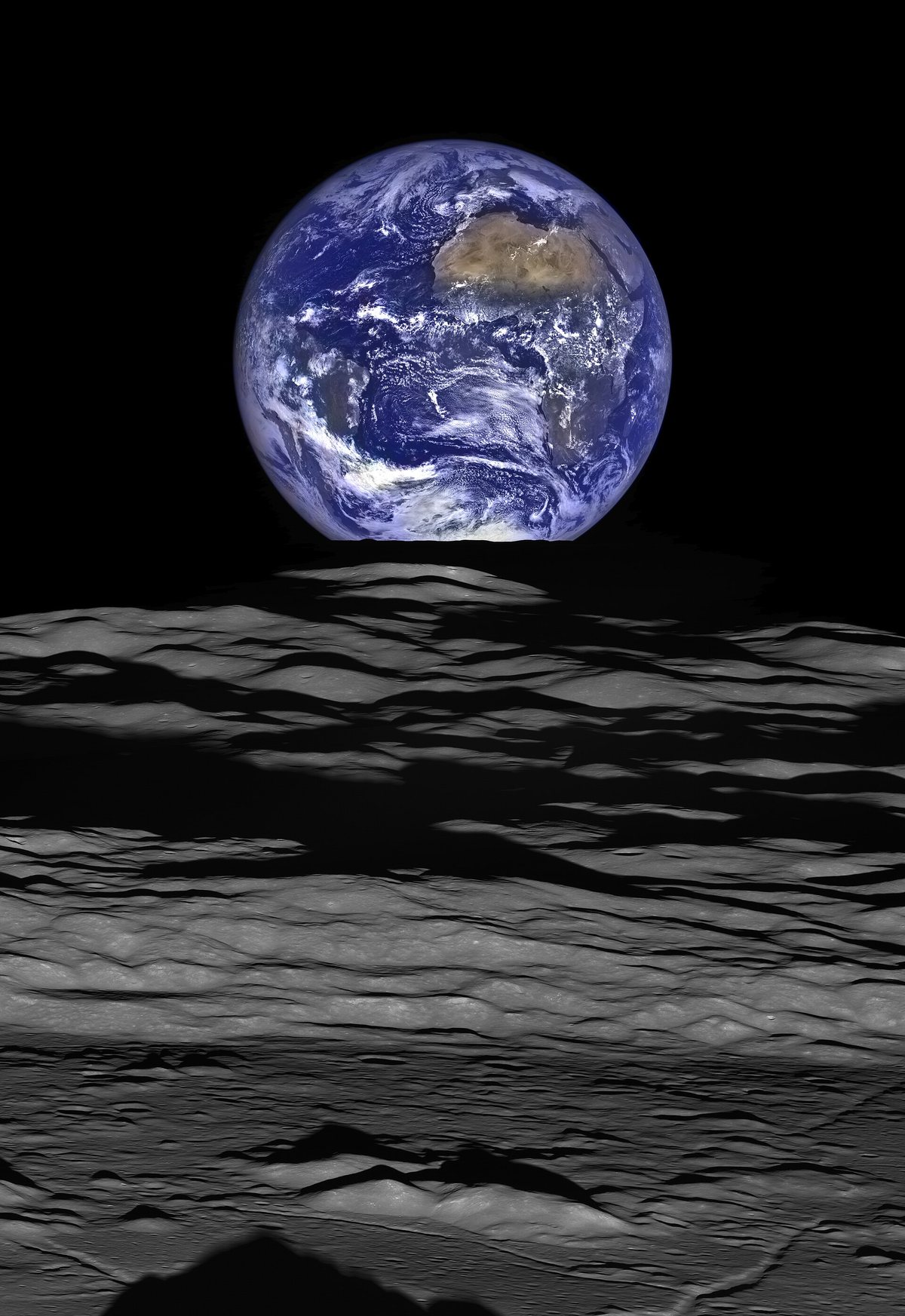
The Moon Is Always Falling
The Moon is a natural satellite that travels around Earth. NASA explains that an object in orbit would fly off into space in a straight line without gravity. With Earth's gravity pulling it, the Moon is always being drawn toward our planet. So in a way, the Moon is always falling toward Earth.
Sideways Speed Is the Key
To make an orbit, two things must balance: forward momentum and the pull of gravity. If the forward momentum is too strong, the object speeds past. If it is too weak, the object is pulled down and crashes. The Moon is moving sideways fast enough that, even though it keeps falling, it never hits Earth.
A Balance Called Orbit
This balance of gravity and sideways speed is what we call an orbit. Orbits are not perfect circles; they are ellipses, a bit like ovals. The Moon's distance from Earth changes slightly, with a closest point and a farthest point. Still, the Moon does not fall down to Earth.

Satellites and Planets Follow the Same Rule
The International Space Station stays in orbit around Earth using the same balance. If a satellite's forward speed is too great, it leaves orbit; if it is too small, it falls. Earth stays in orbit around the Sun for the same reason: the Sun's gravity and Earth's sideways speed are balanced. The Moon also circles Earth in the same way.
Want to know more?
- The Moon is a natural satellite, just as Earth is in orbit around the Sun—so we are all in orbit right now.
- The Moon's gravity pulls on Earth's seas and helps cause the ocean tides.
- An orbit is not a perfect circle. The Moon has a closest point to Earth (perigee) and a farthest point (apogee).
Quick quiz: test yourself
What is the main reason the Moon does not fall to Earth?
Show the answer
- Earth's gravity is too weak.
- The Moon is moving sideways fast enough.
- The Moon has its own thick atmosphere.
The Moon is moving sideways fast enough. Earth's gravity constantly pulls the Moon, but the Moon's sideways motion is fast enough that it keeps falling around Earth instead of crashing into it.
Earth's gravity constantly pulls the Moon, but the Moon's sideways motion is fast enough that it keeps falling around Earth instead of crashing into it.
Next quiz ›Sources
- What Is an Orbit?NASA Space Place
- What Is Gravity?NASA Space Place
This article was written after checking the sources above as of 2026-10-03. Explanations may change as research progresses. Photo credits are shown below each photo.