Does the Universe Have an Edge?

 As it happens, no one knows yet whether the universe has an edge. We can only see the part whose light has reached us.
We don't yet know if the universe has an edge. We can see only as far as light has had time to reach us. Because space has expanded, the farthest visible objects are now about 42 billion light-years away. The oldest light, the cosmic microwave background, is a kind of wall in our view, not a real edge.
Is There an Edge?
Scientists don't yet know whether the universe has an edge. What we often call the edge of the universe is really the limit of the observable universe—the part whose light has had time to reach us. Since light travels at a finite speed, looking farther away means looking further back in time.
How Far Can We See?
The universe is about 13.8 billion years old. NASA's WMAP measured 13.77 billion years, and ESA's Planck measured 13.82 billion years. Light can travel only 13.8 billion light-years in that time, but because space has expanded while the light traveled, the current distance to the most distant thing we can see is much larger. If we use 14 billion years for the age, the farthest visible objects are now about 42 billion light-years away.
The Oldest Light
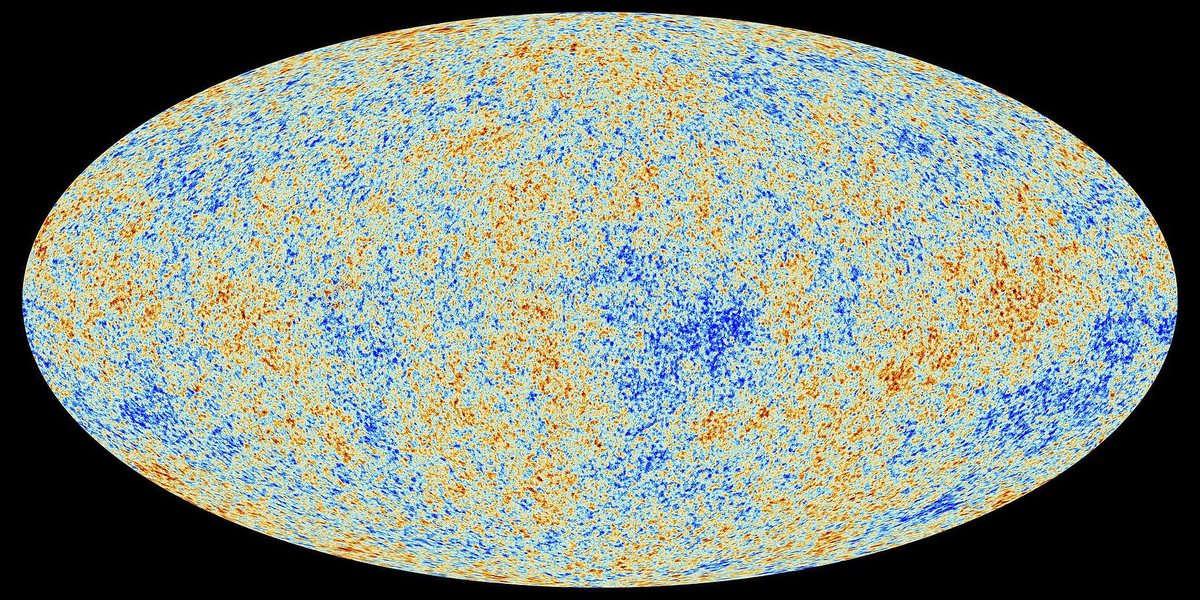
The oldest light we can observe is the cosmic microwave background (CMB). It was released when the universe was about 380,000 years old (about 375,000 years in NASA's wording) and now reaches us from all directions as microwaves with a temperature of about 2.7 K. The CMB is like the farthest wall we can see with telescopes, but it is not a physical edge.

Still Unknown
So is the whole universe finite? Observations suggest that the universe is close to being flat, or straight, but whether it has an edge or goes on forever is still unknown. We know the size of the observable universe, but the question of an actual edge remains open.
Want to know more?
- Tiny temperature differences in the CMB are thought to be the seeds of today's stars and galaxies.
- Planck estimates the universe is made of about 4.9% normal matter and 26.8% dark matter.
- The expansion of the universe is speeding up, driven by a mysterious force called dark energy.
Quick quiz: test yourself
If the universe is about 14 billion years old, about how far away is the farthest thing we can see now?
Show the answer
- 42 billion light-years
- 14 billion light-years
- 1 trillion light-years
42 billion light-years The universe is about 13.8 billion years old, but expansion stretched the distance to the farthest visible objects to about 42 billion light-years, based on a 14-billion-year estimate.
The universe is about 13.8 billion years old, but expansion stretched the distance to the farthest visible objects to about 42 billion light-years, based on a 14-billion-year estimate.
Next quiz ›Sources
- WMAP OverviewNASA / WMAP Science Team
- Planck reveals an almost perfect UniverseESA(欧州宇宙機関)
- Frequently Asked Questions in CosmologyUCLA(カリフォルニア大学ロサンゼルス校)
This article was written after checking the sources above as of 2026-10-03. Explanations may change as research progresses. Photo credits are shown below each photo.