Where was the hammock born?

 The answer is Latin America and the Caribbean. It began as a bed woven by Indigenous peoples.
The hammock is thought to have been created by Indigenous peoples of Latin America and the Caribbean. Woven from cotton or palm fibers, it was used widely from Mexico to the Amazon Basin. In 1500, a writer in Brazil recorded Indigenous people sleeping in hammocks.
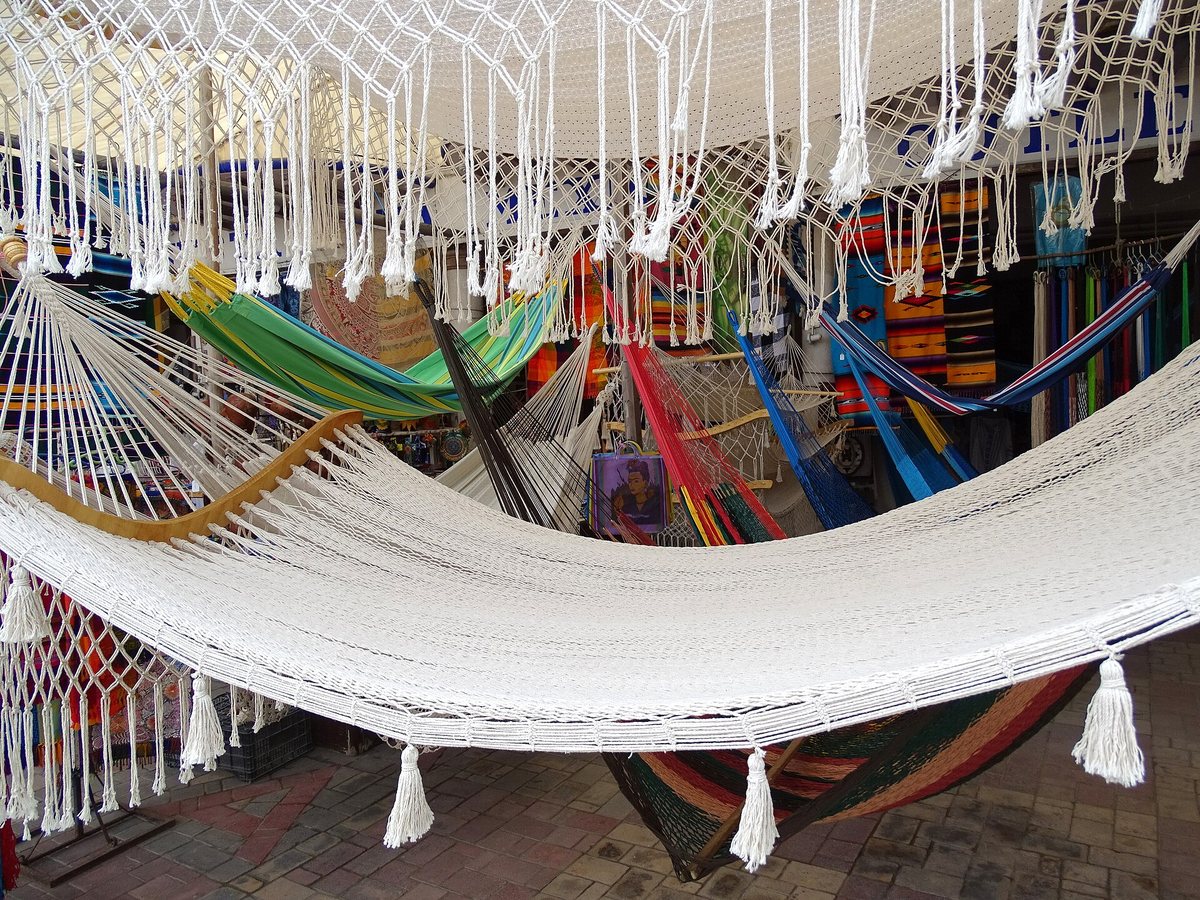
A bed of Indigenous peoples of Latin America and the Caribbean
The hammock is thought to have been created by Indigenous peoples of Latin America and the Caribbean. At first, it was a portable bed woven from cotton or palm fibers and hung up for use. The earliest European explorers did not record hammocks anywhere else in the world.
No one knows who made them first
Hammocks were used widely in Mexico, the Caribbean, and Central and South America, especially in the Amazon Basin. However, they seem to have been used only a little in Chile, Argentina and Bolivia. Researchers still have not decided which people made them first. The Brazilian scholar Luís da Câmara Cascudo believed the Arawaks invented them and passed them on to the Tupi, while many other scholars favor the Caribs.
The first record in Brazil
In 1500, Pero Vaz de Caminha, who was with a Portuguese fleet that had landed in Brazil, wrote that Indigenous people slept in something like a net. This is the first written record of hammocks in Brazil. Caminha had probably never seen a hammock, and because it looked like a fishing net, he is thought to have called it "rede," the Portuguese word for net. The Spanish word "hamaca" comes from the language of the Taíno people of the Caribbean.

Spreading to Europeans and sailors
Europeans soon took up the hammock too. It was portable and washable, let air flow through, and lifted sleepers above rats, insects and tropical floods. In 1570, it was written that most beds in Brazil were hammocks. Hammocks also became sailors' beds, and in the British Royal Navy, each sailor is said to have been allowed a space 14 inches wide for his hammock.
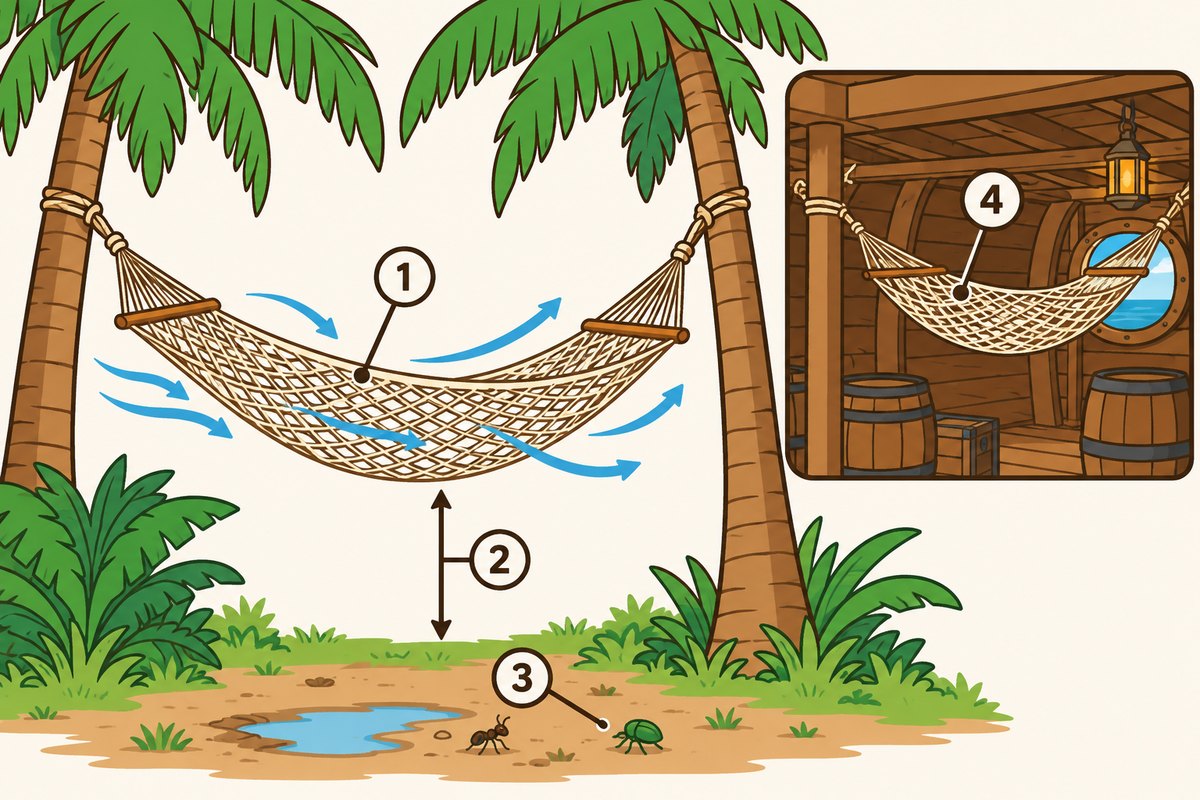
- 1A hammock woven from fibers
- 2The space between it and the ground
- 3Keeping your body away from bugs and water on the ground
- 4A hammock hung inside a ship
Want to know more?
- In Portuguese, a hammock is still called a "rede." In northern and northeastern Brazil, hammocks are still widely used and are made both by hand and in factories.
- On American warships around the War of 1812, the space between hanging hammocks tended to be about 18 inches. British Royal Navy ships squeezed many more sailors into almost the same space.
Quick quiz: test yourself
Remember what you just read? Give it a try!The Portuguese word for hammock, "rede," originally meant what?
Show the answer
- A fishing net
- A tree branch
- A cradle
A fishing net A Portuguese writer who saw a hammock for the first time is thought to have called it "rede" (net) because it looked like a fishing net.
A Portuguese writer who saw a hammock for the first time is thought to have called it "rede" (net) because it looked like a fishing net.
Next quiz ›Sources
- Hammock(Encyclopedia of Latin American History and Culture)Encyclopedia.com(Gale)
- Swaying on Feather-Roses and Imperial Crests: Brazilian Feather-Decorated Hammocks, Nation-Building, and Indigenous AgencyIndiana vol.37 no.2(Ibero-Amerikanisches Institut)
- hamaca(Diccionario de la lengua española)Real Academia Española
- Berth Deck Area ActivityUSS Constitution Museum
This article was written after checking the sources above as of 2026-10-03. Explanations may change as research progresses. Photo credits are shown below each photo.
Next fun fact ▶
 CultureWhy does a week have seven days?Monday to Sunday, the same seven days come around every week. But why seven?

40 surprising animal facts with big photos and short, easy text. A fun-facts book for kids and grown-ups to read together.
See it on Amazon