Why does the Moon change shape?

 Actually, the shape of the Moon itself isn't changing at all.
The Moon's phases happen because, as the Moon travels around Earth, the angle from which we see its sunlit half changes. The Moon itself does not change shape, and it is not Earth's shadow falling on it. It takes about 29.5 days from one new moon to the next.
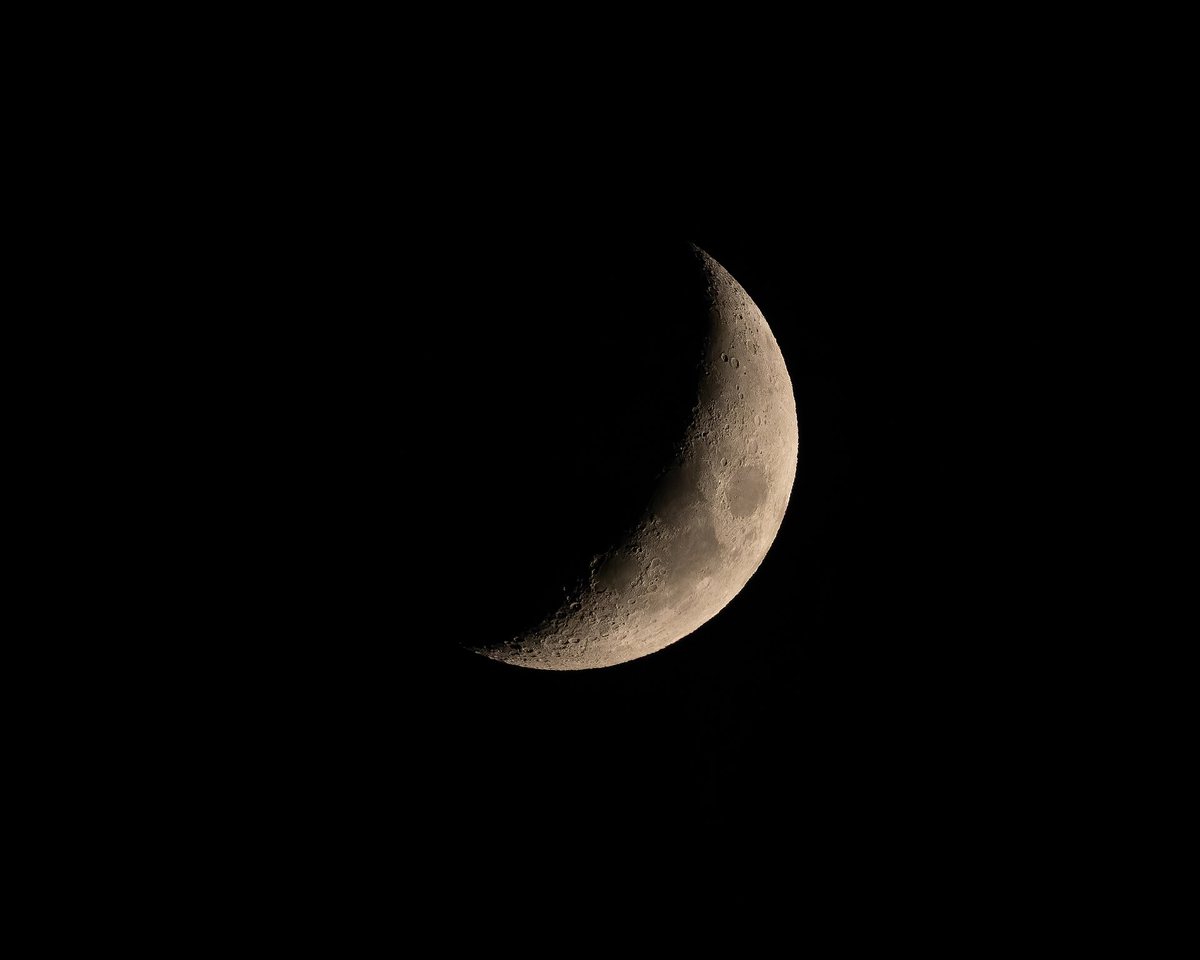
Half of the Moon is always lit
The Moon does not make its own light; it shines by reflecting sunlight. So the half facing the Sun is always bright, and the other half stays dark. NASA (the U.S. space agency) explains that the Moon, just like Earth, has a day side and a night side.
The shape depends on the viewing angle
The Moon travels around Earth in about 1 month. When the Moon is in nearly the same direction as the Sun, its bright side faces away from us, and from Earth we can see only the dark side. This is the new moon. When the Moon comes to the opposite side of Earth from the Sun, we see the bright side straight on, and it becomes a full moon. In the positions in between, we see only part of the bright side, so it looks like a crescent or a half moon.
It isn't Earth's shadow
Some people think the phases happen because Earth's shadow falls on the Moon, but that is not true. NASA says Earth's shadow affects how the Moon looks only during a lunar eclipse. According to the National Astronomical Observatory of Japan, a lunar eclipse happens only around a full moon, when the Sun, Earth, and Moon line up, and because the Moon's path is slightly tilted, it does not happen at every full moon.

A cycle a bit longer than one orbit
The Moon goes around Earth once in about 27.3 days, but it takes about 29.5 days from one new moon to the next. While the Moon is going around, Earth is also moving along its path around the Sun, so it takes about 2 extra days for the Sun and Moon to return to the same positions.
Want to know more?
- The Moon takes the same amount of time to spin once as it does to go around Earth, so it always shows the same face to Earth.
- The phases look the same everywhere in the world, but the same moon appears upside down in the Northern and Southern Hemispheres.
- A full moon rises around sunset and sets around sunrise, while a new moon is in the sky all through the daytime.

Quick quiz: test yourself
Why does the Moon change shape?
Show the answer
- Earth's shadow falls on it
- The Moon itself changes shape
- Our view of its lit half changes
Our view of its lit half changes As the Moon travels around Earth, the angle from which we see its sunlit half changes. Earth's shadow only matters during a lunar eclipse.
As the Moon travels around Earth, the angle from which we see its sunlit half changes. Earth's shadow only matters during a lunar eclipse.
Next quiz ›Sources
- Top Moon QuestionsNASA Science
- Moon PhasesNASA Science
- 月食とは国立天文台 (in Japanese)
This article was written after checking the sources above as of 2026-10-03. Explanations may change as research progresses. Photo credits are shown below each photo.